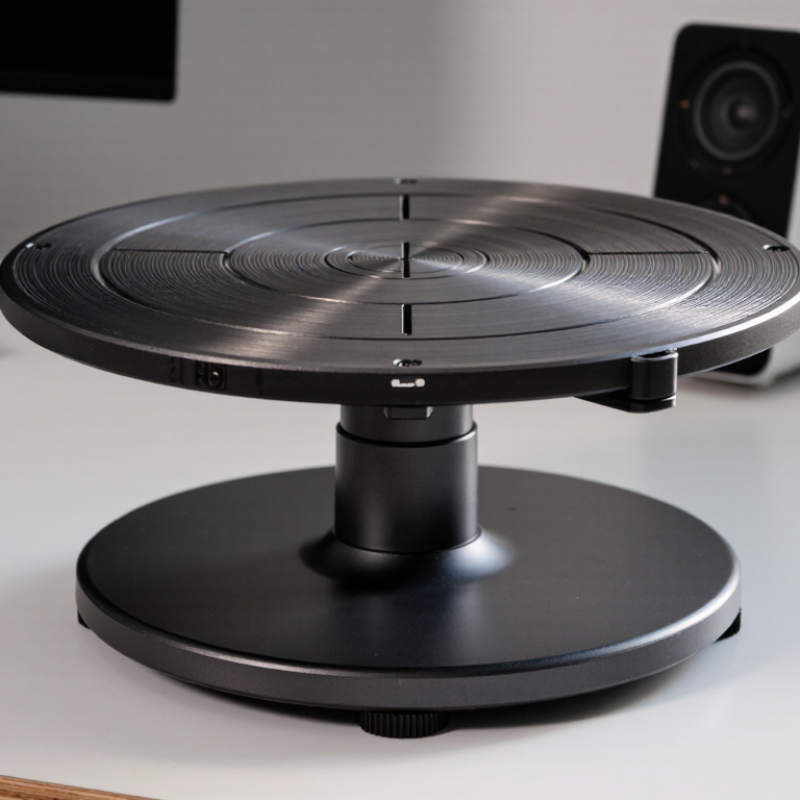
Choosing a 360-degree swivel stand starts with defining one cycle. In most applications, one cycle means a complete rotation under a stated load. Do not compare 5,000 and 50,000 cycles without checking test conditions. A 5,000-cycle bearing may suit a display adjusted weekly. A 50,000-cycle design fits equipment repositioned many times each day. Rated life is not a promise for every installation. Load matters. So does speed. A heavy platform can shorten bearing life sharply, even when rotation feels smooth during inspection. In practical testing, uneven loading often causes more trouble than occasional use. That detail is easy to miss.
Compare bearing designs by contact surfaces, sealing, and load direction. Ball bearings often reduce starting torque, while plain bushings can handle slow movement with less complexity. Neither option wins universally. Request cycle-test data, applied load, rotation angle, and failure criteria. “One cycle” should be clearly defined. Check whether testing included dust, moisture, temperature changes, or side loading. A clean laboratory result may not match a workshop floor. For stands near people, examine wobble, pinch points, retention, and noise alongside rated life. Add a realistic safety margin instead of selecting the smallest acceptable number. If expected use reaches 5,000 cycles, a 5,000-cycle bearing leaves no room for misalignment or neglected maintenance. I would also record actual usage after installation. Real data may challenge the original estimate.



 © Copyright 2020 Tianjin Tanghaidongyang Valve Co., Ltd. All Rights Reserved.