How to Choose the Right Air Dryer for Your Needs?
Choosing the right air dryer begins with the air’s real working conditions, not a product brochure. A workshop running spray equipment may need cleaner, drier air than a factory powering pneumatic tools. The difference can affect paint finish, valve reliability, product quality, and maintenance costs.
Ron Marshall, a respected compressed-air systems specialist, offers a practical reminder: “The best dryer is the one that matches the dew point you actually need.” That principle deserves attention. Start by checking compressor flow, operating pressure, inlet temperature, ambient humidity, and the required pressure dew point. A refrigerated air dryer may suit general manufacturing. A desiccant model may be necessary for very dry air, outdoor pipelines, or sensitive instruments. Membrane dryers can help where compact equipment and low maintenance matter.
Small details matter. A dryer sized for 500 cubic feet per minute may struggle when demand briefly reaches 650. Hot compressor-room air can also reduce performance. Automatic drains, filters, service access, and pressure loss deserve equal attention. They are easy to overlook.
The cheapest option is not always economical. Energy use, purge-air loss, replacement desiccant, and unplanned downtime can quietly increase ownership costs. Field experience shows that specifications are often incomplete. That is worth admitting. Recheck actual demand before buying.
This guide explains how to compare air dryer technologies, identify the correct capacity, and avoid common selection errors. The goal is dependable air. Not simply dry air.
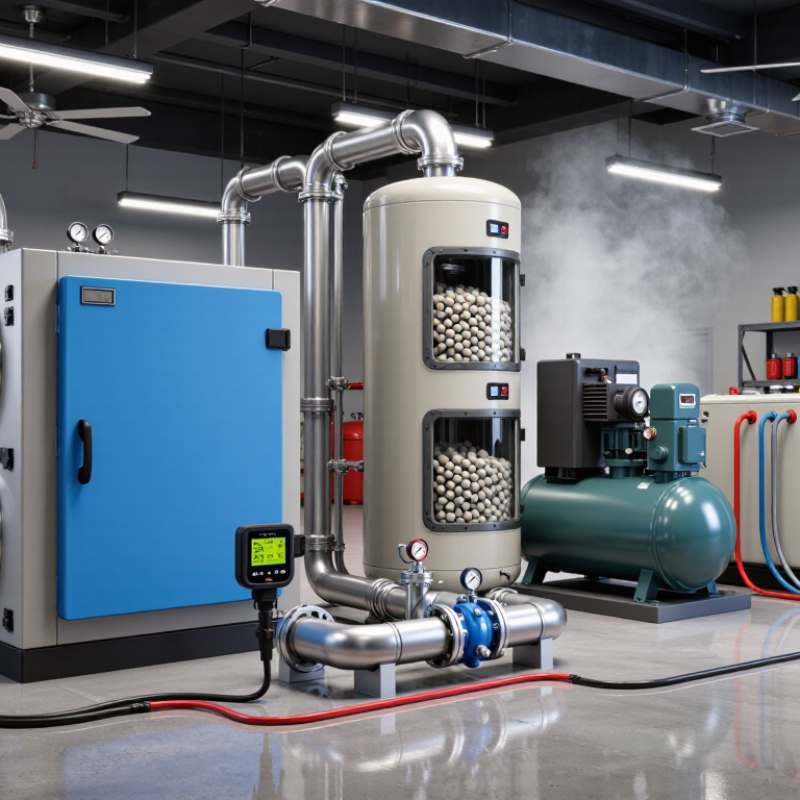
Define Your Air Drying Requirements
Choosing an air dryer starts with defining your air drying requirements. Do not begin with equipment size. Begin with the air itself. Measure flow rate, operating pressure, inlet temperature, and ambient conditions. A workshop may need dry air for paint spraying. A pneumatic control system may require a much lower pressure dew point. These needs are not interchangeable.
Identify the most sensitive point in your process. Is moisture causing rust, blocked valves, poor surface finishes, or frozen lines? Record when the problem appears, especially during humid mornings or production peaks. This practical evidence is more useful than a rough estimate. Check the compressor’s actual output, not only its nameplate rating. Pressure drops can also change dryer performance. Small details matter.
Set a target pressure dew point using technical data and qualified advice. Refrigerated drying may suit general workshop air. Adsorption drying can be necessary for very low moisture levels. Assess oil carryover, dust, and liquid water before selection. A pre-filter or automatic drain may be needed. A common field lesson is simple: average demand can hide short, heavy-use cycles. That mistake is easy to repeat. Leave room for measured growth, but avoid excessive capacity, which can increase energy use and complicate maintenance. Write down your assumptions, then challenge them before buying.
Compare the Main Types of Air Dryers
Choosing the right air dryer starts with the air’s final destination. A workshop may need dry air for tools, while food processing requires stricter moisture control. Check flow rate, operating pressure, ambient temperature, and required pressure dew point before comparing dryer types. Small mistakes here can create corrosion, blocked valves, or inconsistent product quality.
Refrigerated air dryers cool compressed air and remove condensed water. They suit general manufacturing and pneumatic tools at moderate dew points. Desiccant dryers use absorbent material to achieve much drier air. They are better for outdoor lines, instruments, and freezing conditions, but consume energy during regeneration. Membrane dryers are compact and have few moving parts. Their lower flow capacity can limit larger systems. Deliquescent dryers are simple and chemical-based, yet their drying material needs regular replacement. I have seen operators choose a dryer by pipe size alone. That approach often fails.
Tips: Measure real demand, not only compressor capacity. Install a reliable drain. Inspect filters regularly. Ask for tested dew-point data, not vague performance claims. Leave room for seasonal temperature changes. A practical trial can reveal pressure drops that a brochure misses. Also, check maintenance access before installation. This detail seems minor. It rarely is.
How to Choose the Right Air Dryer for Your Needs?
Compare the typical pressure dew points achieved by the main types of compressed-air dryers.
Pressure dew point indicates how dry the compressed air is. A lower value provides better protection against condensation, corrosion, and contamination, but usually requires more equipment, maintenance, or energy.
Refrigerated dryers are commonly suitable for general plant air, while desiccant dryers are preferred for freezing conditions or applications requiring very dry air. Deliquescent dryers can be a simple option for less demanding systems. Values shown are representative engineering figures; actual performance depends on inlet temperature, pressure, flow rate, and operating conditions.
Evaluate Capacity, Pressure, and Air Quality
Choosing the right air dryer begins with the air your system actually uses, not the compressor label. Measure average flow, peak demand, and expected expansion. A dryer sized only for today’s average load may struggle when several tools operate together. Leave a practical margin, but avoid excessive oversizing. Large units can waste energy and occupy valuable floor space.
Pressure deserves equal attention. Check the compressor’s working pressure, the dryer’s rated pressure, and the pressure drop across filters and piping. A small pressure loss can reduce tool performance and increase operating costs. I once focused only on flow rate and overlooked inlet temperature. That assumption was too simple. Hot, humid air can overload a dryer, especially near a compressor room with poor ventilation. Verify actual site conditions before choosing the equipment.
Air quality should match the application. General workshop tools may need dry air, while painting, food processing, and sensitive instruments demand tighter moisture and contaminant control. Use ISO 8573-1 as a clear reference for particles, water, and oil classes. Also inspect the existing filtration system; a dryer cannot correct every upstream problem. A dew point monitor can reveal changing conditions more reliably than occasional manual checks. Small details matter. Sometimes, the selected specification looks perfect on paper but fails during seasonal humidity changes. Recheck measurements after installation and question convenient assumptions.
Assess Energy Use, Maintenance, and Installation
Choosing the right air dryer starts with your operating conditions, not the equipment catalog. Measure airflow, pressure, inlet temperature, and ambient humidity during a normal production shift. A dryer that works well in winter may struggle beside a hot compressor. Check energy use at both full and partial load. Some systems waste power when demand falls, while variable-control models can reduce unnecessary cycling.
Maintenance affects more than service costs. Review filter replacement intervals, drain reliability, access space, and alarm visibility. A blocked filter can increase pressure loss and force the compressor to work harder.
Automatic drains also need inspection; they are small parts with expensive consequences when ignored. I have seen maintenance plans fail because technicians could not reach the drain safely. That detail should be checked before purchase.
Tips: Compare the dryer’s rated capacity with your highest expected demand, not the average. Leave clear space around panels and filters. Confirm electrical connections, ventilation, piping direction, and condensate handling before installation. Ask for measured energy data under similar conditions, not only laboratory figures. Keep a simple maintenance log from day one. It exposes patterns. However, estimates remain imperfect; seasonal humidity, leaks, and future expansion can change the result. Allowing modest capacity headroom is sensible, but excessive oversizing may increase purchase and operating costs.



 © Copyright 2020 Tianjin Tanghaidongyang Valve Co., Ltd. All Rights Reserved.