| White Marble with Fine Veining | White to light gray background with delicate gray veins | Approximately 3–4 | Low to moderate, depending on density and porosity | Bathroom walls, vanity tops, fireplace surrounds, low-traffic floors | Light colors create a spacious appearance but may show staining and etching more clearly | Honed for a softer look; polished for stronger reflection | Minimalist, contemporary, Scandinavian, and classic interiors |
| White Marble with Bold Veining | White or cream base with prominent gray, gold, or darker veins | Approximately 3–4 | Low to moderate; slab-specific testing is important | Feature walls, reception desks, statement islands, shower walls | Vein direction and slab continuity strongly affect the final appearance | Polished for visual impact; book-matched slabs for feature installations | Luxury, dramatic, transitional, and high-end hospitality designs |
| Cream Marble | Warm beige, ivory, or light cream tones with subtle movement | Approximately 3–4 | Moderate; sealing is generally recommended | Large floors, staircases, bathrooms, wall cladding, hotel interiors | Warm tones conceal minor dust better than very light marble; acidic cleaners can etch the surface | Honed for high-traffic floors; polished for formal rooms | Traditional, Mediterranean, warm contemporary, and classic projects |
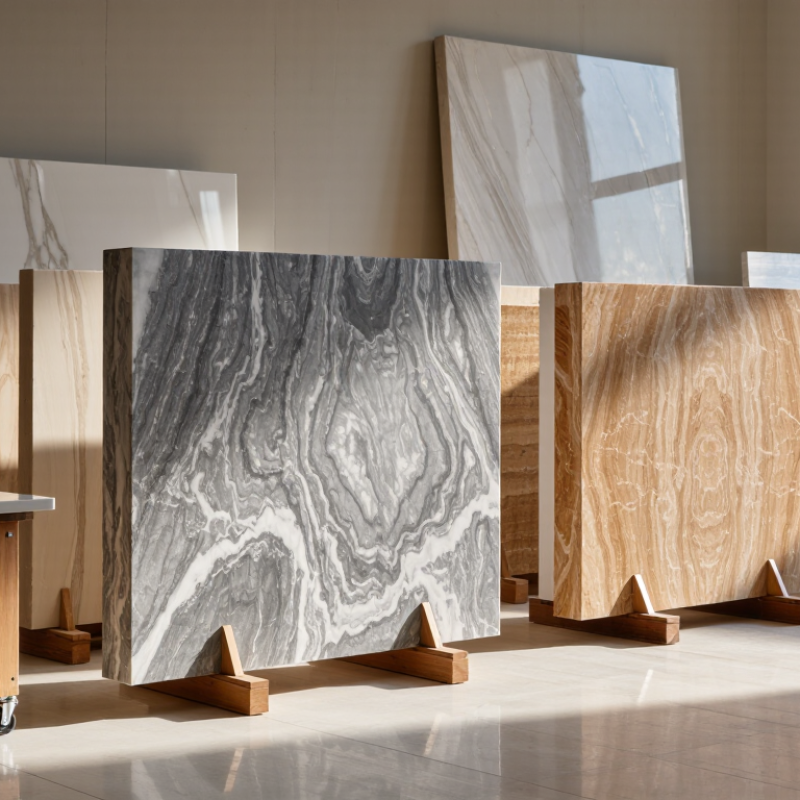
| Gray Marble | Light to charcoal gray with linear, cloudy, or directional patterns | Approximately 3–4 | Low to moderate, depending on the stone structure | Floors, wall panels, vanity tops, fireplace surrounds, commercial interiors | Mid-tone colors are practical for busy spaces, but surface scratches may still be visible | Leathered or honed for reduced glare; polished for a refined finish | Industrial, modern, monochromatic, and contemporary interiors |
| Green or Deep-Colored Marble | Green, brown, black, or mixed mineral patterns with strong visual variation | Approximately 3–5; mineral composition varies significantly | Moderate to high in some varieties; absorption testing is advisable | Accent walls, bar fronts, powder rooms, tabletops, decorative panels | Color consistency can vary between slabs; confirm samples under project lighting | Polished for depth and color; honed for a more subdued appearance | Eclectic, Art Deco, dramatic contemporary, and statement spaces |
| Veined Marble for Countertops | Varies widely; selected primarily for slab pattern and movement | Approximately 3–4 | Variable; porous slabs require effective sealing | Bathroom vanities, low-to-moderate-use counters, decorative islands | Marble can scratch and react with acids such as lemon juice, vinegar, and some cleaning products | Honed for a less reflective, naturally worn look; polished for maximum color clarity | Best when visual character is prioritized over low maintenance |
| Marble for Exterior or Wet Areas | Appearance varies; selection depends on climate, texture, and slip resistance | Approximately 3–5 | Moderate to high for some stones; laboratory testing is recommended | Covered outdoor areas, sheltered façades, pool surrounds, wet-room walls | Avoid highly polished surfaces where slip risk is a concern; freeze-thaw exposure requires project-specific testing | Flamed, brushed, sandblasted, or textured finishes can improve traction | Suitable only when local climate, drainage, installation method, and maintenance are properly assessed |



 © Copyright 2020 Tianjin Tanghaidongyang Valve Co., Ltd. All Rights Reserved.