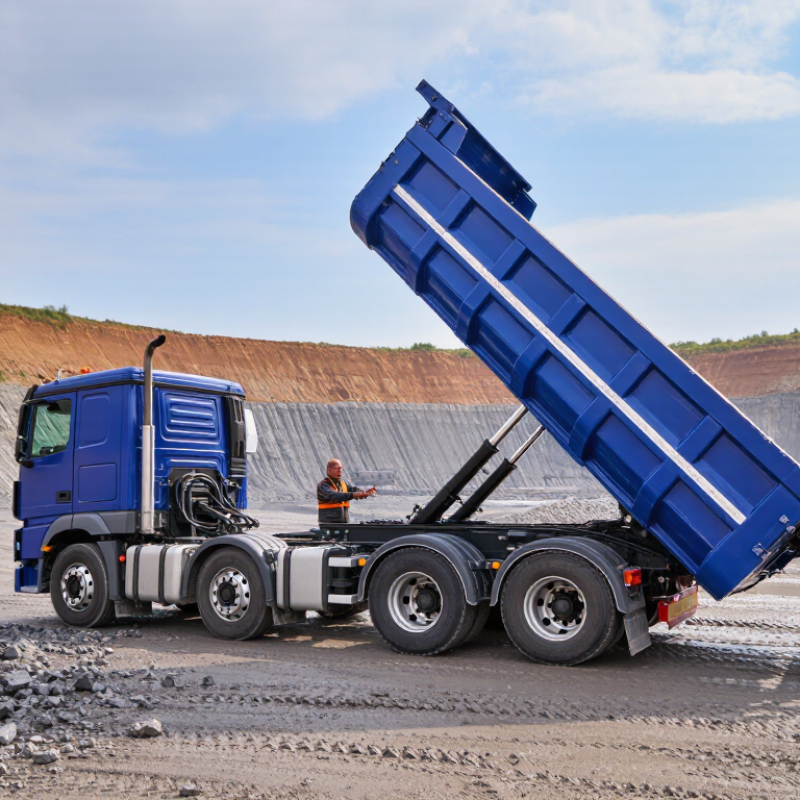
| Basic definition | A side tipper truck is a dump truck that unloads bulk material by tilting its body sideways instead of lifting the body vertically. | It can discharge material in areas where overhead clearance is limited. | Choose this configuration when unloading beside roads, rail lines, tunnels, buildings, or low-clearance structures. |
| Operating principle | A hydraulic cylinder or hydraulic tipping mechanism pushes the cargo body laterally until the load slides out through the open side. | The unloading direction and tipping angle affect stability, cycle time, and material flow. | Specify the preferred discharge side, tipping angle, hydraulic pressure, and control system before purchase. |
| Common payload range | Approximately 10–40 tonnes, depending on the chassis, axle configuration, body construction, and local legal limits. | Payload determines the amount of material moved per trip and directly affects productivity. | Select the smallest legal payload that meets the required daily output to avoid unnecessary purchase and operating costs. |
| Body volume | Common body capacities are about 10–35 m³, with actual usable volume depending on body height, length, and material density. | Low-density materials fill the body before reaching the weight limit, while dense materials may reach the weight limit first. | Match body volume to the bulk density of materials such as soil, sand, gravel, coal, grain, or demolition waste. |
| Suitable materials | Sand, gravel, soil, crushed stone, coal, grain, construction debris, and other free-flowing bulk materials. | Material flow characteristics influence unloading speed and the risk of material sticking inside the body. | For wet clay, sticky soil, or cohesive waste, consider a body liner, steeper tipping angle, or an alternative unloading design. |
| Chassis and axle configuration | Typical configurations include 4×2, 6×4, 8×4, and off-road multi-axle layouts. | More axles can increase payload capacity, traction, and load distribution but may increase purchase and maintenance costs. | Use a lighter configuration for paved roads and moderate loads; choose more axles for heavy-duty work, rough terrain, or higher legal payloads. |
| Tipping direction | Single-side, dual-side, or selectable-side discharge systems are available. | The discharge arrangement determines site flexibility and the space needed for positioning. | Choose dual-side or selectable-side tipping when the truck must work in changing site layouts or on both sides of a road. |
| Tipping angle | Many side-tipping bodies operate within an approximate range of 30°–50°, depending on design and load type. | A larger angle can improve discharge of difficult materials but may increase the stability requirements. | Prioritize stability and ground conditions over maximum angle; confirm the manufacturer's operating limits. |
| Hydraulic system | Key factors include hydraulic pump capacity, working pressure, cylinder size, control valves, hoses, and emergency controls. | The hydraulic system controls tipping speed, lifting force, reliability, and maintenance requirements. | Request rated pressure, cycle time, hose protection, overload protection, and access to replacement hydraulic parts. |
| Ground and site conditions | Side tipping requires adequate lateral clearance and a firm, reasonably level surface during unloading. | Uneven or soft ground can increase the risk of body movement, rollover, or chassis stress. | Avoid tipping on steep cross-slopes; verify ground bearing capacity, clearance, and traffic-control procedures. |
| Legal dimensions and weight | Permitted gross vehicle weight, axle load, width, height, and length vary by jurisdiction and road classification. | A truck that exceeds local limits may require permits, restricted routes, or additional compliance measures. | Check local road regulations before finalizing the chassis, body dimensions, and payload specification. |
| Loading compatibility | The body should be compatible with wheel loaders, excavators, conveyors, hoppers, or other loading equipment used on site. | Poor loading compatibility can cause uneven weight distribution, body damage, and longer cycle times. | Match body height, width, loading clearance, and target payload with the existing loading equipment. |
| Body material and wear protection | High-strength steel can reduce tare weight; abrasion-resistant liners can protect surfaces exposed to stone and demolition materials. | Material selection affects payload, durability, repair frequency, and service life. | Use reinforced floors and replaceable wear plates for abrasive materials; avoid over-specifying reinforcement for light-duty work. |
| Safety equipment | Important features include tipping interlocks, stability controls, emergency stop functions, warning alarms, side guards, and visibility aids. | Side tipping changes the vehicle's center of gravity and creates a work-zone hazard during discharge. | Prioritize documented safety procedures, operator training, tipping interlocks, and clear exclusion zones around the vehicle. |
| Maintenance requirements | Routine service normally includes hydraulic inspections, lubrication, structural checks, tire maintenance, brake service, and body-wear inspections. | Regular maintenance reduces downtime and helps identify hydraulic leaks, cracks, and fastener loosening early. | Choose a design with accessible service points, available spare parts, clear maintenance intervals, and qualified local technicians. |
| Best application match | Construction, quarrying, mining support, agriculture, road maintenance, waste handling, and bulk-material transport. | Each application has different requirements for payload, durability, maneuverability, clearance, and discharge speed. | Define material type, daily trips, route surface, unloading space, climate, and legal limits before comparing truck specifications. |
| 2026 purchase checklist | Confirm payload, body volume, axle layout, tipping direction, hydraulic cycle time, safety systems, legal compliance, warranty, and service support. | A complete specification prevents mismatches between the truck and the operating environment. | Compare total operating cost—not only purchase price—including fuel, tires, maintenance, downtime, insurance, and expected service life. |



 © Copyright 2020 Tianjin Tanghaidongyang Valve Co., Ltd. All Rights Reserved.