How Are PCR Cosmetic Tubes Made in China?
China’s PCR cosmetic tubes usually begin with collected post-consumer plastic waste. Suppliers sort containers by resin type, color, and contamination level. Workers and optical systems remove caps, labels, metals, and unsuitable materials. The plastic is then shredded, washed, dried, and melted into PCR pellets.
The OECD’s Global Plastics Outlook reports that only about 9% of global plastic waste was recycled in 2019. This explains why consistent PCR supply remains difficult.
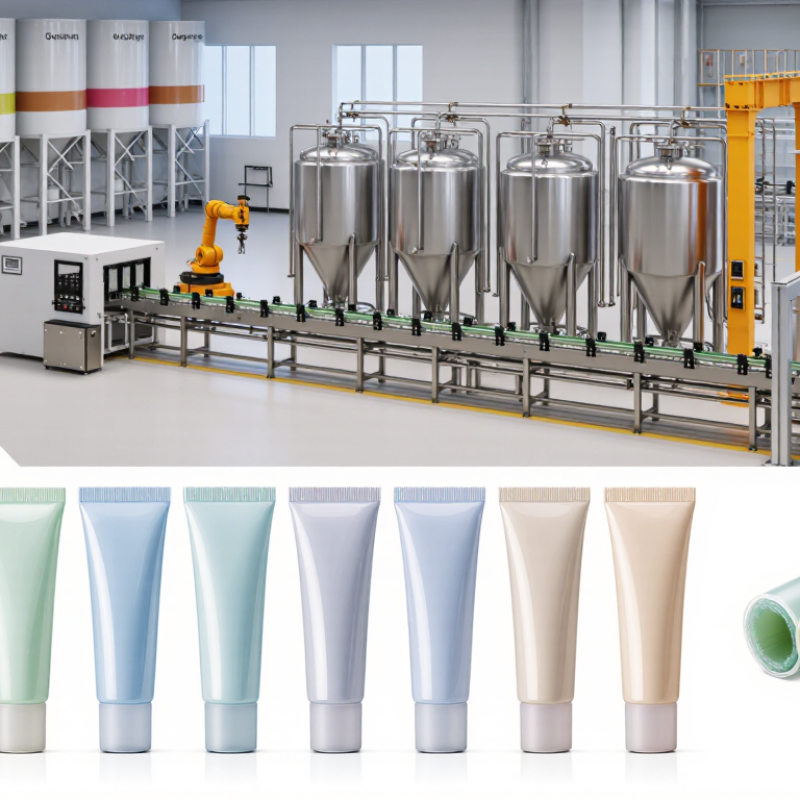
Tube manufacturers blend PCR pellets with virgin resin when performance requires better strength or sealing. The compound passes through an extruder, forming a thin plastic tube. Separate equipment molds the shoulder and nozzle, often under controlled temperature and pressure.
Operators then inspect wall thickness, weight, color, and surface defects. Production teams also test leakage, compression recovery, cap torque, and compatibility with the cosmetic formula.
Not every tube is equally sustainable. Dark pigments may hide recycled content. Heavy decoration can also reduce recyclability. The Ellen MacArthur Foundation has repeatedly emphasized designing packaging for a circular economy, not merely adding recycled material.
In practice, PCR levels depend on feedstock quality, tube structure, and customer performance requirements. A 30% PCR tube may be more stable than a poorly designed 100% PCR tube. That point deserves more honesty.
Manufacturing records, supplier declarations, and third-party testing help verify the claimed PCR percentage and batch consistency.
Still, recycled resin can vary slightly in odor, color, and processing behavior. That remains a real manufacturing challenge in China.



 © Copyright 2020 Tianjin Tanghaidongyang Valve Co., Ltd. All Rights Reserved.