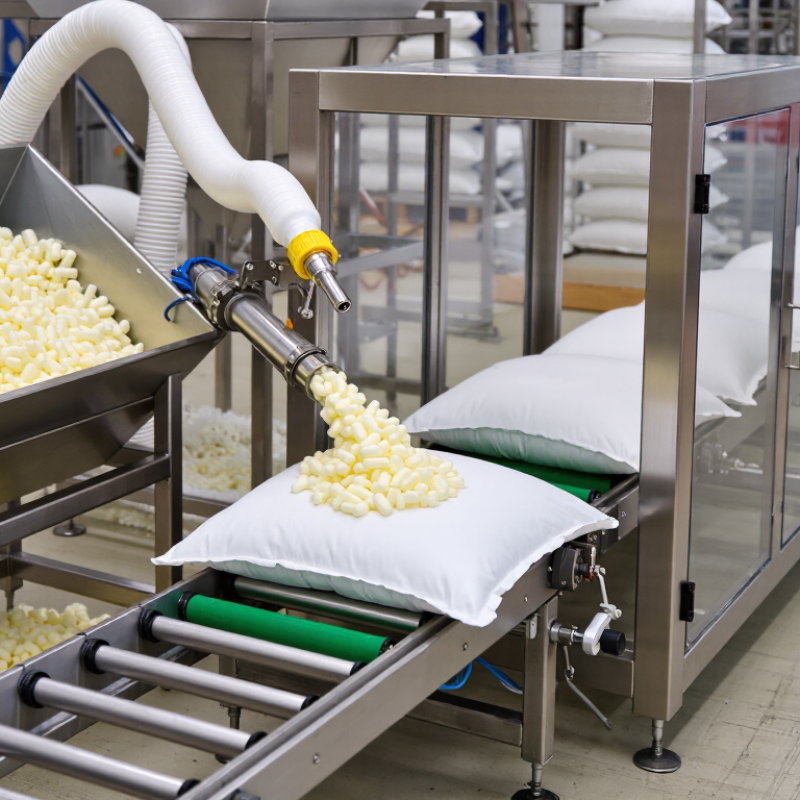
A memory foam core pillow filling machine moves foam material into a pillow cover in measured amounts. The process depends on the foam’s form. Some systems handle small, shredded pieces; others are designed for larger foam inserts. Operators should match the machine setup to the material, rather than assume every filling line works the same way.
The foam is placed in a hopper, where an agitator may help prevent pieces from bridging or clumping. A controlled feed then carries the material toward a filling tube. The operator positions the open pillow cover over the nozzle and starts the fill. Air pressure or a mechanical feeder pushes foam through the tube, while a scale or preset quantity helps control the fill amount.
Watch the cover closely. Foam can catch at the opening, and excessive pressure may strain seams or create uneven corners. After filling, the operator checks the pillow’s weight, shape, and feel, then closes the opening by sewing or another suitable method.
Small adjustments matter.
A slightly uneven fill may be noticeable under a sleeper’s head, even when the pillow looks fine on a worktable. In practice, foam density, piece size, and cover dimensions can all change the settings, so test fills are useful before regular production.



 © Copyright 2020 Tianjin Tanghaidongyang Valve Co., Ltd. All Rights Reserved.