What Is a Mini Fridge Compressor?
A Mini Fridge Compressor is the motor-driven pump that moves refrigerant through a refrigerator’s sealed cooling system. It draws in low-pressure vapor, compresses it, and sends warmer, higher-pressure refrigerant toward the condenser coils. As heat leaves the system, the refrigerant cools and circulates back to absorb heat from inside the cabinet. In plain terms, the compressor helps carry heat out; it does not simply “make cold.” That distinction is useful. Short and clear.
In a compact fridge, the compressor usually sits near the lower rear panel, where a gentle vibration or brief startup click may be noticeable. The exact sound and operating pattern vary by model, room temperature, load, and thermostat setting. A compressor that runs often is not automatically faulty, though persistent loud knocking, poor cooling, or unusual heat deserves attention. Check the manual before moving or troubleshooting the appliance, and allow ventilation around its exterior. Small details matter.
This guide explains how a Mini Fridge Compressor works, how it differs from compressor-free cooling systems, and which everyday signs may point to a problem. It also distinguishes normal operating noise from symptoms that merit qualified repair. One caveat: sound alone cannot diagnose a sealed refrigeration system, and online descriptions can make faults seem simpler than they are. That uncertainty is worth keeping in mind.
Definition and Role of a Mini Fridge Compressor
What Is a Mini Fridge Compressor?
Definition and Role of a Mini Fridge Compressor
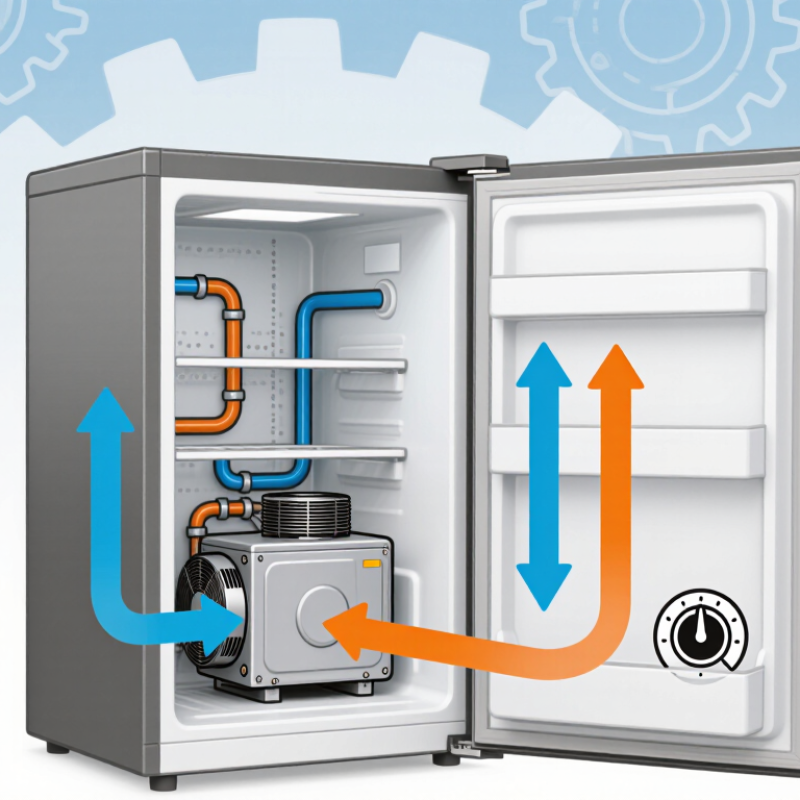
A mini fridge compressor is a motor-driven pump that circulates refrigerant through the cooling system. It draws in low-pressure refrigerant vapor and compresses it, raising its pressure and temperature. The hot vapor then flows through condenser tubing, often near the fridge’s back or outer walls, where it releases heat into the room.
A small sealed loop.
After cooling, the refrigerant passes through a narrow restriction and enters the evaporator inside the cabinet. There, it absorbs heat from the food compartment and returns as vapor. The compressor starts and stops in response to the thermostat. That familiar low hum is part of the cycle.
The International Energy Agency’s 2018 report, The Future of Cooling, projects that energy demand for space cooling could more than triple by 2050. This projection concerns room air conditioning, not mini fridges. The distinction matters, but it highlights why cooling efficiency deserves attention.
In a compact refrigerator, compressor performance also depends on clear airflow around heat-releasing surfaces, an intact door seal, and sensible thermostat settings. A warm rear panel can be normal during operation. Still, a compressor running almost constantly may point to poor ventilation, a worn seal, or a cooling fault. Diagnosis is not always obvious. The compressor is central, but it is only one part of the system.
How a Mini Fridge Compressor Moves Heat
A mini fridge does not make cold; it moves heat from its cabinet into the room. Its compressor is the pump in a sealed refrigeration loop. It draws in cool, low-pressure refrigerant vapor and squeezes it, raising its pressure and temperature. That sounds backward. The hot vapor then travels through condenser tubing, often along the cabinet’s back or sides. As room air passes over this tubing, the refrigerant releases heat and condenses into liquid. The cabinet may feel warm there.
Next, the liquid passes through a narrow restriction, where its pressure drops. It enters the evaporator inside the fridge as a colder mixture, absorbing heat from shelves, food, and trapped air. That heat boils the refrigerant back into vapor, which returns to the compressor; the cycle repeats. Heat has to go somewhere. Leave space around vents and condenser surfaces; blocked airflow makes heat release harder and can reduce cooling. The explanation is tidy, but real performance also depends on door seals, room temperature, loading, and thermostat control. A warm side panel alone does not prove a fault. This cycle is easy to describe, less obvious to observe: the refrigerant stays enclosed while heat crosses the cabinet walls.
What Is a Mini Fridge Compressor? - How a Mini Fridge Compressor Moves Heat
| Part or stage | What happens to the refrigerant | How it moves heat | Typical location or observation |
| Compressor | Draws in low-pressure refrigerant vapor and compresses it into a hotter, higher-pressure vapor. | Uses electrical energy to circulate refrigerant and raise its pressure and temperature; it does not directly create cold. | Usually housed in a sealed unit near the bottom rear of a compressor-style mini fridge. |
| Condenser | Hot, high-pressure vapor releases heat and condenses into a high-pressure liquid. | Transfers heat from the refrigerant to the room air. | Often located at the back or underneath; the surrounding area may feel warm while the fridge runs. |
| Expansion device | Restricts the flow of liquid refrigerant, lowering its pressure and temperature before it enters the evaporator. | Prepares the refrigerant to absorb heat inside the refrigerated compartment. | May be a narrow capillary tube in a compact refrigerator. |
| Evaporator | Low-pressure refrigerant absorbs heat and boils into vapor. | Draws heat out of the interior, cooling the air and stored items. | Often built into or positioned behind the cold compartment’s inner wall. |
| Cycle repeats | Refrigerant vapor returns to the compressor, and the cycle continues while cooling is needed. | Heat is moved from the fridge interior to the surrounding room; the room receives the heat removed from inside plus energy used by the system. | A thermostat or temperature control switches cooling operation on and off to maintain the set temperature. |
In short, the compressor circulates and pressurizes refrigerant so the system can absorb heat inside the mini fridge and release it into the room.
Key Components in the Compression Cycle
A mini fridge compressor drives a repeating cooling cycle. It draws in cool, low-pressure refrigerant vapor and compresses it into a hotter, high-pressure gas. The compressor does not create cold air directly. It moves heat by circulating refrigerant through the system. You may hear a low hum when it runs, followed by silence as the thermostat pauses the cycle. That sound alone does not reveal whether every component is working properly.
The hot gas flows through condenser coils, often hidden behind or beneath the cabinet, where it releases heat into the room and becomes liquid. Next, a narrow capillary tube restricts the flow and drops the refrigerant’s pressure. In the evaporator, usually inside the cooling compartment, the refrigerant absorbs heat and turns back into vapor. The compressor then draws that vapor in again. A small thermostat helps regulate the cycle. It may switch the compressor on when the interior warms and off after cooling. The pattern is not perfectly even; room temperature, door openings, and a worn door seal can all affect run time. Dust around accessible ventilation areas can also limit heat release.
Common Compressor Types in Mini Fridges
Common Compressor Types in Mini Fridges
Many compressor-based mini fridges use a sealed reciprocating compressor. A small piston moves inside a cylinder, compressing refrigerant before it travels through the cooling system. You may hear a brief hum or vibration when the unit starts. These compressors are common because they fit compact cabinets and provide dependable cooling for drinks, snacks, and other suitable items. Their sound and energy use vary with the fridge’s insulation, room temperature, and how often its door is opened.
Some compact models use rotary compressors, which move refrigerant with rotating parts rather than a piston. They can be relatively smooth, but the design is less common in mini fridges, so check the manufacturer’s specifications instead of assuming. Another useful distinction is fixed-speed versus inverter-driven operation. A fixed-speed compressor switches on and off to maintain temperature; an inverter system can adjust its speed as cooling demand changes. Inverter describes the motor control, not a separate compressor mechanism. That detail is easy to miss. A fridge that runs quietly in a cool room may behave differently beside a sunny window, and no compressor type alone guarantees low noise or efficient operation.
What Is a Mini Fridge Compressor? — Common Compressor Types
A compressor circulates refrigerant to move heat out of the fridge. This comparison shows whether each common compressor control type can vary its operating speed.
Fixed-speed compressors cycle on and off at a set speed. Inverter-driven compressors can adjust speed to match cooling demand. The two labels describe control approaches; the exact compressor design depends on the fridge model.
Signs of Compressor Problems and Basic Care
What Is a Mini Fridge Compressor?
A mini fridge compressor circulates refrigerant to carry heat out of the cabinet. When it starts, you may hear a low hum or feel a slight vibration near the back. Some sound is normal. Listen closely. Repeated loud clicking, harsh rattling, or a compressor that runs almost nonstop can signal trouble, but these clues do not prove the compressor has failed.
Check the simple causes first. Leave space around the fridge so warm air can escape, and make sure it stands level on a firm floor. Look for a door gasket that feels loose or has crumbs trapped along its edge. A door that does not seal can make the unit work harder. If the inside stays warm, check the temperature setting and confirm the door closes fully. Small details matter.
For basic care, unplug the fridge before cleaning accessible vents or coils. Follow the care instructions for your model, since coil locations and cleaning methods vary. Wipe spills promptly, and avoid packing food against interior air openings. Keep the rear area clear of dust. Not every household remembers this; I sometimes miss it too. If the fridge still struggles after these checks, or clicks repeatedly without cooling, arrange service with a qualified appliance technician. Do not open sealed refrigerant lines or attempt compressor repairs yourself.



 © Copyright 2020 Tianjin Tanghaidongyang Valve Co., Ltd. All Rights Reserved.