What is an OEM Salt Grinder and Why Should You Choose It?
In the world of kitchen essentials, the "OEM Salt Grinder" stands out as a preferred choice for many chefs and home cooks alike. According to culinary expert Gordon Ramsay, "A great salt grinder is the true key to flavor." This statement captures the importance of an exceptional salt grinder in enhancing culinary experiences.
An OEM Salt Grinder is not just a typical kitchen tool. It is often designed with precision in mind. Quality materials ensure durability and an even grind. This results in a fresher, more flavorful seasoning for every dish. Many consumers appreciate the personalization aspect of OEM products. Tailoring a grinder to match their style can elevate not just functionality but also aesthetics in the kitchen.
However, opting for an OEM Salt Grinder demands careful consideration. Not all brands maintain high manufacturing standards. Research is vital to distinguish between reliable products and those that may not meet expectations. While the allure of customization is strong, one must ensure that quality is not compromised for design. A thoughtful choice can make a significant difference in cooking outcomes.
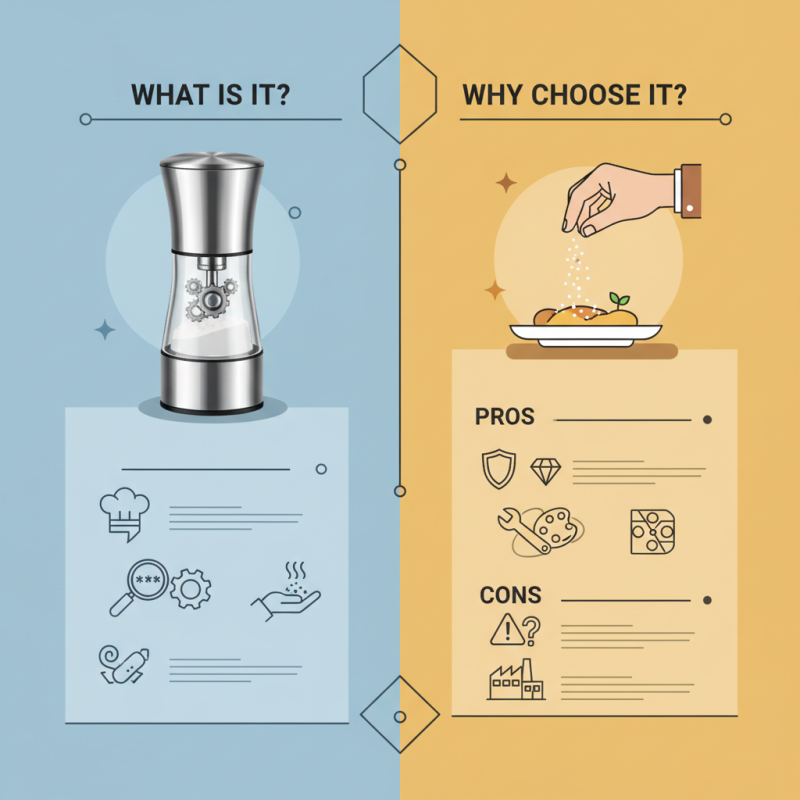
What is an OEM Salt Grinder and Its Functionality in Culinary Use
An OEM salt grinder is a specialized tool for seasoning food. It grinds coarse salt into finer particles, enhancing flavor more effectively. This grinder typically features adjustable settings. Chefs can choose their desired coarseness, allowing for a versatile culinary experience. Using an OEM salt grinder offers practicality in the kitchen, as it provides a fresh touch to meals.
In culinary use, the functionality of an OEM salt grinder goes beyond just salt. It can also grind various spices, making it an essential tool for flavor enthusiasts. The grinding mechanism often ensures even consistency in texture. A consistent salt grain allows for better integration into dishes. Nonetheless, many users mistakenly overlook cleaning the grinder, leading to flavor contamination. Regular maintenance is required for optimal performance.
In essence, the value of an OEM salt grinder lies in both its efficiency and adaptability. Its role in cooking is crucial, yet it’s often taken for granted. A thoughtful choice in tools like this can elevate everyday cooking. However, the decision to choose an OEM grinder should involve careful consideration of quality and usability. Each cook’s preference varies, showing there’s no one-size-fits-all solution.
Key Features of OEM Salt Grinders Compared to Traditional Grinders
OEM salt grinders stand out due to their unique features. Unlike traditional grinders, they often have adjustable coarseness settings. This allows users to customize their salt texture from fine to coarse. Such versatility meets different culinary needs. Whether you’re preparing a delicate fish dish or a hearty stew, this adaptability is essential.
Another critical feature is the durability of OEM grinders. Many are made with high-quality materials. This results in a product that can handle daily use without wear. Traditional models may not offer the same longevity. Moreover, many OEM grinders come with a refillable design. This feature minimizes waste and allows for easy enjoyment of various salt types.
However, some users may find the complex mechanisms challenging. It takes time to learn how to adjust settings properly. This could be frustrating initially. Additionally, while some may prefer the tactile feel of a manual grinder, OEM models provide convenience. Balancing ease of use with personal preference can be quite a task for many.
What is an OEM Salt Grinder and Why Should You Choose It? - Key Features of OEM Salt Grinders Compared to Traditional Grinders
| Feature | OEM Salt Grinder | Traditional Salt Grinder |
| Material Quality | High-grade materials ensuring durability | Variable quality, often prone to wear |
| Grinding Mechanism | Ceramic or stainless steel for consistent grind | Often metal, leading to uneven grind |
| Adjustable Grind Settings | Multiple settings for fine to coarse | Usually limited or none |
| Ease of Use | Ergonomic design for easy handling | Can be awkward, depending on design |
| Refill Process | Easy refill mechanism | Often complex or messy |
| Cost | Moderately priced with long-term savings | Lower initial cost but higher long-term costs |
| Aesthetics | Modern design options | Classic styles available but limited |
Market Trends: Growing Demand for OEM Salt Grinders in the Food Industry
The food industry witnesses a notable shift towards OEM salt grinders. Market research indicates a 15% annual growth rate in demand. This trend is driven by rising consumer interest in gourmet and artisanal food products. Consequently, businesses are seeking custom solutions to meet these preferences.
OEM salt grinders offer versatility and customization. Manufacturers can tailor designs, sizes, and materials. This adaptability attracts food service providers looking for unique branding. A report by FoodTech and Innovations suggests that over 60% of chefs prefer bespoke tools for their kitchens. They believe customized grinders enhance flavor profiles significantly.
However, the push for these grinders isn't without challenges. Quality control can be inconsistent across different suppliers. Maintaining a reliable supply chain is critical but complicated. As the market evolves, ensuring that each grinder meets high standards while adapting to consumer needs will be crucial. Balancing quality and customization might require additional investment and oversight.
Benefits of Choosing OEM Salt Grinders for Home and Professional Use
When it comes to seasoning food, the right tools make all the difference. An OEM salt grinder is designed for both home cooks and professional chefs. These grinders are crafted with precision, ensuring that every grain of salt is perfectly ground. The outcome? Enhanced flavor for your dishes.
Choosing OEM salt grinders offers several benefits. For one, they provide consistent results. Unlike standard grinders, OEM products often use durable materials. They resist wear and tear, ensuring longevity. This means fewer replacements over time, saving money in the end. Many users appreciate the ergonomic designs. They feel comfortable in the hand and are easy to operate, even during busy meal prep.
However, it’s essential to consider the learning curve with an OEM grinder. While they might seem straightforward, finding the perfect grind size takes practice. Not everyone may achieve the ideal texture right away. Reflecting on this can lead to better seasoning techniques. Embracing this challenge can improve culinary skills over time. What seems simple often leads to greater expertise.
Quality Assurance: Understanding OEM Standards in Salt Grinder Production
When discussing OEM salt grinders, quality assurance is paramount. OEM standards ensure that each grinder meets safety, functionality, and durability benchmarks. These standards are often set by industry experts. They help manufacturers create reliable products that consumers can trust. For a salt grinder, the materials should be food-safe and non-corrosive. This is crucial for maintaining the quality of the salt.
Understanding OEM standards can help consumers make informed choices. These standards dictate the manufacturing processes and quality checks that a grinder undergoes. Not all manufacturers adhere to the same level of quality. Some may cut corners to save costs, leading to inferior products. It is vital to research and understand the implications of these decisions. Choose products that follow rigorous OEM protocols for better longevity and performance.
While many products exist in the market, not every grinder is created equal. Some may look appealing but fail under daily use. Investigating the OEM practices of manufacturers can reveal their commitment to quality. A product's design and functionality depend heavily on these aspects. Opt for those that prioritize quality assurance to ensure a satisfactory user experience.



 © Copyright 2020 Tianjin Tanghaidongyang Valve Co., Ltd. All Rights Reserved.