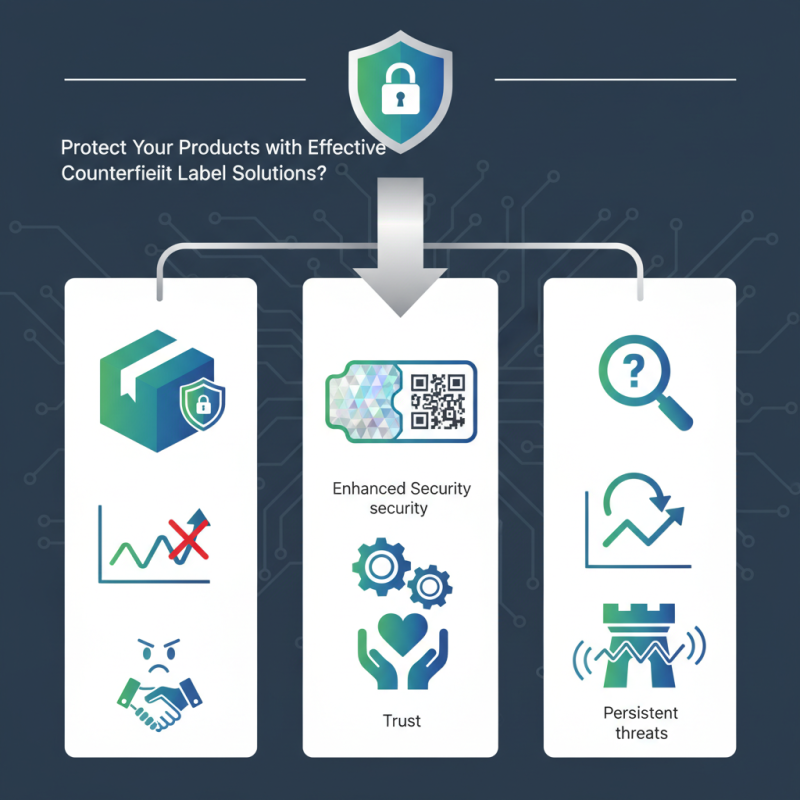
Protect Your Products with Effective Counterfeit Label Solutions?
In today's market, safeguarding your products from counterfeit threats is crucial. Counterfeit Label Protection is an essential strategy for businesses, ensuring the integrity of their brand. The rise of fake products has harmed consumers and reputable companies alike, leading to significant losses and tarnished reputations.
Investing in effective label solutions can help you differentiate your authentic products from imitations. High-quality labels with unique features, such as holograms or QR codes, enhance security. These measures create an added layer of trust between you and your customers.
However, it's important to acknowledge that no solution is foolproof. Counterfeiters are increasingly sophisticated, often finding ways to replicate even the most advanced technologies. Regular reassessment of your protection strategies is necessary. By staying informed and adaptable, you can better defend your products against these persistent threats.
Understanding Counterfeit Labels and Their Impact on Products
Counterfeit labels are a growing concern in many industries. A report by the International Chamber of Commerce estimated that counterfeiting costs the global economy over $600 billion annually. These counterfeit goods can harm brand reputation and customer trust. In fact, about 70% of consumers have purchased counterfeit products unknowingly.
The impact of counterfeit labels extends beyond economics. They compromise product quality and safety. In a recent study, 39% of respondents reported that they encountered safety issues due to counterfeit goods. The lack of regulation allows these products to flood the market. As consumers become more aware, the demand for genuine articles increases. However, the lure of lower prices often blinds buyers to the risks involved.
Businesses need effective solutions to combat this issue. Label authentication technology can verify product genuineness. However, not all companies use such measures, leading to a situation where some products remain vulnerable. Consumer education also plays a crucial role. Many consumers lack knowledge about identifying counterfeit products. Therefore, it’s vital for brands to invest in transparency and informative labeling to aid in consumer decision-making.
Types of Counterfeit Label Solutions Available in the Market
Counterfeit products pose a significant threat to businesses and consumers alike. There are various counterfeit label solutions available in the market to combat this issue. Each type has distinct features and benefits that can enhance product security. One common option is holographic labels. These labels are challenging to replicate, making them a reliable choice for protecting products. Their dynamic visual effects also add an appealing design element.
Another effective solution is the use of RFID tags. These tags can be embedded in product packaging. They provide real-time tracking and authentication, ensuring that each item is genuine. Additionally, tamper-evident seals serve as a straightforward method of indicating if a product has been altered. Observing whether seals remain intact can instantly inform consumers about the product's integrity.
While these solutions offer protection, they are not foolproof. Some counterfeiters constantly adapt and find ways around security measures. Regularly reviewing and upgrading label technologies is essential for staying ahead. Yet, many companies still hesitate to invest in these advanced solutions. This reflects an ongoing challenge in balancing cost with the need for effective security.
Types of Counterfeit Label Solutions Available in the Market
How to Choose the Right Counterfeit Label Solution for Your Products
When selecting a counterfeit label solution, it’s crucial to consider several factors. Not all solutions are equally effective. Start with understanding your product’s needs. Different products may require unique labeling techniques. Identify what works best for your items.
Tips for Choosing the Right Solution:
- Assess the risk level of counterfeiting for your products.
- Look for solutions that can integrate easily into your production process.
- Ensure that the labels can resist tampering or alteration.
Reliability is key. You want a solution that not only deters counterfeiters but also provides clear indicators of authenticity. Consider solutions that offer verification features, such as QR codes or holograms. These technologies can enhance transparency and trust with your customers.
Evaluate past cases of counterfeit attempts in your industry. Reflect on what worked and what did not. This can guide your decision-making.
Adapt your labeling strategy based on actual threats. No single solution will fit all situations perfectly. Your approach may need adjustments over time.
Implementing Anti-Counterfeit Strategies in Packaging Design
In today’s market, effective anti-counterfeit strategies in packaging design are more critical than ever. Brands face the threat of counterfeit goods that can harm reputation and consumer trust. Implementing robust labeling solutions is one way to deter counterfeiters. A well-designed package can serve as a first line of defense. It not only protects the product but also communicates authenticity.
One effective approach is to incorporate unique elements into packaging design. Consider using holograms, QR codes, or RFID tags. These features can help customers verify product authenticity quickly. However, the design process must focus on user-friendliness. Too often, brands overlook the consumer experience. Complex codes or hard-to-read labels can frustrate buyers. Ensuring clarity is just as important as security.
It’s crucial to remain vigilant about evolving counterfeiting tactics. Regularly updating designs can keep your products ahead of counterfeiters. Staying informed about market trends and technological advancements plays a significant role. While innovations are available, not all are suitable for every brand. Careful evaluation of options is necessary for an effective strategy. The journey to effective anti-counterfeit measures is ongoing and requires constant reflection.
Case Studies: Successful Use of Counterfeit Label Solutions
Counterfeit label solutions are essential in today's market. Many companies face challenges due to counterfeit products. These issues can damage brand reputation and lead to financial losses. Case studies show that effective labeling can reduce these risks.
One company used advanced holograms on their products. This small change increased customer trust. Consumers felt assured about the authenticity of their purchases. Another case involved using QR codes linked to a secure database. Customers could verify product origins quickly. This approach led to a significant drop in counterfeit incidents.
Yet, not every solution is perfect. Some labels can be costly to implement. Companies must balance effectiveness with affordability. Investing in technology is crucial, but not always feasible for smaller businesses. Reflection is needed on how to make these solutions accessible while maintaining quality.
Protect Your Products with Effective Counterfeit Label Solutions
| Industry | Counterfeit Label Solution Used | Outcome | Percentage Reduction in Counterfeits | Year Implemented |
| Pharmaceutical | Holographic Labels | Significant drop in fake medications | 85% | 2021 |
| Luxury Goods | QR Code Authentication | Higher consumer trust and sales | 70% | 2020 |
| Food & Beverage | Tamper-Evident Labels | Enhanced product safety | 60% | 2019 |
| Electronics | RFID Tracking | Improved inventory control | 75% | 2022 |
| Cosmetics | Specialty Ink | Reduced fakes in market | 90% | 2023 |



 © Copyright 2020 Tianjin Tanghaidongyang Valve Co., Ltd. All Rights Reserved.