Certificates

Certificates

Why Choose Rapid Injection Molding for Global Production?

Why Choose Rapid Injection Molding for Global Production?

Global production demands more than fast parts. It requires repeatable quality, predictable costs, and practical communication across time zones. Rapid Injection Molding helps manufacturers move from validated designs to production-ready components without waiting through unnecessarily long tooling cycles.

John Bozzelli, founder of Injection Mold Consulting, has often stressed, “Injection molding is a science, not an art.” That principle matters when a product must perform consistently in different factories and markets. Engineers can review wall thickness, draft angles, material behavior, cooling performance, and mold-flow risks before production begins. These checks reduce avoidable changes later.

Speed is the visible advantage. Control is the deeper one.

A rapid mold can support bridge production, pilot launches, replacement parts, and regional supply planning. It may also reduce inventory pressure by bringing smaller production runs online sooner. However, speed does not solve every manufacturing problem. Highly complex geometries, demanding surface finishes, and very large volumes may require conventional tooling instead.

That limitation deserves honesty. A faster process can still create expensive mistakes if the design is immature. My experience with production planning suggests that early engineering conversations often save more time than rushed manufacturing. Suppliers should document inspection methods, material specifications, and tolerance expectations clearly. They should also prove repeatability with sample parts and measured data.

Rapid Injection Molding is not simply a shortcut. Used carefully, it becomes a disciplined bridge between product development and dependable global production.

Why Choose Rapid Injection Molding for Global Production?

What Is Rapid Injection Molding for Global Production?

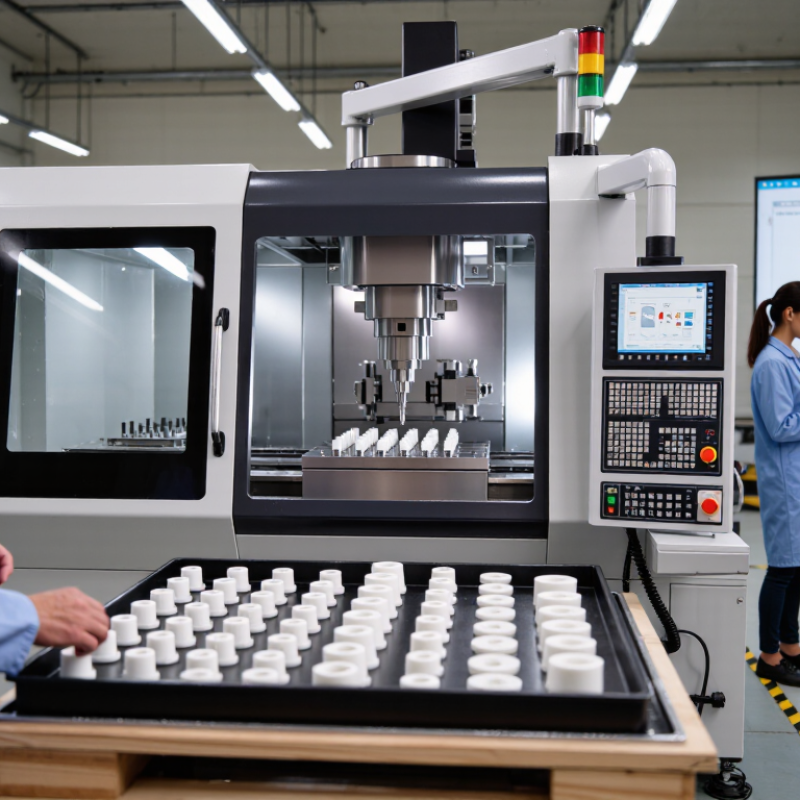
Rapid injection molding is a manufacturing method for producing usable plastic parts quickly. It combines computer-aided design, fast tooling, and controlled injection cycles. Unlike ordinary prototyping, it can deliver hundreds or thousands of near-production parts before full-scale tooling begins.

The process usually starts with a digital model and a manufacturability review. Engineers check wall thickness, draft angles, ribs, gates, and shrinkage risks. A simplified aluminum or soft-steel mold then supports short production runs. Parts may arrive within days or weeks, depending on geometry and finishing requirements. The speed is useful for regional testing, medical-device development, consumer products, and replacement components. It is not magic. Complex slides, tight tolerances, and difficult materials can quickly reduce the advantage.

Global production adds another layer. A mold must produce consistent parts across approved facilities, temperatures, and inspection systems. Material certificates, first-article checks, and dimensional reports become essential. According to Grand View Research, the global injection molded plastics market was valued at about 171.7 billion dollars in 2023. Fortune Business Insights also projects continued market growth through the decade. These figures show strong demand, but they do not guarantee successful launches. That assumption needs checking. In practice, teams should compare tooling cost, shipping distance, local capacity, and quality-control maturity. A rapid mold may shorten the first delivery, yet a poorly documented process can create expensive regional variation.

How the Rapid Injection Molding Process Works

Rapid injection molding turns a digital part design into usable plastic components quickly. The process begins with a 3D CAD model and a review of walls, ribs, holes, and draft angles. Engineers check whether molten resin can fill the cavity without creating weak spots or visible flow marks. They also select steel or aluminum tooling based on quantity, geometry, and expected service life. Small design changes here can prevent expensive rework later. This stage looks simple. It is not.

After the mold is machined, it enters an injection molding machine. Plastic pellets are heated until they become a controlled melt. A screw pushes the material into the closed cavity under measured pressure. Cooling channels remove heat while the part takes shape. The mold opens, and ejector pins release the component. Technicians inspect dimensions, surface finish, flash, and warpage. Process data matters because a part can look correct and still fail a fit test.

For global production, teams can repeat this workflow across approved tools, materials, and inspection standards. Sample parts are tested before larger runs begin. Results may lead to changes in gate location, cooling time, or injection speed. The first trial is rarely perfect. That reality matters. In practice, rapid molding rewards clear drawings, realistic tolerances, and honest communication about volume. It can shorten development, but it cannot replace engineering judgment. A rushed mold may create faster defects. Careful iteration is usually the safer path.

Key Advantages for International Manufacturing

Rapid injection molding helps international manufacturers move from validated designs to production parts with less waiting. In my experience, fast tooling is most valuable when product teams need physical evidence, not another screen review. A mold can support functional samples, fit checks, and early customer feedback within a compressed development cycle. That speed matters when engineering teams work across different time zones.

The international advantage extends beyond faster sampling. Manufacturers can compare regional suppliers using consistent drawings, material specifications, and inspection criteria. They can also adjust production volumes without committing immediately to expensive long-term tooling. Smaller initial runs reduce inventory exposure and reveal demand differences between markets. Useful flexibility. However, rapid tooling is not automatically suitable for every geometry or resin. Thin walls, complex textures, and tight tolerances may require additional engineering reviews. I have seen schedules suffer when teams treat a quick mold as a shortcut around design validation.

Reliable global production depends on clear communication and measurable quality controls. Shared 3D files, documented revisions, first-article inspections, and traceable material records help reduce misunderstandings. Local packaging and shipping requirements should be reviewed before parts leave the factory. A short video call can expose an assembly issue that drawings miss. Still, remote collaboration has weaknesses. Color perception, surface expectations, and measurement methods may differ between facilities. Independent inspections can add confidence, although they also add time and cost. Teams should balance speed with evidence, especially when one molding project serves several international markets.

Why Choose Rapid Injection Molding for Global Production?

Rapid injection molding can shorten the tooling phase, helping international manufacturing teams validate designs and begin production sooner. The chart shows commonly reported industry lead-time ranges; actual timing varies by part complexity, material, tool size, and validation requirements.

Key advantage: Rapid tooling is commonly completed in approximately 5–15 days, compared with about 30–60 days for conventional tooling. This shorter cycle can support faster sampling, regional production transfers, and more responsive global supply planning.

Material, Quality, and Design Considerations

Rapid injection molding helps global teams test and produce parts without long tooling cycles. Material selection affects strength, surface feel, heat resistance, and shipping performance. A food-contact enclosure may need a verified grade with traceable documentation. An outdoor housing requires UV stability and controlled moisture absorption. I have seen teams choose low-cost resin, then discover warping near screw bosses. That mistake delayed assembly. Material data must match the actual environment, not only the drawing.

Quality begins with measurable requirements. Define critical dimensions, cosmetic zones, tolerances, and inspection methods before tooling starts. Ask for first-article reports, material certificates, and sample retention. Mold-flow reviews can reveal thin walls, trapped air, or uneven cooling. Still, simulation is not reality. Gate marks, knit lines, and slight color variation may appear later. A practical approval sample prevents arguments across borders. Global output also needs consistent process settings, not merely identical molds. Small deviations can hide across time zones. Document them.

Tips: Keep wall thickness as uniform as practical, and add draft for easier release. Place ribs beside visible surfaces when sink marks matter. Define appearance limits with photographs. Confirm resin availability near each production region. Recheck packaging compression; a perfect part can arrive scratched. One more review helps.

When to Choose Rapid Injection Molding for Global Supply Chains

Rapid injection molding becomes valuable when a global supply chain needs production parts before conventional tooling is ready. It fits pilot launches, regional demand tests, replacement programs, and bridge production. The decision is strongest when volumes are moderate and designs may still change. In practice, teams can receive molded samples within weeks, inspect fit, and adjust before committing to hardened tooling. That feedback matters. A drawing may look complete, yet a thin rib can warp after cooling.

Choose this route when several markets need the same part, but demand remains uncertain. A controlled mold can support early orders while forecasting improves. Request documented resin data, dimensional reports, process records, and sample approval criteria. These records help engineering and purchasing teams compare output across locations. They also expose weak assumptions. A part that passes a local fit check may fail after long transport, temperature changes, or different assembly methods. Plan packaging, inspection frequency, and spare components before shipment begins.

Rapid tooling is less suitable for very high volumes, demanding cosmetic surfaces, or designs requiring long mold life. Tooling cost may look attractive, but repeated air freight can erase the saving. We have seen schedules slip when teams approve samples too quickly. Leave time for gate changes, color matching, and a second validation round. The decision should account for landed cost, expected volume, quality risk, and delay exposure. Speed alone is not enough.

Why Choose Rapid Injection Molding for Global Production? - When to Choose Rapid Injection Molding for Global Supply Chains
Decision Dimension Rapid Injection Molding Conventional Production Molding Global Supply-Chain Implication When Rapid Molding Is the Better Choice
Typical Tooling Lead Time Approximately 5–15 business days for relatively simple, low-cavity tools after design approval. Commonly about 4–12 weeks, depending on tool complexity, cavity count, steel grade, surface finish, and validation requirements. Shorter tooling cycles can support earlier regional launches and reduce the time products spend waiting for production capacity. Choose rapid When launch timing, customer sampling, or a design freeze is time-sensitive.
Best-Fit Production Volume Generally suited to prototypes, pilot runs, bridge production, and low-to-medium volumes, often from several dozen to approximately 10,000 parts per design. Usually more economical for stable, repeat production at medium-to-high volumes, especially when the tool will run for many cycles. Allows demand to be tested before committing to large inventory positions or long-term tooling investments. Choose rapid When demand is uncertain or the product is moving through early commercialization.
Initial Tooling Investment Typically lower because tools may use aluminum or simplified steel construction, fewer cavities, and reduced secondary features. Often higher because production tools may require hardened steel, multiple cavities, complex slides, automated features, and extended validation. Lower upfront exposure helps companies distribute tooling investment across multiple regions or product variants. Choose rapid When cash flow, product validation, or portfolio flexibility is more important than the lowest long-run piece cost.
Per-Part Economics Usually competitive for smaller batches, but the unit cost can be higher because of lower automation, fewer cavities, or less optimized cycle times. Often delivers a lower unit cost at high volume because tooling, machine time, and labor are spread across more parts. Supports a staged cost strategy: validate locally or regionally first, then transfer mature demand to high-volume production. Choose rapid When the expected quantity does not justify a high-cavity production tool.
Design Iteration Speed Fast tool modification or replacement may enable multiple design iterations before final production tooling is commissioned. Design changes can be expensive and disruptive after a complex production tool has been completed or qualified. Reduces the risk of distributing a design defect across several countries, warehouses, or customer programs. Choose rapid When fit, function, assembly, or cosmetic requirements are still being verified.
Material and Finish Options Can support many commonly molded thermoplastics and finishes, subject to tool design, resin availability, and process capability. Generally offers the broadest range of engineered resins, inserts, textures, coatings, and automated secondary operations. Material standardization should be confirmed across regions to avoid differences in resin grade, color, shrinkage, or regulatory status. Choose rapid When the selected resin and finish are already defined and do not require highly specialized processing.
Supply-Chain Risk Enables shorter replenishment cycles, smaller inventory commitments, and the possibility of producing closer to the point of demand. May provide better high-volume efficiency but can create greater dependence on long production schedules, centralized tooling, or ocean freight. Useful for reducing exposure to demand volatility, long transport routes, customs delays, and single-region capacity constraints. Choose rapid When resilience and responsiveness are higher priorities than maximum production scale.
Inventory Strategy Supports make-to-order, postponement, pilot inventory, and smaller regional safety stocks. Often favors longer production campaigns and larger economic order quantities. Can reduce obsolete inventory when forecasts are uncertain or products have short life cycles. Choose rapid When product demand, configuration, or regional requirements change frequently.
Quality and Validation Requirements Appropriate for functional samples and controlled pilot production when inspection, material traceability, and process documentation are defined. Better suited to highly formalized, repeatable validation programs requiring extensive process capability data and long-term tool durability. Quality documentation must remain consistent across sites, especially for regulated, safety-critical, or customer-audited products. Choose rapid For non-regulated or appropriately controlled products where rapid learning is essential.
Tool Life and Long-Term Repeatability Tool life can be sufficient for short and medium runs, but it depends strongly on tool material, resin abrasiveness, geometry, and maintenance. Production tools are normally engineered for higher cycle counts and extended repeatability under sustained operation. Long-life tooling is preferable when the same part will be produced continuously for several years across multiple demand cycles. Choose conventional When forecast volume and product specifications are stable for the long term.
Recommended Global Use Case New product introduction, regional market testing, spare parts, bridge production, engineering validation, and demand-sensitive products. Stable, high-volume products with predictable demand, mature designs, and well-established quality and logistics processes. A hybrid approach can be effective: use rapid molding for launch and risk reduction, then transition mature demand to optimized production tooling. Choose rapid When speed, flexibility, and supply continuity outweigh the advantages of maximum scale.

Data note: The lead times, volume ranges, and cost relationships shown are indicative industry ranges rather than guaranteed specifications. Actual results vary with part size, geometry, resin, surface finish, tolerances, tooling design, validation requirements, production location, and shipping conditions. A detailed quotation and manufacturability review should be completed before selecting a global production model.