
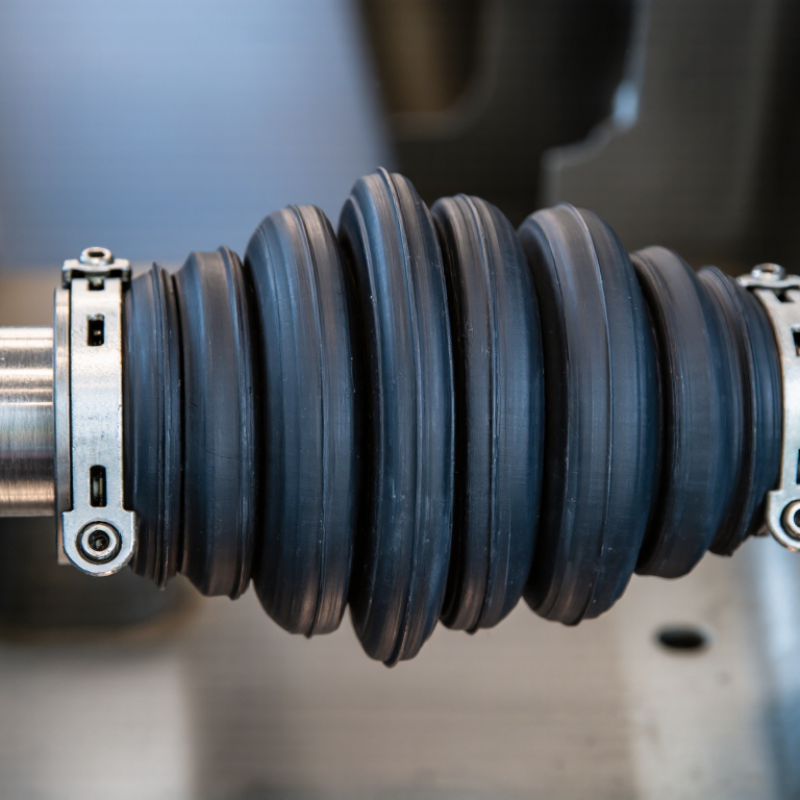
A rubber dust boot is a flexible seal that protects moving joints from dirt, water, and road grit. It also helps retain lubricating grease around the joint. During inspection, look for splits, pinholes, swelling, or hardened rubber. Pay close attention to folds and clamping edges, where damage often begins. A healthy boot should remain flexible and firmly seated. Short checks matter.
In practice, a clean outer surface can hide internal wear. Wipe the boot with a damp cloth, then inspect it under bright light. Do not use sharp tools to test the rubber. If grease appears outside the boot, contamination may already be reaching the joint. A loose clamp, unusual clicking, or restricted movement deserves professional assessment.
Replace the boot when damage is visible, rather than waiting for noise or complete joint failure. Use the correct replacement size, clean the mating surfaces, and apply compatible grease. Follow the equipment service manual for tightening values. Guessing here can create a second problem.
Tips: Inspect boots during routine servicing and after driving through mud, deep water, or gravel. Keep solvents, excessive heat, and petroleum products away from the rubber unless approved. Record the inspection date and any small changes. I sometimes find that photographs reveal cracks more clearly than memory. If replacement requires pressing or dismantling a loaded assembly, use trained equipment and proper support.


 © Copyright 2020 Tianjin Tanghaidongyang Valve Co., Ltd. All Rights Reserved.