| 1 | Electrical compatibility | Verify rated voltage, frequency, plug format, socket dimensions, and wiring configuration. | Must match local system
Common household systems include approximately 100–127 V or 220–240 V, with 50 Hz or 60 Hz frequency depending on the market. | A mismatch can cause overheating, malfunction, or permanent damage to connected equipment. | Confirm the destination country, circuit type, and wall-box dimensions before ordering. |
| 2 | Load capacity and protection | Check continuous current rating, maximum resistive load, motor-load limitations, and protection against overload or overtemperature. | Use within the rated load
Do not assume that a smart socket rated for lighting is suitable for heaters, pumps, or other high-inrush appliances. | Motors and heating appliances may draw higher starting or sustained current than ordinary lamps. | Compare the socket rating with the appliance nameplate and local electrical-code requirements. |
| 3 | Grounding and wiring requirements | Determine whether the product requires a protective earth/ground wire and whether it supports neutral-free installation. | Confirm before installation
Many hardwired smart sockets require line, neutral, and ground conductors; neutral-free models may require a compatible bypass or minimum load. | Incorrect wiring can create shock, fire, or unreliable switching hazards. | Have a qualified electrician inspect the circuit, especially in older buildings or multi-standard projects. |
| 4 | Safety shutter and touch protection | Look for shutters or equivalent protection that reduce access to live contacts, plus secure terminal covers and insulated construction. | Strongly recommended
Child-protection features should not prevent proper insertion of compliant plugs. | Shutters help reduce accidental contact with energized parts, particularly in homes with children. | Check the applicable national socket standard and confirm that the protection mechanism is tested as part of the complete product. |
| 5 | Fire and surge protection | Review enclosure material, terminal quality, thermal cutoff, short-circuit protection, and any stated surge-protection capability. | Verify the specification
Surge protection is not the same as circuit-breaker protection and may have a limited energy rating. | These features can reduce risk from abnormal heat, voltage events, or wiring faults, but they do not replace a properly protected circuit. | Ask for test evidence, protection limits, and required upstream breakers rather than relying only on marketing descriptions. |
| 6 | Environmental protection | Check the IP rating, operating temperature, humidity range, UV resistance, and suitability for indoor or damp locations. | Match the installation environment
Indoor wall sockets are not automatically suitable for bathrooms, kitchens, garages, or outdoor areas. | Moisture, condensation, dust, and temperature extremes can degrade insulation and electronics. | For wet or outdoor locations, use a product specifically certified and installed for that environment with appropriate residual-current protection. |
| 7 | Certification and market access | Identify the safety and electromagnetic-compatibility requirements for the destination market and verify the exact model number on certificates or test reports. | Certification must be market-specific
Examples may include CE-related EU obligations, UKCA requirements where applicable, UL or CSA certification pathways in North America, and national schemes in other markets. | A logo alone may not prove that the precise socket version meets local legal or safety requirements. | Request a declaration of conformity, accredited laboratory reports, certification scope, and applicable local registration or marking details. |
| 8 | Wireless communication and cybersecurity | Evaluate Wi-Fi, Bluetooth, Zigbee, or other protocol support, frequency band, hub dependency, encryption, authentication, and firmware-update policy. | Plan for long-term support
Prefer unique credentials, encrypted communication, secure updates, and a documented process for vulnerability handling. | Connectivity problems affect control, while weak security can expose the home network or device data. | Confirm regional radio requirements, router compatibility, cloud dependency, offline operation, and the promised software-support period. |
| 9 | Installation and maintenance | Assess wall-box depth, terminal size, clearance, mounting method, wiring labels, reset access, and serviceability. | Installation must be practical and safe
Power should be isolated at the breaker, absence of voltage verified, and all terminals tightened to the specified torque by a competent installer. | A crowded box or loose connection can cause heat buildup, nuisance tripping, and premature failure. | Obtain the installation manual in the required language and allow space for the device, conductors, and heat dissipation. |
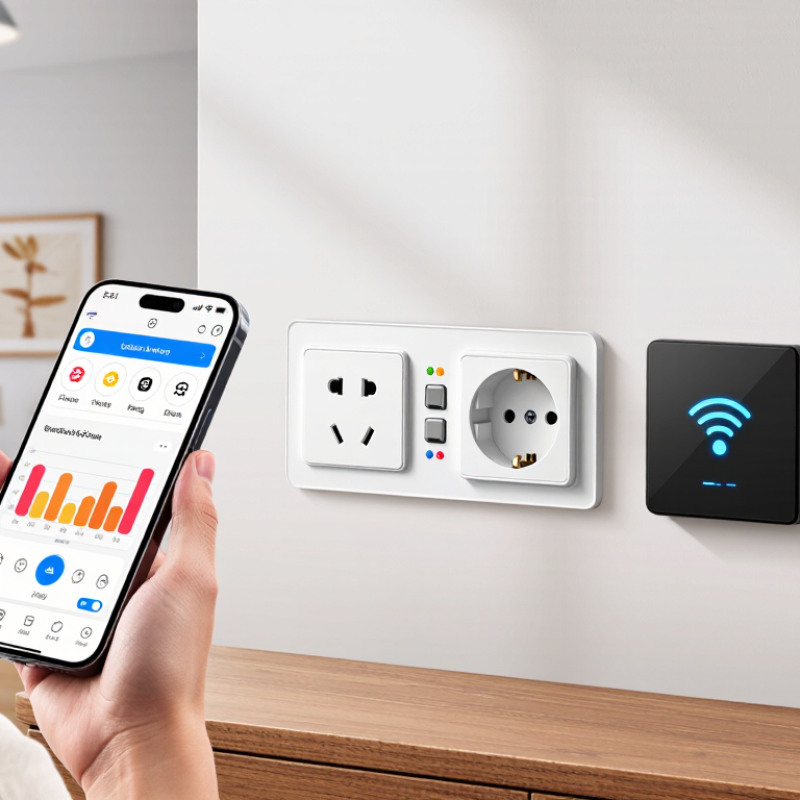
| 10 | Energy monitoring, warranty, and documentation | Check measurement accuracy claims, data export, local data handling, warranty period, spare availability, manuals, and technical support. | Compare total ownership cost
Energy readings are for monitoring unless the product is explicitly approved for billing-grade measurement. | Reliable documentation and support are important for multi-country deployment, troubleshooting, and replacement planning. | Request calibration information, software terms, warranty exclusions, compliance documents, and end-of-life or replacement policies. |



 © Copyright 2020 Tianjin Tanghaidongyang Valve Co., Ltd. All Rights Reserved.