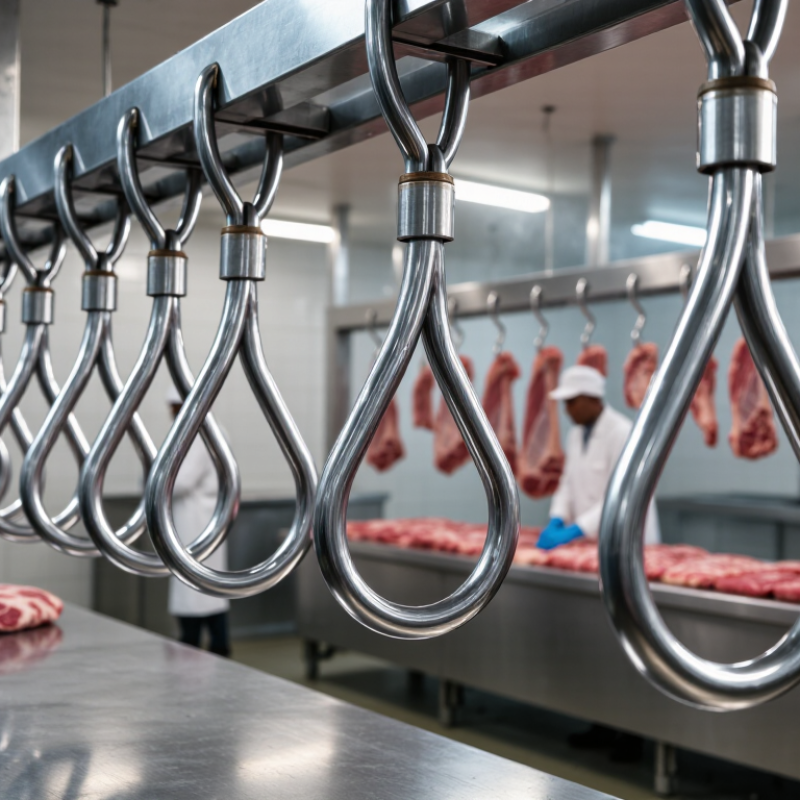
Selecting stainless steel meat hooks starts with matching their design to the job. Check the documented steel grade, rated load, hook opening, and weld quality. A hook should hold the cut securely without sharp burrs or narrow crevices that trap residue. In damp chill rooms, inspect for pitting and rust, especially near joints. Stainless steel resists corrosion; it is not damage-proof. That distinction matters.
Maintenance is practical, but easy to rush. Clean hooks after use, then sanitize food-contact surfaces according to the site’s approved procedure.
The FDA Food Code 2022 requires food-contact surfaces to be cleaned and sanitized before use.
CDC’s 2011 foodborne-illness estimates report about 48 million U.S. illnesses, 128,000 hospitalizations, and 3,000 deaths annually; those figures cover foodborne illness broadly, not meat hooks specifically. They underline why small cleaning steps deserve attention.
Inspect each hook for bent tips, cracked welds, or rough surfaces, and remove damaged pieces from service. Keep hooks dry between uses where possible. A quick visual check helps, though it cannot replace proper cleaning records or hands-on inspection.



 © Copyright 2020 Tianjin Tanghaidongyang Valve Co., Ltd. All Rights Reserved.