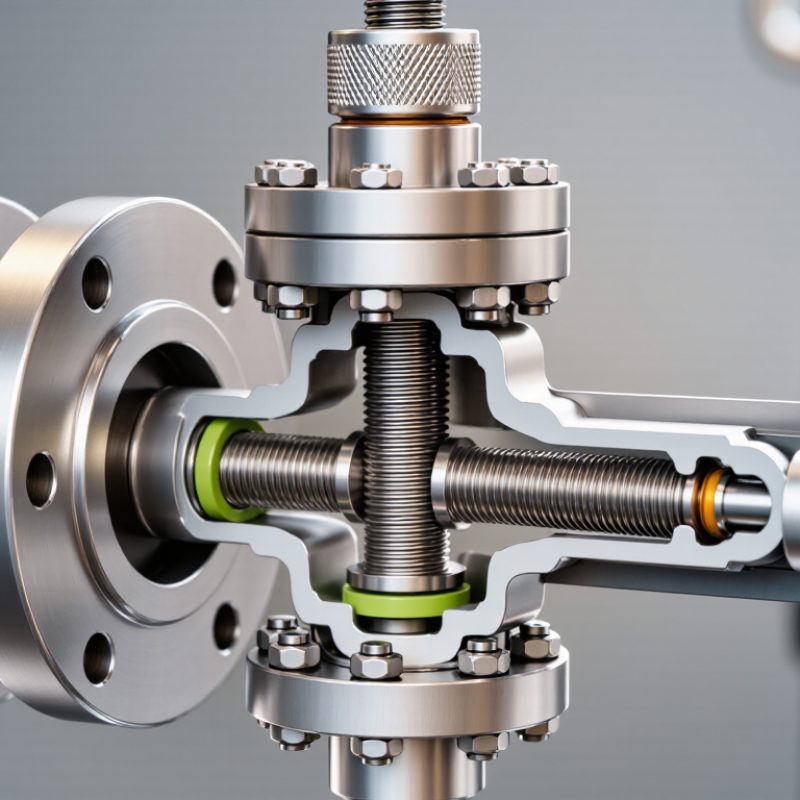
| Definition | A corrosion-resistant mechanical shaft that transfers motion from the actuator or handwheel to the valve closure element. | The stem does not normally throttle fluid directly; it positions the ball, disc, plug, or gate that changes the flow passage. |
| Primary stainless steel grades | 304 stainless steel for general corrosion resistance; 316 stainless steel for improved resistance to chlorides and many process chemicals; precipitation-hardened grades such as 17-4 PH for higher strength. | The selected grade influences service life, resistance to corrosion-related sticking, and the stem’s ability to transmit operating torque or thrust. |
| Common valve movements | Quarter-turn rotation, typically about 90°; linear travel for gate, globe, and diaphragm valve designs. | Rotational movement turns a ball, disc, or plug, while linear movement raises, lowers, or repositions the closure element. |
| Flow-control positions | Fully open, partially open, or fully closed. Quarter-turn valves generally reach full travel in approximately 90°; linear-valve travel depends on valve size and design. | A larger effective opening usually permits greater flow, while a smaller opening increases resistance and reduces flow. The exact relationship is determined by valve geometry and pressure conditions. |
| Stem arrangement | Rising stem: the stem moves axially as the valve opens. Non-rising stem: the stem rotates or moves internally without a significant external rise. | The arrangement determines how valve position is indicated, how much installation clearance is needed, and how motion reaches the closure element. |
| Actuation methods | Manual handwheel or lever, electric actuator, pneumatic actuator, or hydraulic actuator. | The actuator supplies rotational torque or linear thrust, allowing the stem to position the closure element accurately and repeatedly. |
| Stem sealing methods | Compressed packing, O-rings, or a metal bellows seal. Packing materials may include PTFE, graphite, or other process-compatible compounds. | The seal prevents fluid from escaping along the stem. Seal selection must match temperature, pressure, fluid chemistry, and emissions requirements. |
| Stem surface condition | Machined, polished, passivated, or hardened surfaces are commonly used, depending on the valve design and service conditions. | A smooth, clean surface reduces seal wear, friction, leakage risk, and the possibility of deposit buildup on moving parts. |
| Torque and thrust transmission | Torque is primarily required for rotary valves; thrust is primarily required for linear valves. Required values vary with valve size, pressure, temperature, seal friction, and differential pressure. | Adequate mechanical strength prevents twisting, bending, or failure that could leave the valve partially open, closed, or difficult to operate. |
| Typical service temperatures | The stainless stem may tolerate a wide temperature range, but the usable operating range is normally limited by the valve seats, packing, seals, and actuator. | Temperature changes can alter seal elasticity, lubrication, material strength, and the torque needed to move the valve. |
| Corrosion resistance | Good resistance in many water, air, steam, food-processing, and chemical environments; chloride-rich or highly aggressive media require careful grade and design selection. | Reduced corrosion helps maintain stem dimensions and surface quality, supporting reliable movement and long-term sealing performance. |
| Flow capacity indicator | Valve flow capacity is commonly expressed using a flow coefficient such as Cv or Kv, which is specified for the complete valve rather than the stem alone. | Stem position changes the valve opening, while the valve’s internal passage, pressure differential, and fluid properties determine the resulting flow rate. |
| Main maintenance checks | Inspect for leakage, corrosion, excessive operating force, damaged threads, packing wear, misalignment, and incomplete travel. | Correct maintenance keeps the stem moving smoothly, preserves shutoff capability, and helps the valve reach its intended flow position. |


 © Copyright 2020 Tianjin Tanghaidongyang Valve Co., Ltd. All Rights Reserved.