| LED Light-Emitting Diodes | Convert electrical energy into visible light. | Common color temperatures: 2700–6500 K; typical service life: approximately 50,000 hours when properly operated. | Current passes through semiconductor junctions, causing electrons and holes to recombine and release photons. | Higher-quality LEDs generally provide more consistent brightness, color stability, and thermal performance. |
| LED Circuit Board | Holds and electrically connects the LED packages. | Usually a printed circuit board with copper conductors and heat-transfer features; aluminum-core boards may improve thermal dissipation. | The circuit distributes controlled current to groups of LEDs arranged in series, parallel, or a combination of both. | Board layout affects uniformity, electrical reliability, and heat management. |
| LED Driver | Regulates power supplied to the LEDs. | Converts building AC power, commonly 100–277 V AC, into regulated low-voltage DC; efficiency often exceeds 85%. | The driver controls current and voltage to prevent LED overload caused by input fluctuations or temperature changes. | A constant-current design is commonly used because LED brightness is strongly affected by current. |
| Diffuser or Light Guide Plate | Distributes light evenly across the panel surface and reduces visible hotspots. | Typically made from optical acrylic or polycarbonate; may use micro-prism, frosted, or etched patterns. | Optical textures scatter or redirect light from the LED array so the illuminated surface appears uniform. | Optical efficiency, glare control, and cleaning resistance depend on the diffuser material and surface design. |
| Reflective Backing | Redirects light toward the visible face of the panel. | Often uses a high-reflectance white coating or reflective sheet positioned behind the light guide. | Light traveling toward the rear of the panel is reflected forward, improving useful light output. | Damage, dust, or discoloration can reduce optical efficiency and create uneven illumination. |
| Aluminum Frame or Housing | Provides structural support and helps remove heat from internal components. | Lightweight aluminum is commonly used because it combines rigidity with good thermal conductivity. | Heat produced by the LEDs and driver is transferred to the housing and released into the surrounding air. | The housing should remain unobstructed so natural or assisted airflow can dissipate heat effectively. |
| Thermal Management System | Maintains LED and driver temperatures within safe operating limits. | May include aluminum heat spreaders, thermal interface materials, ventilation openings, or passive heat sinks. | Heat travels from the LED junction through the circuit board and housing before being released to the room. | Lower operating temperatures generally support longer life and slower lumen depreciation. |
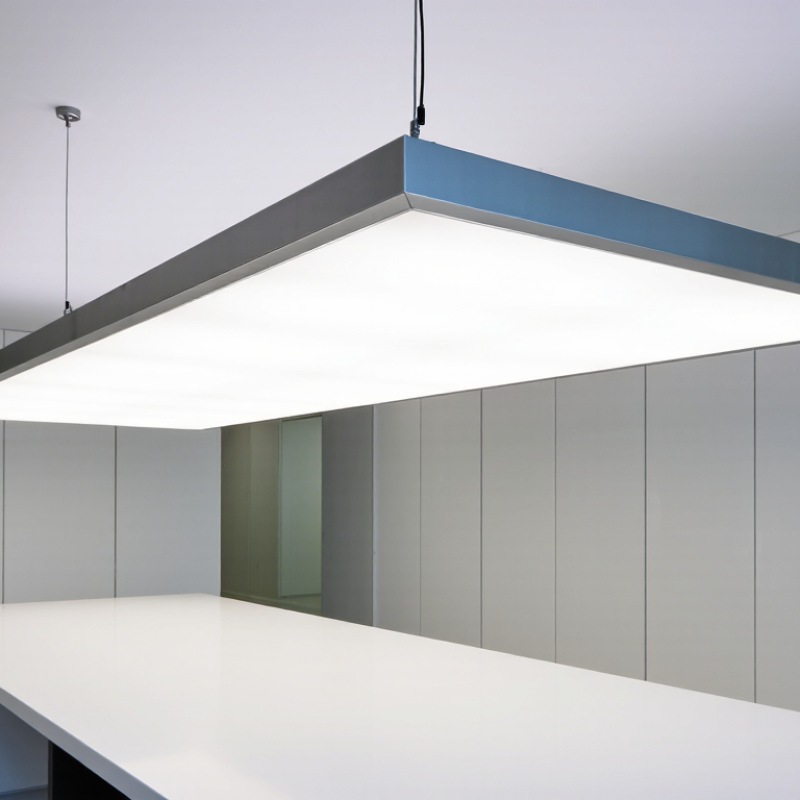
| Suspension Cables or Rods | Hang the panel below the ceiling at a selected height. | Common systems use two or four adjustable suspension points; installation height is often selected for visual comfort and light distribution. | Cables or rigid rods transfer the panel's weight to ceiling anchors or a structural support system. | All anchor points must be suitable for the ceiling structure and rated for the panel load. |
| Ceiling Canopy and Mounting Hardware | Connects the suspension system to the ceiling and conceals electrical connections. | May include mounting plates, anchors, cable grippers, strain reliefs, and a decorative canopy. | The hardware distributes mechanical load while providing a protected route for the power cable. | Mounting must comply with local electrical and building regulations, especially for suspended fixtures. |
| Power and Control Wiring | Delivers electrical power and, where applicable, dimming or control signals. | Control methods may include 0–10 V, digital addressable lighting control, phase dimming, or wireless control. | The power conductors supply the driver, while separate control conductors adjust the driver's output level. | Wiring should be protected from mechanical strain and routed according to the installation instructions. |
| Diffuser Frame and Fasteners | Secure the diffuser, light guide, and internal layers in their correct positions. | Usually consists of an extruded metal frame, clips, screws, or removable retention brackets. | The frame maintains optical alignment and prevents internal components from shifting during installation or operation. | Loose fasteners may cause rattling, light leakage, or uneven illumination. |
| Emergency Lighting Module | Provides illumination during a mains power failure when included in the design. | Typically uses a rechargeable battery, charging circuit, indicator, and emergency control circuitry. | When normal power is interrupted, the module switches the light source to battery operation for a specified duration. | Battery condition and periodic functional testing are important for emergency-rated installations. |
| Optical and Electrical Safety Features | Improve user safety, visual comfort, and operating reliability. | May include low-flicker operation, glare control, short-circuit protection, over-temperature protection, and surge protection. | Electronic protection circuits monitor abnormal conditions and reduce or disconnect power when necessary. | Actual protection levels depend on the fixture design and the applicable electrical safety requirements. |



 © Copyright 2020 Tianjin Tanghaidongyang Valve Co., Ltd. All Rights Reserved.