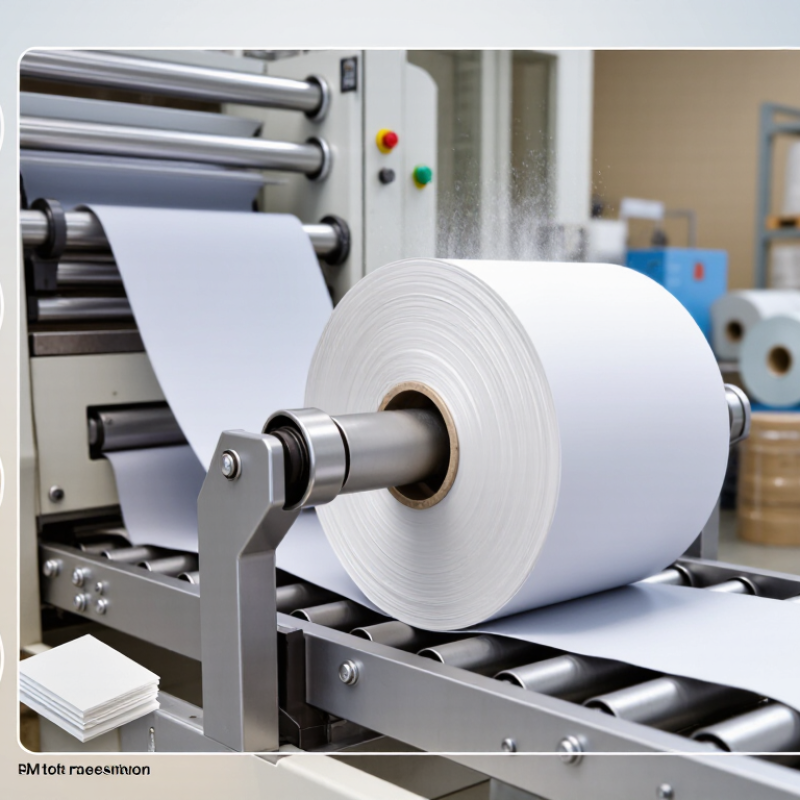
| 1 | Understand the Product | Parent roll tissue paper is a large, unconverted tissue roll supplied to manufacturers. It is later rewound, embossed, folded, perforated, or cut into finished products. | The parent roll is the basic production material for converting lines and is not normally sold as a ready-to-use consumer roll. | Confirm whether the quotation is for parent rolls, finished rolls, or cut sheets. Request the roll construction, core details, and technical data sheet. | Toilet tissue, facial tissue, paper towels, napkins, hand towels, industrial wiping products, and specialty hygiene products. |
| 2 | Select the Correct Basis Weight | Common tissue basis weight: approximately 13–40 g/m² per ply. Multi-ply products may use two or more tissue layers. | Basis weight affects softness, strength, absorbency, bulk, roll length, and material cost. | Match the basis weight to the final product. Use lighter grades for soft facial tissue and standard toilet tissue; use heavier or multi-ply grades for towels and industrial wiping. | Facial tissue, toilet tissue, napkins, kitchen towels, hand towels, and high-absorbency wiping rolls. |
| 3 | Check Width and Roll Diameter | Parent-roll width and diameter vary by machine design. Common commercial configurations may use widths around 1.8–3.6 m and diameters around 1.0–2.8 m. | Incorrect dimensions can cause loading problems, unstable unwinding, excessive trim waste, or incompatibility with the converting line. | Provide the exact unwinder limits, usable web width, maximum roll diameter, roll weight, winding direction, and permitted edge trim. | High-speed tissue converting, jumbo toilet-roll production, towel converting, napkin production, and folded tissue manufacturing. |
| 4 | Verify Core and Winding Specifications | Common core inside diameters include approximately 76 mm, 152 mm, and 203 mm, depending on the unwinder and roll size. | Core fit and winding hardness influence roll stability, unwinding performance, web tension, and machine downtime. | Confirm core inside diameter, core material, core length, roll direction, winding tightness, telescoping tolerance, and edge condition. | Automatic rewinding, embossing, laminating, perforating, folding, and high-speed roll converting. |
| 5 | Compare Strength, Absorbency, and Softness | Important performance indicators include machine direction strength, cross direction strength, wet strength, tensile balance, absorbency rate, bulk, and softness. | A grade that is strong enough for converting may still be unsuitable if it feels rough, tears easily when wet, or has poor absorbency. | Request laboratory test results and, where possible, evaluate samples on the actual converting line. Check linting, dust, pinholes, formation, and sheet release. | Personal hygiene tissue, food-service napkins, household towels, medical-use wiping, and industrial cleaning cloths. |
| 6 | Review Fiber Composition and Appearance | Parent rolls may be manufactured from virgin wood pulp, recycled fiber, or a controlled blend. Typical appearance variables include color, brightness, formation, and fiber cleanliness. | Fiber composition affects softness, strength, absorbency, color, environmental claims, and suitability for sensitive applications. | Ask for the fiber composition, recycled content where applicable, brightness or color specification, odor limits, foreign-particle controls, and compliance documents. | White hygiene tissue, recycled commercial tissue, colored napkins, industrial wipes, and applications requiring specific absorbency or sustainability characteristics. |
| 7 | Control Moisture, Packaging, and Storage | A typical tissue moisture range is often about 4–8%, but the agreed specification depends on the grade and test method. | Excessive moisture can affect strength, roll hardness, microbial control, and converting stability. Poor packaging can cause contamination or edge damage. | Confirm moisture limits, packaging layers, pallet or roll protection, storage temperature, warehouse humidity, production date, and FIFO handling requirements. | All parent-roll applications, especially long-distance shipments, high-speed converting, absorbent products, and hygienic end uses. |
| 8 | Evaluate Machine Compatibility | Compatibility depends on web tension, caliper, bulk, winding hardness, roll weight, core size, unwind direction, and the speed of the converting equipment. | A technically acceptable tissue grade may still create wrinkles, breaks, dust, or poor embossing if it does not match the machine settings. | Share the converter model, operating speed, embossing pattern, ply configuration, perforation pitch, and target finished-product dimensions before ordering. | Rewound tissue rolls, folded towels, interfolded napkins, embossed bathroom tissue, and laminated multi-ply products. |
| 9 | Confirm Quality and Delivery Terms | A complete specification should cover basis weight, moisture, roll dimensions, core, strength, absorbency, appearance, packaging, tolerances, inspection method, and delivery schedule. | Clear acceptance criteria reduce disputes, production interruptions, and variation between shipments. | Use an approved sample, written tolerance limits, batch identification, pre-shipment inspection, defect definitions, and a documented claim procedure. | Continuous tissue converting operations, contract manufacturing, hygiene-product production, and large-volume industrial supply programs. |



 © Copyright 2020 Tianjin Tanghaidongyang Valve Co., Ltd. All Rights Reserved.