| 1 | Match the machine to the required production volume. | Manual or semi-automatic cup filler | Operator-loaded volumetric or piston filling | Preformed plastic, paperboard, or glass cups | Approximately 300–1,500 cups/hour | Typically ±1% to ±2% | Suitable for small dairies, pilot production, seasonal products, and frequent product changes. Labor involvement is higher, but the initial investment and setup requirements are generally lower. |
| 2 | Choose the correct machine format for the packaging line. | Automatic linear cup filler and sealer | Inline volumetric or piston filling with foil-lid sealing | Preformed cups with flat or rimmed sealing flanges | Approximately 1,500–6,000 cups/hour | Typically ±0.5% to ±1% | A practical option for small-to-medium production lines. It offers simpler access for cleaning and changeovers than many rotary systems, but it usually requires more floor space per production lane. |
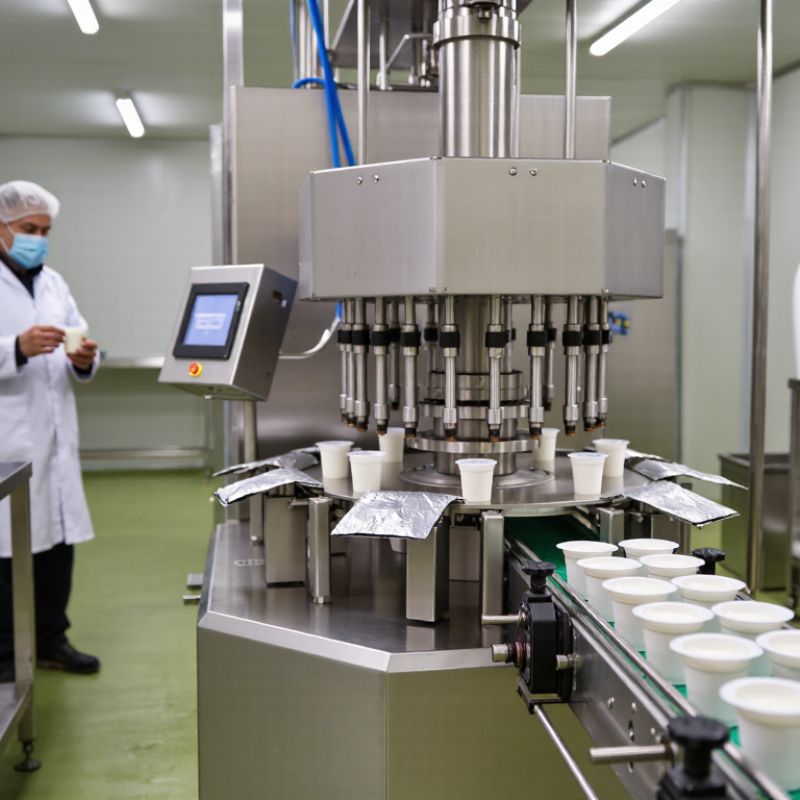
| 3 | Use a rotary system when floor space and speed are priorities. | Automatic rotary cup filler and sealer | Multi-station volumetric, piston, or servo-controlled filling | Preformed cups made from plastic, paperboard, or laminated materials | Approximately 4,000–20,000 cups/hour | Typically ±0.5% to ±1% | Provides a compact footprint and high throughput. It is best suited to stable, high-volume production, although tooling, maintenance, and format changes can be more complex. |
| 4 | Select a form-fill-seal system for integrated cup production. | Thermoform-fill-seal machine | Thermoformed cup production followed by volumetric or piston filling and heat sealing | Roll-stock plastic films, commonly used to form single-serve cups | Approximately 6,000–30,000 cups/hour | Typically ±0.5% to ±1% | Reduces dependence on preformed cups and can lower packaging material costs at high volumes. It requires suitable forming films, heating control, mold tooling, and more specialized maintenance. |
| 5 | Match the filling principle to yogurt texture and inclusions. | Piston or servo-piston filler | Positive-displacement filling with controlled piston volume | Cups, jars, bottles, and some preformed pouches | Approximately 1,000–12,000 fills/hour, depending on the number of filling heads | Typically ±0.5% to ±1% | Well suited to thick yogurt, Greek-style yogurt, and products with moderate particulates. The product path should be designed to minimize shear, air incorporation, and damage to fruit or cereal pieces. |
| 6 | Confirm container shape, opening, and sealing requirements. | Bottle or jar filling and capping line | Volumetric or piston filling followed by cap application | HDPE, PET, PP, or glass bottles and jars with compatible neck finishes | Approximately 1,000–12,000 containers/hour | Typically ±0.5% to ±1.5% | Suitable for drinkable yogurt, family-size yogurt, and spoonable yogurt in wide-mouth containers. Check container stability, neck dimensions, cap type, headspace, and the required sanitation process before purchase. |
| 7 | Prioritize hygiene, cleanability, and product-change flexibility. | Hygienic multi-format filling and sealing system | Servo-controlled filling with automated CIP-compatible or removable product-contact parts | Multiple cup, jar, bottle, or pouch formats, subject to tooling and sealing limits | Depends on format, number of lanes, and changeover design | Depends on product, equipment design, and validation method | Look for sanitary product-contact materials, drainable piping, tool-free access where practical, verified seal integrity, and documented cleaning procedures. Request trials using the actual yogurt formulation, viscosity, temperature, and inclusions. |



 © Copyright 2020 Tianjin Tanghaidongyang Valve Co., Ltd. All Rights Reserved.