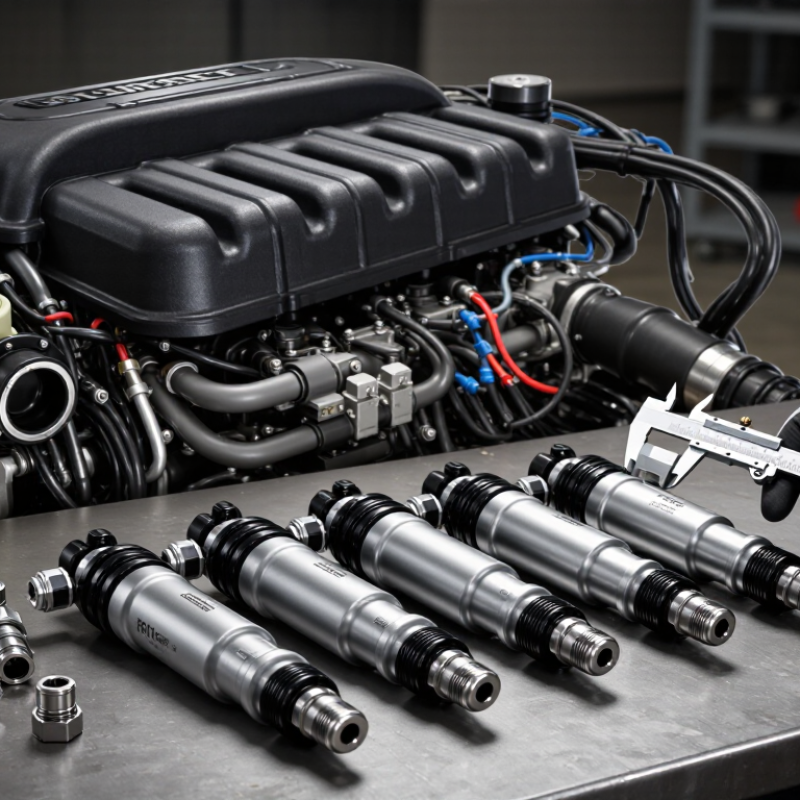
Start with the vehicle’s exact model year, engine code, displacement, and fuel system. Similar-looking engines may use different injector designs. Check the service manual or a reliable parts catalogue, then compare the existing injector’s connector, length, seal locations, and mounting style. Small details matter. A connector that nearly fits is still the wrong connector.
Next, match the injector specifications, not just its appearance. Confirm the rated flow, operating pressure, electrical impedance, and spray pattern. Flow ratings only make sense when their test pressure is known. An injector rated at one pressure may deliver a different amount at another. The engine computer also expects a particular electrical load and fuel delivery. An incorrect match can cause hard starting, rough idle, poor fuel economy, or an overly rich or lean mixture.
Before ordering, verify that the replacement suits the engine’s existing calibration. Avoid assuming that a higher flow rating means better performance; the computer may not compensate correctly. Check seals and dimensions against the original part, and inspect the fuel rail for damage or corrosion. It is easy to overlook a small difference on a screen. Recheck the engine code and specifications before purchase, especially if the vehicle has had engine or fuel-system work. If the records are incomplete, a qualified technician can confirm fitment and pressure requirements.


 © Copyright 2020 Tianjin Tanghaidongyang Valve Co., Ltd. All Rights Reserved.