| 1 | Match the Thread System | Metric threads are specified by nominal diameter and pitch, such as M4 × 0.7. Unified inch threads are specified by major diameter and threads per inch, such as #10-24 UNC. | Use the same thread system as the tapped hole or nut. Do not substitute a metric screw for an inch-threaded hole, or mix coarse and fine threads of the same diameter. | M4 × 0.7 for a metric tapped hole; #10-24 UNC for a compatible inch-threaded hole. |
| 2 | Verify Nominal Diameter and Pitch | Common metric machine-screw sizes include M3 × 0.5, M4 × 0.7, M5 × 0.8, and M6 × 1.0. A smaller pitch number indicates finer thread spacing. | Measure an existing screw with a thread gauge or confirm the tapped-hole specification. The diameter must fit the hole while the pitch must match exactly. | M5 × 0.8 is suitable only for an M5 tapped hole with a 0.8 mm pitch. |
| 3 | Calculate the Required Length | For a screw passing through a clearance hole, required length is approximately: grip thickness + washer thickness + nut height. For a tapped hole, allow sufficient thread engagement without bottoming out. | Measure the total material stack and select the nearest standard length. Avoid a screw that is too short to engage the threads or so long that it contacts the bottom of a blind hole. | A 6 mm material stack with a 1 mm washer may use an approximately 8–10 mm screw, subject to the hole and engagement requirements. |
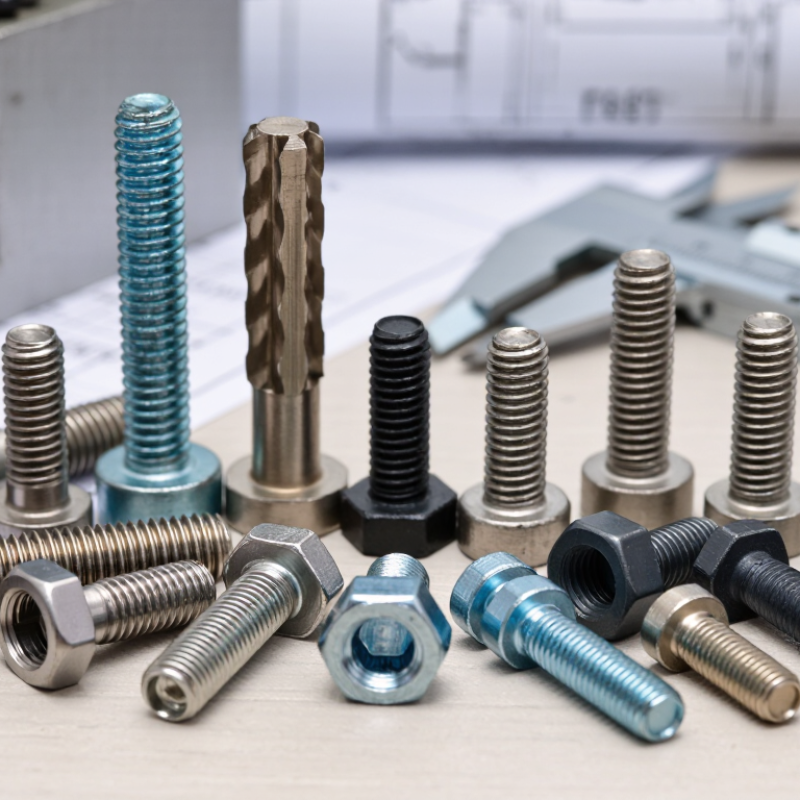
| 4 | Select the Head Style | Hex-head screws provide external wrench access. Socket-head screws use an internal hex drive and generally have a smaller head diameter with a taller head. Low-profile socket heads reduce protrusion where clearance is limited. | Choose a hex head for accessible wrench installation, a socket head for compact assemblies, or a low-profile head where overhead clearance is restricted. | Hex head: open-access equipment. Socket head: recessed or compact assemblies. Low-profile socket head: limited clearance. |
| 5 | Match the Drive Type to Access | External hex drives are installed with a wrench or socket. Internal hex drives require a correctly sized hex key or bit. The tool must fully seat in the drive recess to reduce rounding. | Use an external hex drive when side access is available. Use an internal hex drive when the fastener is recessed or when a smaller installation envelope is needed. | An M6 external-hex screw can be installed with a suitable socket; an M6 socket-head screw uses an internal hex key sized for its drive. |
| 6 | Choose Material and Finish for the Environment | Carbon-steel screws are commonly used for general mechanical assemblies. Stainless-steel screws provide improved corrosion resistance in many environments. Zinc or other protective coatings can improve corrosion resistance on compatible steel fasteners. | Consider moisture, chemicals, temperature, magnetic requirements, and galvanic-corrosion risk. Confirm that the selected material and coating meet the application specification. | Stainless steel: damp or exposed areas. Coated carbon steel: general indoor machinery. Avoid incompatible material pairs in conductive, wet environments. |
| 7 | Confirm Engagement, Clearance, and Torque | The screw should engage the full usable thread length without bottoming out. The head and tool need adequate clearance, and installation torque must follow the applicable engineering or fastener specification. | Check hole depth, thread engagement, head diameter, wrench clearance, and any washer requirement before ordering. Do not estimate torque solely from screw diameter. | For a blind tapped hole, select a length that leaves clearance at the bottom. For a through-hole joint, verify that the exposed thread beyond the nut is adequate but not excessive. |



 © Copyright 2020 Tianjin Tanghaidongyang Valve Co., Ltd. All Rights Reserved.