| 1 | Cash dispenser module | Separates, counts, and presents banknotes during a withdrawal. | Confirm the ATM model, dispenser configuration, cassette arrangement, interface, and supported firmware version. | Check for documented testing, clean feed paths, reliable note handling, and a clear parts condition and warranty description. | Use authorized service procedures and test dispensing and retract functions after installation. Confirm the supplier offers installation guidance and service support. |
| 2 | Card reader | Reads payment-card data for the transaction. | Match the reader type, mounting dimensions, connection, supported card-reading standards, and ATM software configuration. | Inspect the read head, card path, connectors, and documented reliability or test results. | Choose a reader that supports the required anti-tamper controls. Inspect for unauthorized attachments and follow approved security checks before returning the ATM to service. |
| 3 | Secure PIN-entry keypad (EPP) | Allows customers to enter their PIN through a protected keypad. | Verify the exact keypad interface, enclosure fit, supported security configuration, and compatibility with the ATM's software. | Check key response, physical condition, tamper detection, and documented certification or approval for the intended deployment. | PIN-entry components require controlled handling and approved installation. Confirm that support includes secure configuration and any necessary key-management procedures. |
| 4 | Cash cassette | Stores and presents a specific denomination of banknotes to the dispenser. | Match cassette dimensions, dispenser family, denomination setup, capacity, and any required identification or configuration features. | Inspect the housing, latch, guides, springs, and note-presenter parts for damage, wear, or contamination. | Use controlled access and documented cash-handling procedures. Confirm replacement cassettes can be serviced and identified through approved operational processes. |
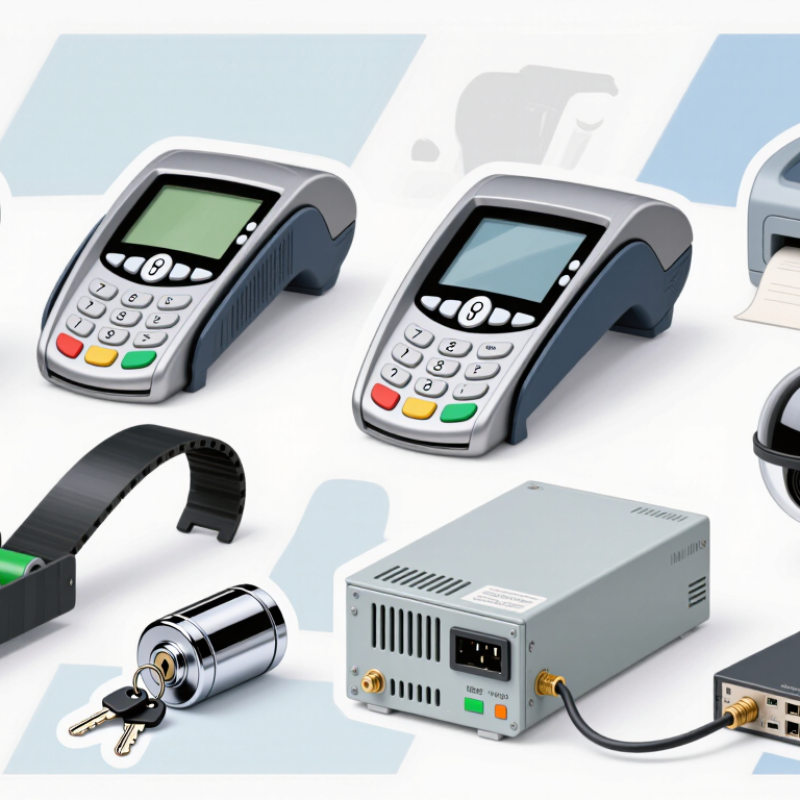
| 5 | Receipt printer | Prints transaction receipts and, where configured, service or journal records. | Check printer type, mounting, power and data connections, paper width, paper-roll diameter, and software or driver support. | Review print clarity, cutter operation, feed alignment, and the availability of compatible consumables. | Ensure service records are handled according to privacy and retention policies. Look for clear troubleshooting instructions and access to replacement print mechanisms. |
| 6 | Display or touchscreen | Shows transaction instructions and accepts touch input on interactive models. | Confirm screen size, resolution, mounting, connector type, power requirements, and compatibility with the ATM's graphics and touch controller. | Check brightness, viewing angles, dead pixels, touch accuracy, and resistance to the ATM's operating environment. | After replacement, verify that on-screen prompts and touch areas align correctly. Confirm that support covers calibration and software settings. |
| 7 | Power supply unit | Provides regulated power to the ATM and its internal components. | Match input range, output voltages, connector layout, mounting, rated capacity, and the power requirements of the installed modules. | Look for electrical safety documentation, suitable thermal performance, and protection against overload and short circuit. | Use qualified service personnel and follow lockout and electrical-safety procedures. Confirm access to technical specifications and warranty support. |
| 8 | Transport belts and feed rollers | Move banknotes through the dispenser and help separate individual notes. | Check exact module version, belt length and profile, roller dimensions, material, and installation orientation. | Choose parts with consistent dimensions and suitable wear characteristics. Inspect rollers for cracking, glazing, or deformation. | Incorrect feed components can cause jams or miscounts. Confirm the supplier provides installation instructions and recommendations for post-repair testing. |
| 9 | Optical sensors | Detect banknotes, jams, positions, or movement within the dispenser and other ATM mechanisms. | Match sensor type, connector, mounting position, sensing range, and the module's electrical and software requirements. | Check the sensing surface, cable condition, alignment tolerance, and results from functional testing. | Verify sensor status using the ATM's approved diagnostic tools after installation. Confirm access to calibration and fault-diagnosis guidance. |
| 10 | Safe or service-access lock assembly | Controls authorized physical access to protected ATM compartments. | Verify the lock type, mounting dimensions, door preparation, access method, and compatibility with established site procedures. | Check the operating cycle, bolt engagement, construction, and documentation for installation and maintenance. | Restrict installation and access to authorized personnel. Confirm that support covers secure setup, access management, and procedures for lost credentials or service events. |



 © Copyright 2020 Tianjin Tanghaidongyang Valve Co., Ltd. All Rights Reserved.