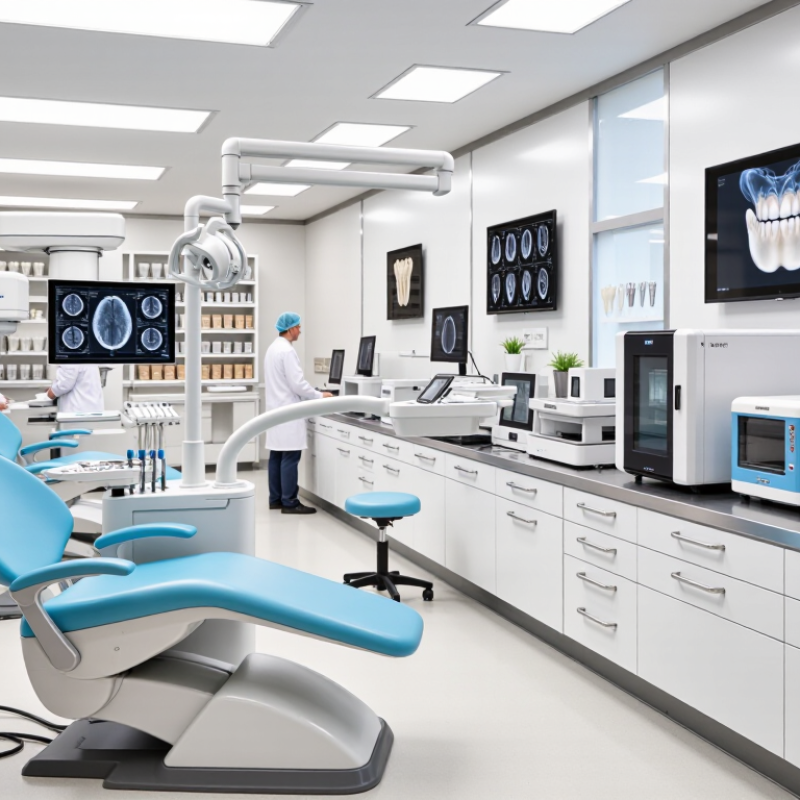
China’s top ten dental equipment manufacturers should be compared by product depth, not catalog size. The review should cover dental chairs, imaging systems, CAD/CAM equipment, sterilizers, and handpieces. The World Health Organization’s 2022 Global Oral Health Status Report estimates that nearly 3.5 billion people live with oral diseases worldwide. This demand requires reliable equipment, simple maintenance, and responsive technical support. No ranking is perfect. Some prioritize export volume, while others value engineering, certification, or service networks.
Market reports from Grand View Research and Fortune Business Insights forecast continued growth in global dental equipment demand. However, their market definitions differ. Buyers should verify specifications directly instead of trusting broad product claims. For dental chairs, check hydraulic stability, patient load, control ergonomics, upholstery replacement, and spare-part access. Imaging suppliers should disclose radiation-related specifications, sensor compatibility, software integration, and repair response times. CAD/CAM assessments need evidence of scanning accuracy, milling tolerance, material compatibility, and operator training.
Sterilizer manufacturers should provide validated cycle records, traceability functions, and clear maintenance instructions. Handpiece evaluations should include speed, torque, noise, bearing durability, and reprocessing guidance. ISO 13485 certification supports confidence in quality management, but it cannot prove clinical performance alone. Independent testing still matters. I would request installation references from comparable clinics. A catalog can look complete and still leave a clinic waiting for one replacement valve.



 © Copyright 2020 Tianjin Tanghaidongyang Valve Co., Ltd. All Rights Reserved.