Certificates

Certificates

Top 10 Laser Quenching Machine Manufacturers Worldwide

Laser quenching has become a practical option for hardening selected steel surfaces while limiting heat exposure elsewhere on a component. A Laser Quenching Machine uses a controlled beam to heat a defined area, then relies on the surrounding material to draw heat away rapidly. The result can be a hardened surface with limited distortion, though outcomes depend on the material and process settings. This is useful for gears, shafts, molds, and other parts exposed to repeated wear. Details matter. Laser power, beam shape, scanning speed, and cooling behavior can all affect the final hardness and treatment depth. A machine’s headline specifications alone do not guarantee consistent production results.

This overview of the top 10 manufacturers worldwide gives readers a starting point for comparing suppliers, rather than treating any ranking as a universal verdict. It considers practical factors such as process control, automation options, application support, service access, and the ability to tailor equipment to different part geometries. Manufacturer claims should be checked against technical documentation, application examples, and, where possible, sample trials on the intended material. Some published information may be incomplete or difficult to compare directly. That is worth acknowledging. A system suited to high-volume automotive components may not fit a small workshop or a specialist repair line. Buyers should define their parts, throughput, quality targets, and available floor space before requesting proposals. The best choice is not always the most powerful machine; it is the one that reliably meets the actual process requirements.

Top 10 Laser Quenching Machine Manufacturers Worldwide

Laser Quenching Machines: Core Technology and Industrial Applications

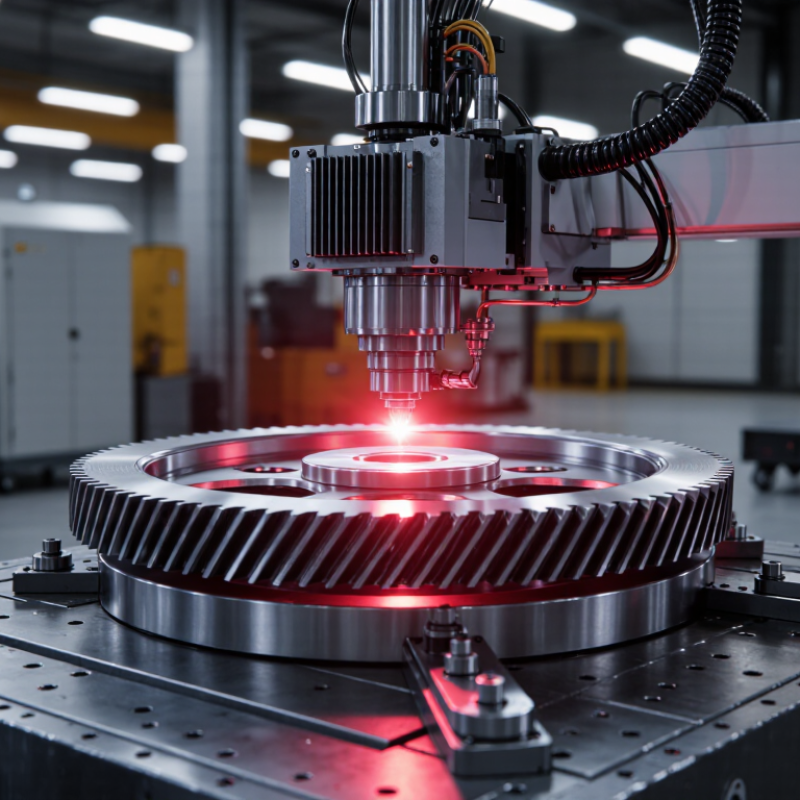
Laser quenching uses a focused beam to heat a metal surface above its transformation temperature. The part then cools as heat flows into the surrounding material, forming a harder surface layer. Unlike furnace treatment, the process can target narrow zones, such as gear teeth, shaft journals, or guide rails. This precision can reduce distortion and avoid treating areas that do not need extra wear resistance.

Machine performance depends on more than laser power. Beam shape, scanning speed, spot size, and material composition all affect case depth and hardness. Sensors and control software help keep energy delivery steady as part geometry changes. In production, technicians often verify results with hardness tests and cross-section measurements; a clean-looking surface alone proves little. Results still vary with setup, and some parts need repeated trials. That can be frustrating, but it provides useful evidence.

Tips: Clean oil and scale from the treatment zone before processing. Confirm focus and scanning speed on a representative sample. Record the settings, then inspect hardness and distortion after cooling. Don’t assume one recipe fits every alloy. Even small changes matter.

Criteria for Comparing Manufacturers Worldwide

Comparing laser quenching machine manufacturers starts with the part, not the brochure. Ask for trials using your actual steel grade, geometry, and target hardness. Record case depth, hardness variation, distortion, and cycle time across repeated runs. A polished sample proves little. Request raw test conditions, including beam size, power, feed rate, and cooling method.

Check whether the machine can control the heat zone consistently. Review laser output stability, scanning accuracy, temperature monitoring, and recipe storage. The International Federation of Robotics reported 4,281,585 industrial robots operating worldwide in 2023 in World Robotics 2024. That figure does not measure quenching quality, but it highlights why interface compatibility and automation support deserve scrutiny. Ask how the system handles part loading, safety interlocks, and production data.

Service matters. Request response-time commitments, spare-parts availability, operator training, and maintenance schedules. MarketsandMarkets estimated the laser processing market at USD 6.5 billion in 2023 and forecast USD 11.3 billion by 2028. This market forecast is not a performance ranking. Treat it as context, then compare documented acceptance tests and lifecycle costs. One detail is easy to miss: confirm who owns the process recipe after commissioning. That point can become awkward later.

Ten Leading Laser Quenching Machine Manufacturers

A comparison of ten leading laser quenching machine manufacturers should begin with process capability, not brochure claims. Suppliers may build complete cells, integrate laser sources, or specialize in automation and heat-treatment equipment. Their machines differ in beam control, scanning methods, workpiece handling, and monitoring. These details affect whether a system can harden a narrow shaft, a gear tooth, or a larger flat surface consistently.

Ask manufacturers for process data from parts similar to yours. Useful evidence includes case-depth measurements, hardness results, repeatability records, and sample production runs. Check how the machine controls power, focus, and travel speed as the surface changes shape. A clean test report helps. So does a clear explanation of its limits. Service matters too: response times, operator training, spare-part access, and commissioning support can shape the real cost of ownership.

The strongest candidates usually connect equipment design with practical process knowledge. Still, “leading” is not a fixed ranking; needs vary by material, geometry, output, and local support. A supplier may excel with compact components yet struggle with a large, irregular part. That deserves scrutiny. Compare energy use, safety interlocks, software access, and maintenance requirements alongside purchase price. Some specifications look impressive, but the production trial may tell a less polished story.

Manufacturer Profiles: Technologies, Markets, and Specialties

Laser quenching manufacturers differ in how they control heat, motion, and process data. Some build systems around diode lasers, which can deliver a broad, even treatment zone. Others focus on fiber-laser sources and compact heads for narrow surfaces. Many offer robotic cells for complex parts, while simpler gantry systems suit flat rails, shafts, and tooling. The practical test is repeatability: does the hardened track remain consistent across a long production shift? Small changes in focus, travel speed, or surface condition can alter the result.

Their markets range from automotive components and agricultural machinery to molds, mining equipment, and industrial maintenance. Specialist suppliers may design optics for gear teeth or scan large rollers, while broader engineering firms integrate laser sources, cooling, safety enclosures, and inspection equipment. Ask for trials using the actual alloy and part geometry. A polished sample can look convincing, but it may not represent production conditions. Check case depth, hardness profile, distortion, and cycle time together. Useful documentation matters. So does service access. One limitation is often overlooked: automation cannot compensate for poorly prepared surfaces or inconsistent incoming parts. A strong manufacturer explains these trade-offs clearly, even when the answer complicates the purchase.

Key Factors for Selecting a Laser Quenching Equipment Supplier

Top 10 Laser Quenching Machine Manufacturers Worldwide
Key Factors for Selecting a Laser Quenching Equipment Supplier

Choosing a laser quenching supplier starts with your part, not its machine catalog. Confirm the target alloy, case depth, hardness range, and production rate. Ask how the system controls spot size, travel speed, laser power, and temperature feedback. These settings affect heat distribution around edges, bores, and changing section thicknesses. A small test coupon can reveal uneven hardening or distortion before installation.

Request test results from parts similar to yours. Check hardness maps, treated-layer depth, and repeatability across multiple runs. Ask for written process records and clear acceptance criteria. A capable supplier should explain safety interlocks, fume extraction, maintenance intervals, and operator training. Service response matters when a protective window gets dirty or a sensor drifts. A polished demonstration can still leave questions; insist on seeing realistic production trials.

Tips: Bring drawings and sample parts to technical discussions. Ask who verifies calibration and how often. Compare total operating costs, not just the purchase price. Measure twice. Then decide.