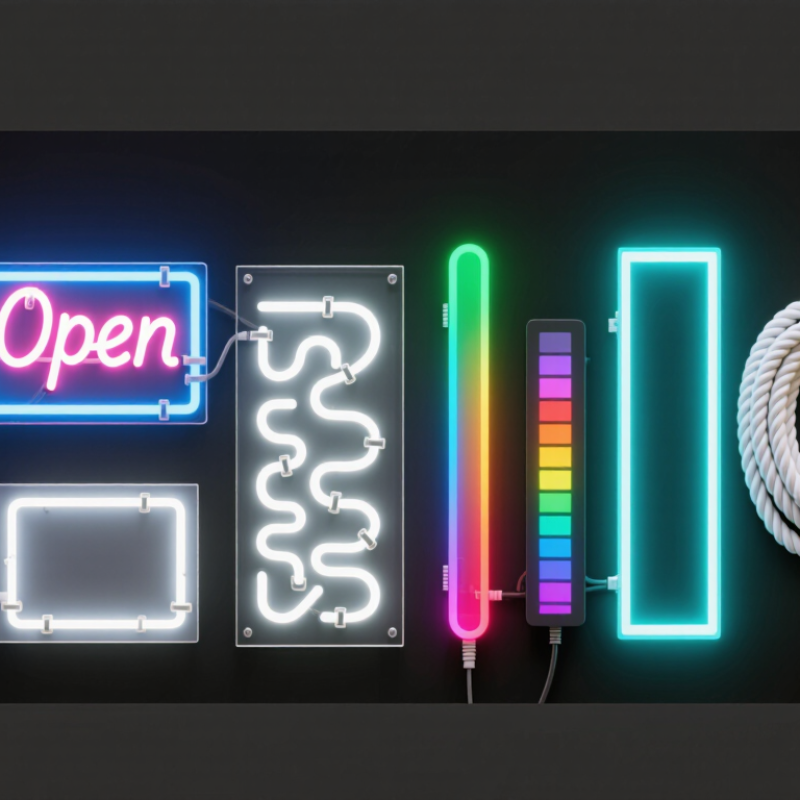
| 1. Neon-Filled Glass Tubing | A sealed glass tube contains low-pressure neon gas. An electrical discharge excites the gas, which emits visible light. | Typically a vivid red-orange glow from neon gas. | Custom signs, architectural accents, and decorative installations. | Offers authentic glass-tube appearance, but the tubing is fragile and the system uses high voltage. Check local electrical requirements and installation arrangements. |
| 2. Argon-Mercury Glass Tubing | A low-pressure argon and mercury-vapor fill produces ultraviolet radiation when electrically excited. The tube coating or glass affects the visible result. | Commonly used for blue and other colors, depending on the tube construction and coating. | Commercial signage and custom glass-tube lighting. | Confirm the specified gas fill, color method, electrical system, and applicable regulations. Some designs contain mercury, so handling and disposal requirements may apply. |
| 3. Phosphor-Coated Glass Tubing | A fluorescent coating inside the glass converts ultraviolet energy from the discharge into visible light. | Available in a range of colors determined by the phosphor, gas fill, and glass. | Colored signs, decorative lettering, and bespoke display work. | Ask how the color is produced and whether a sample or color reference is available. Appearance can vary with the tube specification and viewing conditions. |
| 4. Hand-Bent Custom Glass Neon | Glass tubing is heated and shaped into lettering, logos, or artwork, then filled with a suitable gas and fitted with electrodes. | Can use different glass colors, tube diameters, and gas or coating combinations. | One-off signs, artistic pieces, hospitality venues, and restoration projects. | Check drawing approval, dimensions, mounting method, packaging, replacement parts, and installation support. Custom glass is more vulnerable to shipping damage than flexible alternatives. |
| 5. LED Neon Flex — Top-Bend | LEDs inside a flexible diffuser create a continuous-looking line. The product bends mainly across its width, allowing curves in one plane. | Usually offered in fixed colors; the diffuser softens the visible LED points. | Outline lettering, wall graphics, retail displays, and indoor or outdoor trim, subject to product rating. | Check bend direction, minimum bend radius, cutting intervals, voltage, mounting accessories, and the stated environmental rating. |
| 6. LED Neon Flex — Side-Bend | Its construction allows the flexible line to curve sideways, making it suitable for paths that turn across the face of a sign. | Typically provides an even, diffused line in a selected color. | Script-style lettering, circular designs, and curved sign outlines. | Confirm the bend orientation and minimum bend radius; top-bend and side-bend products are not interchangeable for every design. |
| 7. Single-Color LED Neon Flex | LEDs emit one selected color through a continuous or translucent flexible housing. | Common choices include warm white, cool white, red, blue, green, and other fixed colors, depending on the product. | Wayfinding, architectural edging, shop displays, and decorative lighting. | Compare color temperature for white products, brightness, dimming compatibility, power requirements, diffuser appearance, and consistency between batches. |
| 8. RGB or RGBW LED Neon Flex | Multiple LED color channels are controlled electronically to produce changing colors and, in RGBW products, a separate white channel. | Can produce color-changing effects; achievable whites and color quality vary by product. | Entertainment spaces, event installations, feature displays, and programmable signage. | Check controller compatibility, channel configuration, power supply capacity, control protocol, and whether the product supports the required effects. |
| 9. Rigid LED Neon-Style Tube | LEDs are housed in a rigid or semi-rigid diffusing profile to create a continuous linear-light effect. | Typically a uniform line in fixed or selectable colors, depending on the model. | Linear architectural accents, cabinet details, and straight or gently curved installations. | Review available lengths, connectors, profile dimensions, mounting hardware, cut options, and whether the product can accommodate the planned curves. |
| 10. Electroluminescent (EL) Wire | A phosphor-based coating around a conductive core emits light when driven by an alternating electrical field, usually supplied by an inverter. | Thin, flexible, and generally lower in brightness than many sign-grade glass neon or LED products. | Costumes, crafts, lightweight decoration, and short-distance accent lighting. | Check inverter noise, runtime or power source, brightness expectations, connector design, and whether the intended installation suits its light output. |



 © Copyright 2020 Tianjin Tanghaidongyang Valve Co., Ltd. All Rights Reserved.