Top 10 Thermal Break Aluminum System Windows Brands?
Thermal Break Aluminum System Windows are becoming a serious choice for energy-conscious buildings. Their insulated polyamide barriers reduce heat transfer through aluminum frames. This detail matters in cold winters, hot summers, and noisy urban streets.
The International Energy Agency reports that buildings consume about 30% of global final energy. Building operations also create roughly 26% of global energy-related emissions. The U.S. Department of Energy adds a practical warning: windows can account for 25% to 30% of residential heating and cooling energy use. These figures explain why frame design deserves more attention than appearance alone.
This guide examines the Top 10 Thermal Break Aluminum System Windows Brands through measurable and practical criteria. These include thermal transmittance, air leakage, water resistance, acoustic performance, hardware quality, certification, warranty support, and installation experience. NFRC guidance shows why U-factor and solar heat gain coefficient should be compared together. A low U-factor may help winter performance, while an unsuitable solar gain rating can increase summer cooling loads.
Real projects often reveal the difference. A well-installed frame should meet a masonry opening evenly, maintain a continuous seal, and prevent cold interior edges. Small gaps can undermine expensive glass and advanced profiles. Brand reputation helps, but it is not enough. No ranking is perfectly universal. Climate, glass selection, fabrication standards, and installer skill can change the final result. Some data also comes from manufacturer testing, so independent verification remains valuable. This review therefore focuses on evidence, field practicality, and transparent limitations rather than attractive marketing claims.
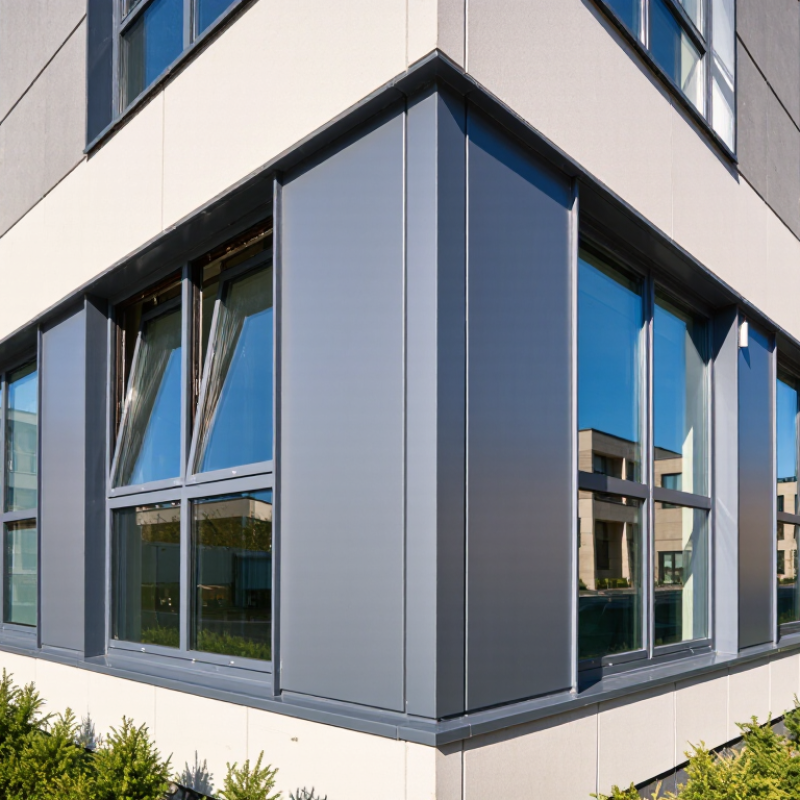
What Are Thermal Break Aluminum System Windows?
Thermal break aluminum system windows are engineered to reduce heat transfer through the frame. A nonconductive strip, often made from reinforced polyamide, separates the interior and exterior aluminum sections. This interrupts the metal’s natural thermal bridge.
The difference can be felt beside a large window on a cold morning. The inner frame stays warmer, while condensation risk may decrease. The U.S. Department of Energy reports that windows can represent 25–30% of residential heating and cooling energy use. However, frame insulation alone does not guarantee high performance. The National Fenestration Rating Council evaluates whole-window values, including U-factor and solar heat gain coefficient. Glazing, gaskets, spacers, installation, and orientation all matter. A premium frame with poor installation can disappoint. That is an uncomfortable reality.
Tips: Check the complete window label, not only the aluminum profile. Lower U-factor generally means better insulation. Compare SHGC with the building’s climate and sun exposure. Ask for tested air leakage, water resistance, and structural performance. Site measurements are essential. Small gaps around a frame can weaken otherwise careful engineering. One practical mistake is choosing the lowest U-factor without considering summer overheating. Thermal comfort is more balanced than a single number.
Top 10 Thermal Break Aluminum System Windows Brands?
What Are Thermal Break Aluminum System Windows?
Thermal break aluminum windows use a low-conductivity polyamide separator between the interior and exterior aluminum sections. This interrupts heat transfer and improves insulation compared with continuous aluminum frames. The chart compares approximate thermal conductivity values at room temperature; lower values generally indicate better resistance to heat flow. Actual window performance also depends on frame design, glazing, seals, installation, and air leakage.
How Thermal Break Aluminum Windows Work and Why They Matter
Thermal break aluminum windows reduce heat transfer through the frame. A polyamide barrier separates the interior and exterior aluminum sections. This interrupts the metal’s conductive path. The result is a warmer interior frame in winter and a cooler one in summer. It can also reduce condensation around the window edge.
The U.S. Department of Energy reports that windows may account for 25% to 30% of residential heating and cooling energy use.
The IEA’s Buildings 2023 report states that buildings consume about 30% of global final energy.
These figures explain why frame design matters, not only glass selection. However, a thermal break is not magic. Poor installation, unsealed joints, or incorrect drainage can weaken real performance. Field inspections often find air leakage around the frame, rather than through the glass. That detail is easy to miss.
Tips:
Compare whole-window U-factor and air-leakage ratings, not center-glass values alone. Check the thermal break’s width, glazing specification, and corner assembly. Ask for independent laboratory test reports. A lower U-factor generally indicates better insulation. Also inspect the sill design before installation. Condensation risk depends on indoor humidity, climate, shading, and ventilation. Even excellent products can underperform when the opening is not square. Reflective coatings may help, but they can change daylight and appearance. Choosing purely by the lowest price is tempting, yet often shortsighted.
Top 10 Thermal Break Aluminum System Window Brands Compared
Top 10 Thermal Break Aluminum System Window Brands Compared
Comparing the top ten thermal break aluminum system window brands requires more than checking profile appearance. In project reviews, I examine polyamide strip width, frame depth, glass compatibility, and drainage design. These details affect indoor comfort during cold mornings and intense summer heat. A wider thermal barrier often improves insulation, but it can increase frame weight and fabrication costs. Small differences matter.
Each system should be measured against air leakage, water resistance, wind pressure, and thermal transmittance. Independent laboratory reports are more reliable than broad marketing claims. I also check whether the profiles support low-e double or triple glazing. Hardware quality deserves attention too. Weak hinges can cause sash movement within a few seasons. That issue is easy to miss.
The ten systems differ in installation tolerance, accessory availability, and technical support. Experienced fabricators usually reveal these differences quickly. Ask for tested corner samples, gasket details, and actual project references. A showroom sample may look excellent, yet site performance can disappoint when sealing is inconsistent. I once underestimated the effect of poor sill preparation. The frame was premium, but condensation still appeared near the lower corner. Rankings should therefore consider the complete window assembly, not only the aluminum profile. There is no perfect choice.
Top 10 Thermal Break Aluminum System Windows Brands Compared
Anonymous comparison of commonly published performance ranges for thermal break aluminum window systems. Actual values depend on profile configuration, glazing, hardware, dimensions, and test conditions. | Rank | Anonymous System Profile | Thermal Break
Width (mm) | Frame Uf
(W/m²·K) | Typical Glazing
Thickness (mm) | Air Permeability
Class | Water Tightness
Class / Pressure | Wind Load
Class | Acoustic Rating
Rw (dB) | Typical Frame
Depth (mm) | Best-Fit Application |
| 1 | Anonymous Profile A | 34 | 1.0–1.4 | 32–52 | Class 4 | 9A / 600 Pa+ | C5 | 40–45 | 90–120 | Passive and low-energy buildings |
| 2 | Anonymous Profile B | 30 | 1.2–1.6 | 28–48 | Class 4 | 9A / 600 Pa | C4–C5 | 38–44 | 75–105 | High-performance residential projects |
| 3 | Anonymous Profile C | 28 | 1.3–1.7 | 28–44 | Class 4 | 8A–9A / 450–600 Pa | C4 | 36–42 | 70–100 | Urban apartments and offices |
| 4 | Anonymous Profile D | 24 | 1.5–1.9 | 24–40 | Class 3–4 | 8A / 450 Pa | C3–C4 | 34–40 | 65–90 | General residential construction |
| 5 | Anonymous Profile E | 20 | 1.7–2.1 | 24–36 | Class 3 | 7A–8A / 300–450 Pa | C3 | 32–38 | 60–85 | Cost-sensitive residential projects |
| 6 | Anonymous Profile F | 34 | 1.1–1.5 | 32–52 | Class 4 | 9A / 600 Pa+ | C4–C5 | 39–44 | 80–115 | Large glazed openings |
| 7 | Anonymous Profile G | 18 | 1.8–2.3 | 24–36 | Class 3 | 7A–8A / 300–450 Pa | C3 | 32–36 | 60–80 | Standard replacement windows |
| 8 | Anonymous Profile H | 25 | 1.4–1.8 | 28–44 | Class 4 | 8A–9A / 450–600 Pa | C4 | 35–41 | 70–95 | Mixed-use and commercial buildings |
| 9 | Anonymous Profile I | 16 | 2.0–2.5 | 24–32 | Class 3 | 6A–7A / 250–300 Pa | C2–C3 | 30–35 | 55–75 | Mild-climate and interior applications |
| 10 | Anonymous Profile J | 22 | 1.6–2.0 | 24–40 | Class 3–4 | 8A / 450 Pa | C3–C4 | 33–39 | 65–90 | Renovation and mid-range projects |
Reference framework: Air permeability classifications follow EN 12207, water tightness classifications follow EN 12208, and wind resistance classifications follow EN 12210. Uf refers to the thermal transmittance of the frame, not the complete window.



 © Copyright 2020 Tianjin Tanghaidongyang Valve Co., Ltd. All Rights Reserved.