| Nominal Tube Size | Outside diameter: 60.0 mm; wall thickness commonly available from approximately 1.5 to 5.0 mm, subject to production tooling. | Dimensional ranges are commonly specified under ASTM, EN, or ISO tube standards. | Confirm outside-diameter, wall-thickness, ovality, and length tolerances on the purchase order. |
| Primary Stainless Grades | Austenitic grades such as 304/304L for general corrosion resistance and 316/316L for improved resistance in chloride-bearing environments. | ASTM A240 and EN 10088 are widely used references for stainless steel grade and chemical composition requirements. | Request heat numbers, material certificates, and chemical composition results. |
| Tube Manufacturing Route | Welded tube formed from stainless strip, longitudinally welded, sized, straightened, and cut to length; seamless construction may be available for selected specifications. | ASTM A554 is commonly used for welded mechanical tubing; ASTM A269 is widely used for general-purpose seamless and welded tubing. | Check whether the order requires welded, seamless, or hygienic tube construction. |
| Weld Quality Control | Controlled longitudinal welding with seam inspection, weld-bead treatment, and surface finishing according to the specified application. | EN 10217-7 provides requirements for welded stainless steel tubes for pressure purposes. | Ask for weld inspection records and confirmation of any non-destructive testing method. |
| Surface Finishes | Common finishes include 2B, brushed satin, polished, and sanitary-grade finishes. Surface roughness can be specified for hygienic applications. | EN 10088-2 defines common stainless steel surface conditions; hygienic projects may specify a maximum Ra value. | State the finish, polishing grit, and maximum roughness value, such as Ra ≤ 0.8 μm, when required. |
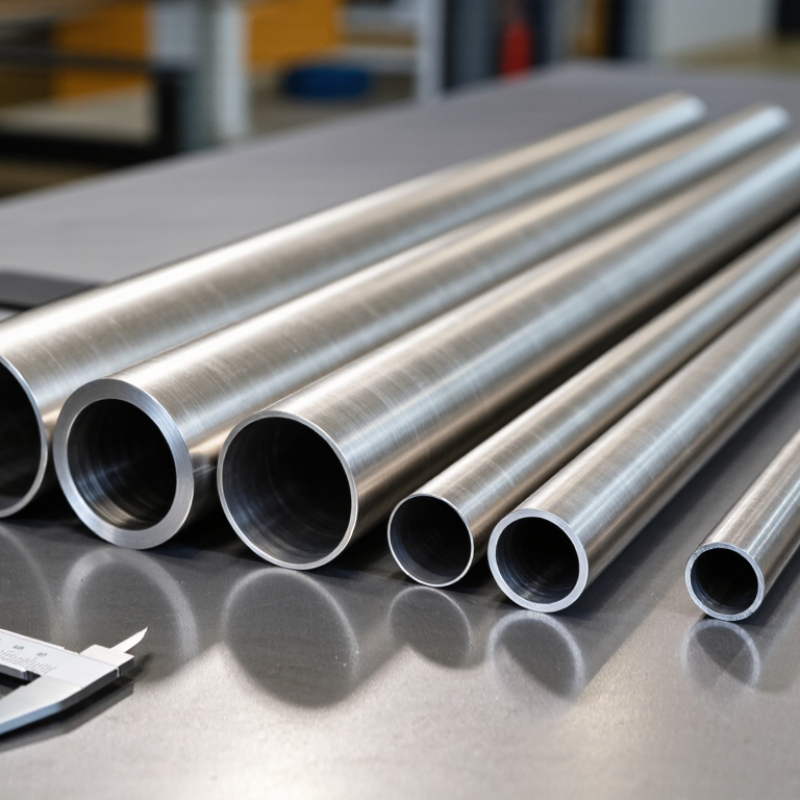
| Dimensional Accuracy | Production control may include laser or calibrated gauge measurement for diameter, wall thickness, straightness, and cut length. | ISO 1127 is a common reference for dimensions and tolerances of stainless steel tubes. | Require a dimensional inspection report linked to the heat or batch number. |
| Corrosion-Resistance Verification | Material selection, correct heat treatment, pickling, passivation, and contamination control support corrosion resistance. | ASTM A967 is a recognized specification for chemical passivation treatments of stainless steel parts. | Confirm whether pickling or passivation is included and request the applicable treatment record. |
| Mechanical and Pressure Testing | Depending on the order, testing may include tensile, hardness, flaring, flattening, hydrostatic, or pneumatic testing. | The required tests depend on the selected ASTM, EN, pressure, or application-specific standard. | Define test type, test pressure, sampling frequency, and acceptance criteria before production. |
| Cut Length and Packaging | Standard mill lengths are commonly supplied, while fixed lengths can be cut to order; protective caps, wrapping, and seaworthy bundles help prevent damage. | Packaging is normally agreed in the commercial specification rather than determined by one universal tube standard. | Specify cut-length tolerance, bundle weight, moisture protection, labeling, and container-loading requirements. |
| Documentation for Global Buyers | Typical documentation includes a commercial invoice, packing list, certificate of origin, material test certificate, inspection report, and shipping documents. | EN 10204 type 3.1 inspection certificates are commonly requested for traceable stainless steel products. | Confirm document language, certificate type, heat-number traceability, and export-marking requirements. |
| Best-Fit Applications | Architectural structures, food-processing equipment, industrial frames, heat-exchanger components, fluid systems, and general fabrication. | Application suitability depends on grade, wall thickness, weld condition, surface finish, temperature, pressure, and corrosive exposure. | Obtain written confirmation that the selected grade and tube standard match the service environment. |



 © Copyright 2020 Tianjin Tanghaidongyang Valve Co., Ltd. All Rights Reserved.