Top 5 Coriolis Mass Flow Meter Benefits for Global Buyers?
In the world of industrial measurement, the Coriolis Mass Flow Meter stands out for its accuracy and reliability. This advanced technology provides critical data for various applications, from food processing to oil and gas. Its design enables it to measure mass flow directly, which reduces the need for additional calculations.
Many global buyers are recognizing the benefits of using Coriolis Mass Flow Meters. These devices offer unmatched precision, which is crucial in industries requiring strict quality control. Furthermore, they can handle diverse fluids, including corrosive and viscous materials. Understanding these advantages is essential for organizations seeking to optimize their production processes and enhance efficiency.
However, it is important to reflect on potential challenges. The initial investment for a Coriolis Mass Flow Meter may be higher compared to other flow measurement devices. This could deter some buyers. Yet, the long-term savings and improved data accuracy often outweigh these costs. Ultimately, the choice of this technology can significantly impact operational performance.
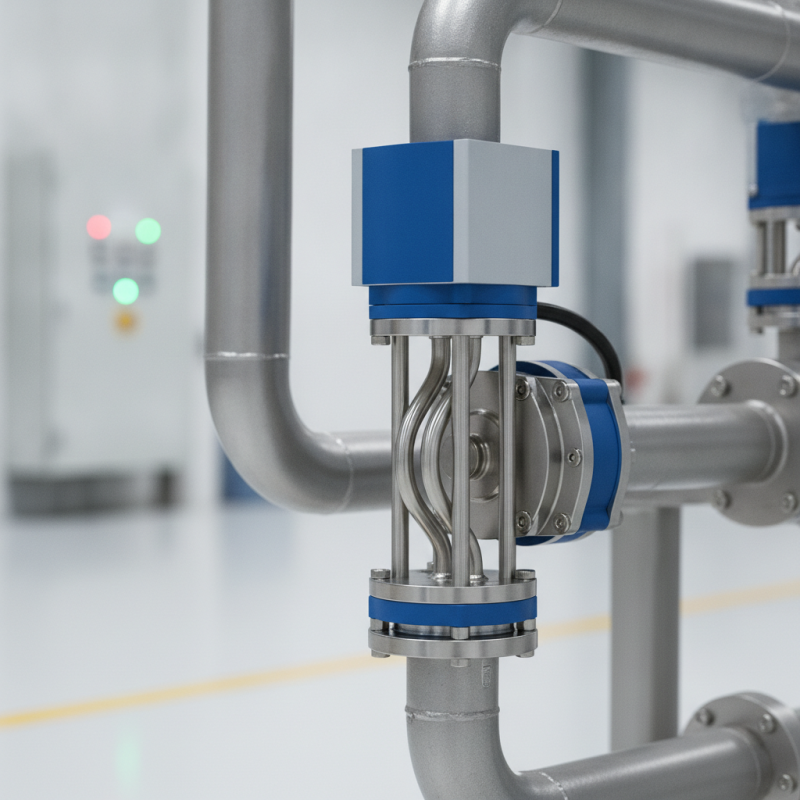
Key Advantages of Coriolis Mass Flow Meters for International Buyers
Coriolis mass flow meters are gaining popularity among global buyers. Their ability to measure mass flow accurately is a primary reason. According to a market research report by Mordor Intelligence, the demand for these meters is expected to grow at a CAGR of 6.6% from 2021 to 2026. This trend highlights the increasing reliance on precise measurement tools in various industries.
One major advantage is the versatility of these meters. They can handle liquids and gases, even under varying temperature and pressure conditions. Additionally, they offer high accuracy levels, typically around ±0.1%. This is crucial for industries that require consistent quality control, such as food and beverage or pharmaceuticals. Many industries report significant cost savings due to reduced product losses and lower maintenance needs.
Another noteworthy benefit is their simple installation. Unlike traditional flow meters, Coriolis meters require less straight-pipe length upstream and downstream. This flexibility can save significant installation costs. However, users must consider the initial investment. While these meters can be pricier upfront, their long-term reliability often justifies the expense. Regular calibration and maintenance are still necessary. Users should reflect on their specific needs to maximize the advantages of Coriolis mass flow meters.
Enhanced Accuracy and Reliability in Flow Measurement
Coriolis mass flow meters offer impressive accuracy and reliability. These instruments measure mass flow directly, eliminating the need for temperature or pressure corrections. This results in precise measurements, which is crucial for industries that rely on exact metrics, such as chemicals and food processing. When every detail counts, using these meters can significantly enhance operational efficiency.
The design of Coriolis meters allows for stable readings, even under varying conditions. This stability reduces the chances of errors, which can be costly. For instance, fluctuations in flow can lead to improper dosing in manufacturing processes. Having a reliable flow measurement system helps mitigate these risks, ensuring consistent product quality.
However, not all applications may benefit equally. Installation can be complex, and maintenance requires technical expertise. It’s essential to evaluate whether the advantages outweigh these challenges. Understanding the specific needs of your operation is key. Knowledgeable professionals should assess the long-term benefits, especially for specialized applications.
Top 5 Coriolis Mass Flow Meter Benefits for Global Buyers
This bar chart illustrates the top benefits of Coriolis mass flow meters for global buyers. Enhanced accuracy leads the benefits list, closely followed by high reliability and robustness, making these meters a preferred choice in various industries.
Versatile Applications Across Various Industries
Coriolis mass flow meters have transformative impacts across various industries. Their ability to measure mass flow accurately makes them ideal for diverse applications. From food and beverage production to chemical processing, these devices ensure efficiency and quality. They are versatile tools that adapt to numerous flow mediums, simplifying operations.
In the oil and gas sector, Coriolis meters excel in measuring viscous fluids, enhancing safety protocols. Their precision also supports compliance with industry standards. In pharmaceutical manufacturing, these meters guarantee precise dosing, crucial for product efficacy. Users in these fields have reported significant improvements in operational efficiency.
Tip: Always consider the fluid's properties before selection. Knowing viscosity, temperature, and composition helps in choosing the right model. Maintenance practices must be reviewed regularly. Lack of proper checks can lead to inaccuracies in measurements, impacting production quality.
Managing multiple applications can be challenging. A flow meter that works well in one area might struggle in another. It’s essential to continuously evaluate performance across different environments. This reflection leads to better decision-making in equipment selection. Familiarity with each application’s nuances is key to optimizing these meters.
Cost-Efficiency and Reduced Maintenance Requirements
Cost-efficient solutions in industrial processes are crucial. Coriolis mass flow meters are gaining attention for their ability to reduce operational costs. For instance, they deliver high accuracy with a typical uncertainty of less than 0.1%. This precision significantly lowers the risk of measurement errors that can lead to costly adjustments or waste.
Maintenance is often a significant expense in any facility. Coriolis meters are unique because they have no moving parts. This design minimizes wear and tear, ultimately leading to lower maintenance requirements. According to industry reports, these meters can reduce maintenance costs by up to 40%. This means fewer disruptions and more consistent operational efficiency.
Moreover, the initial investment in Coriolis technology may seem steep. However, reports suggest that the return on investment can be realized within two years due to savings in maintenance and operational costs. Failing to consider these long-term benefits can lead companies to overlook a valuable asset. Adopting Coriolis mass flow meters enhances not just efficiency but also aids in sustainable operations, reflecting an overall commitment to better process management.
Real-Time Data Monitoring and Integration Capabilities
Coriolis mass flow meters are essential tools for industries needing precise measurements. One notable benefit is their real-time data monitoring capabilities. These devices offer continuous insights into flow rates, density, and temperature. According to a recent report from the International Society of Automation, over 75% of users value real-time monitoring for optimizing processes.
Integrating these flow meters with existing systems can enhance operational efficiency. For instance, the ability to connect with control systems allows for immediate data analysis. This integration fosters better decision-making processes. Industry data indicates that companies leveraging this technology see a 20% improvement in resource allocation. However, some users face challenges during initial integrations. These challenges often require adjustments to existing workflows, highlighting areas for continuous improvement.
Moreover, real-time data can lead to significant cost savings. Monitoring systems in real-time helps in identifying deviations quickly. A study from an engineering firm showed that 30% of unexpected downtimes could be avoided with prompt data alerts. However, reliance on technology creates a risk of overlooking manual checks. Balancing automation with human oversight remains essential for optimal results.


 © Copyright 2020 Tianjin Tanghaidongyang Valve Co., Ltd. All Rights Reserved.