| Feed-water salinity | Brackish water is commonly described as having about 1,000–10,000 mg/L of total dissolved solids (TDS); definitions can vary. | Ask for a design based on a recent laboratory water analysis, including TDS, hardness, silica, iron, manganese, and organics. |
| System recovery | Many brackish-water RO systems are designed for approximately 70–85% recovery, depending on feed-water chemistry and operating conditions. | Check the stated recovery against scaling projections, concentrate disposal limits, and the actual feed-water analysis. |
| Operating pressure | Approximately 10–25 bar (145–363 psi) is a broad indicative range; required pressure depends on salinity, temperature, recovery, and membrane selection. | Request the design pressure, pump duty point, pressure-vessel rating, and operating envelope for the specified site conditions. |
| RO feed pretreatment | RO feed is commonly pretreated to achieve a silt density index (SDI₁₅) below 5; tighter targets may be specified for particular designs. | Confirm the pretreatment equipment, filtration rating, chemical dosing, and provisions for variable or seasonal source-water quality. |
| Energy use | Specific energy consumption varies widely with feed salinity, recovery, system size, and operating conditions; compare proposals using kWh per m³ of permeate. | Ensure quoted energy use states the design feed conditions and clarifies whether pretreatment and auxiliary equipment are included. |
| Permeate quality | Product-water TDS depends on feed composition, membrane performance, temperature, and system configuration; it cannot be reliably specified from feed TDS alone. | Request a projected permeate analysis and confirm whether post-treatment, such as remineralization or pH adjustment, is required for the intended use. |
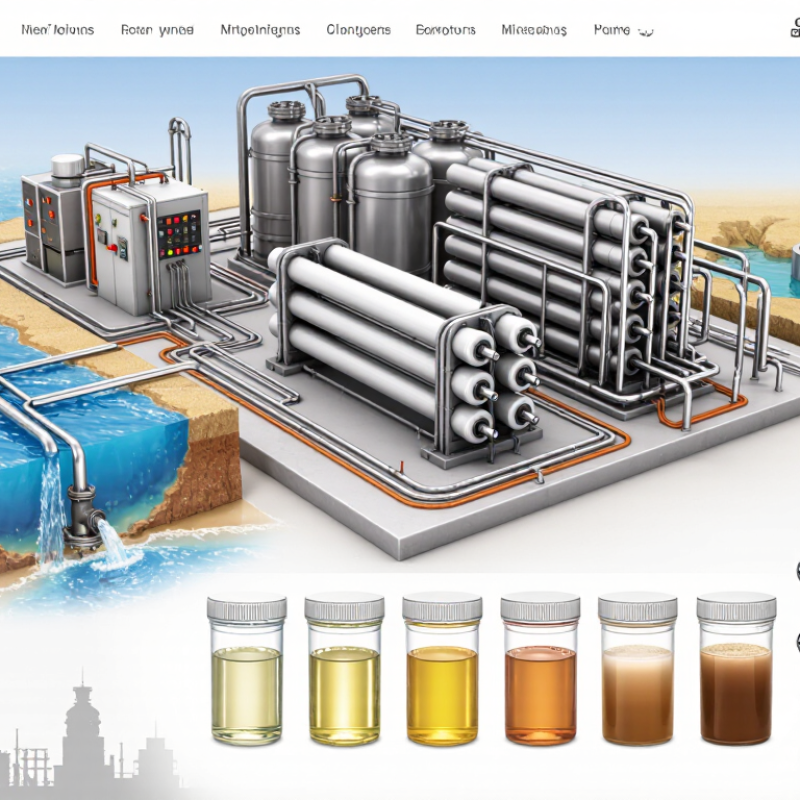
| Membrane and pressure-vessel configuration | Commercial RO systems use membrane elements installed in pressure vessels; the number and arrangement are selected for the required flow and water chemistry. | Check membrane-element availability, replacement compatibility, design flux, vessel rating, and access for routine maintenance. |
| Materials and corrosion protection | Material selection depends on feed-water chemistry, site conditions, and the wetted component; no single material suits every installation. | Review material specifications for pumps, piping, valves, tanks, and fasteners, especially where chloride levels or corrosive conditions are high. |
| Controls and monitoring | Typical monitoring points include feed and permeate flow, pressure, conductivity, and key operating alarms. | Confirm instrumentation scope, data logging, remote-monitoring options, alarm handling, and compatibility with the plant control system. |
| Compliance and project documentation | Applicable requirements depend on the destination market, end use, and project specification. | Request the relevant conformity documents, electrical documentation, process drawings, operating manuals, and commissioning records for the installation location. |
| Service and lifecycle support | Maintenance intervals and consumable life depend on water quality, pretreatment performance, and operating practices. | Compare local service coverage, spare-parts lead times, operator training, warranty terms, and the availability of membrane-cleaning support. |



 © Copyright 2020 Tianjin Tanghaidongyang Valve Co., Ltd. All Rights Reserved.