| Primary Frame Materials | Powder-coated steel, galvanized steel, aluminum, and stainless steel are commonly used. | Steel provides structural strength, aluminum reduces weight, and stainless steel offers strong corrosion resistance. The selected material should match the installation environment and required service life. |
| Wire Mesh and Enclosure Panels | Welded wire mesh, expanded metal panels, and rigid framed screens are common enclosure solutions. | Welded mesh provides consistent openings and good visibility. Buyers should confirm wire diameter, aperture size, edge finishing, and resistance to deformation before ordering. |
| Surface Protection | Powder coating and hot-dip galvanizing are widely used for metal components. | Surface treatment helps protect outdoor components from moisture and oxidation. Outdoor specifications should include coating coverage, pretreatment, color requirements, and inspection criteria. |
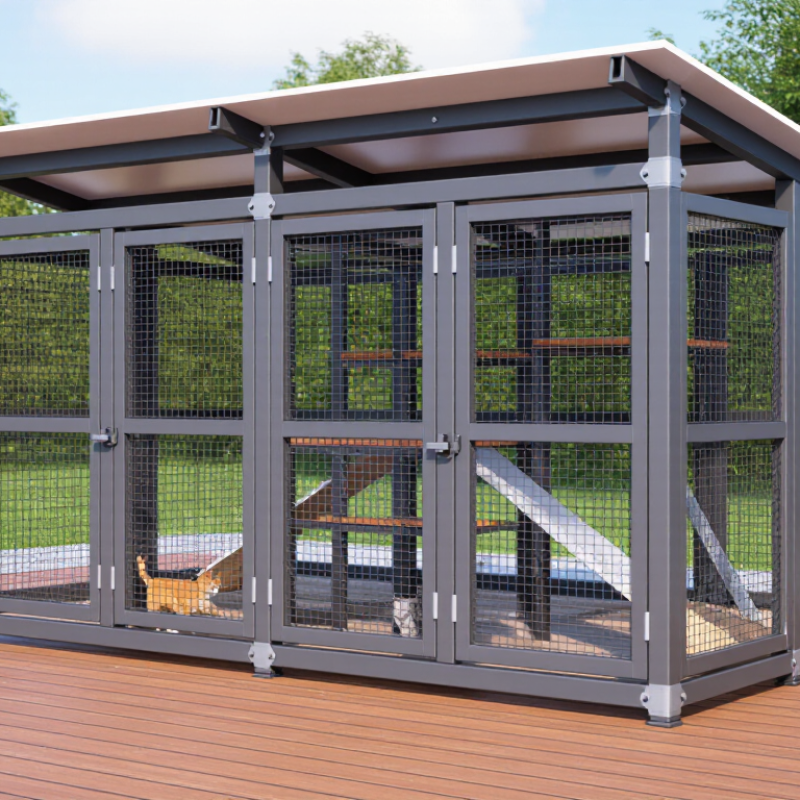
| Roofing Options | Wire-mesh roofs, polycarbonate sheets, metal panels, and partial shade covers are frequently offered. | A mesh roof improves ventilation, while solid or translucent panels provide protection from rain and sun. Mixed-roof designs can balance airflow, shade, and weather protection. |
| Access and Safety Features | Lockable doors, self-closing gates, smooth edges, escape prevention features, and secure connection points are standard design considerations. | The enclosure should prevent accidental opening and minimize sharp edges or pinch points. Door dimensions and latch placement should be checked against the cats’ size and the owner’s access needs. |
| Modular Construction | Bolt-together frames, interchangeable panels, extension modules, and wall-mounted or freestanding layouts are common. | Modular construction simplifies shipping, installation, relocation, and future expansion. It is especially useful for buyers serving different residential layouts or retail markets. |
| Customization Capability | Manufacturers commonly adjust dimensions, frame colors, mesh openings, roof styles, doors, platforms, ramps, and cat-access tunnels. | Custom drawings should clearly identify dimensions, tolerances, materials, hardware, finish, assembly method, and installation conditions to reduce production errors. |
| Outdoor Weather Considerations | Designs may include drainage gaps, corrosion-resistant hardware, UV-resistant roof materials, reinforced anchoring, and wind-load considerations. | Outdoor suitability depends on local rainfall, humidity, temperature, wind, snow, and exposure to salt air. A product described as weather-resistant should still be evaluated for the destination climate. |
| Cat Enrichment Components | Shelves, climbing platforms, ramps, bridges, resting boxes, scratching surfaces, and feeding areas are commonly integrated. | Vertical space and separate resting levels can improve usability in compact patios. Components should be stable, cleanable, securely fixed, and sized for the intended cats. |
| Manufacturing and Quality Control | Typical production stages include cutting, welding, grinding, surface treatment, assembly checks, packaging inspection, and sampling inspections. | Global buyers should request material specifications, dimensional inspection records, coating checks, weld-quality requirements, and pre-shipment photographs where appropriate. |
| Packaging for Export | Knock-down components are commonly packed in cartons, protective foam, woven wrapping, or wooden cases depending on product size and transport requirements. | Flat-pack or knock-down packaging can reduce shipping volume. Packaging should protect coated surfaces, separate hardware, identify parts, and include clear assembly instructions. |
| Common Export Documentation | Commercial invoices, packing lists, shipping documents, certificates of origin, and product-specific compliance documents may be required. | Documentation depends on the destination country, customs classification, shipping method, and buyer requirements. Importers should confirm applicable regulations before placing an order. |
| Installation Formats | Freestanding patio units, wall-attached enclosures, window-access catios, balcony structures, and custom outdoor runs are common formats. | The installation surface, wall condition, balcony restrictions, drainage, and available anchoring points should be reviewed before selecting a configuration. |
| Typical Procurement Process | Inquiry, technical discussion, drawing confirmation, sample or prototype review, quotation, production, inspection, and shipment. | A documented approval process helps align the buyer and manufacturer on dimensions, finish, packaging, accessories, delivery terms, and acceptance standards. |
| Key Buyer Evaluation Criteria | Material quality, structural stability, corrosion protection, safety design, customization support, packaging, communication, and after-sales service. | Evaluating these factors together is more reliable than comparing unit price alone. A lower price may reflect differences in material thickness, hardware, finish, packaging, or included accessories. |


 © Copyright 2020 Tianjin Tanghaidongyang Valve Co., Ltd. All Rights Reserved.