China Top Swagelok Stainless Steel Tubing Suppliers
China’s stainless steel tubing market offers a wide range of suppliers, but a polished catalog is only a starting point. For buyers sourcing Swagelok Stainless Steel Tubing, the key questions are practical: Is the product genuine, traceable, and suitable for the specified pressure, temperature, and fluid? Ask for material test reports, clear grade identification, dimensional tolerances, and batch records. Check how tubing is protected during storage and shipping; a capped tube with clean, dry packaging tells you more than a sales promise. Small details matter.
W. Edwards Deming, a quality-management expert, is often credited with the reminder, “Quality is everyone’s responsibility.” That principle fits supplier evaluation: dependable tubing requires sound production controls, careful inspection, and accurate documentation. It does not, by itself, verify any supplier’s products. This guide compares China-based suppliers by their stated capabilities, product information, quality processes, and communication—not by bold claims alone. Buyers should independently confirm authorization and product origin where those factors matter. No supplier is perfect. That deserves scrutiny. A responsive sales team is useful, but technical answers should be specific and consistent. Look for clear explanations of alloy, surface condition, dimensions, and available documentation. The best choice is not automatically the lowest quote or the largest factory. It is the supplier whose evidence matches your application and whose limitations are stated plainly. This overview offers a grounded starting point for making that comparison.
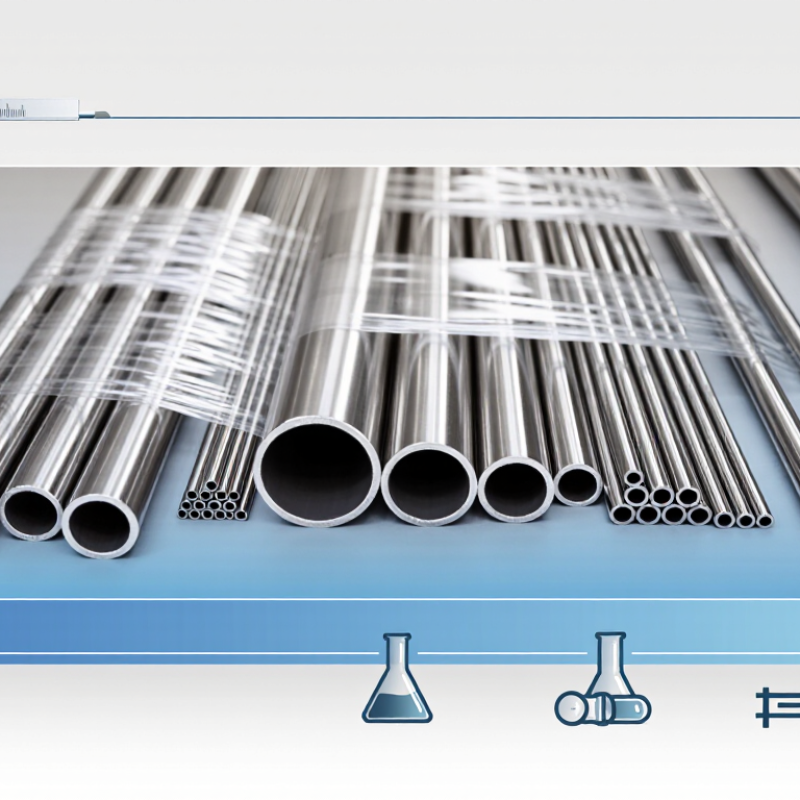
How to Define Swagelok-Compatible Stainless Steel Tubing in China
Defining Swagelok-compatible stainless steel tubing in China starts with measurable fit, not a material label. Specify outside diameter, wall thickness, ovality, and dimensional tolerances against the intended compression fitting. Confirm the tube’s grade, hardness, and surface condition as well. Type 316 or 316L may suit corrosive service, but the grade alone does not guarantee a reliable seal. The International Stainless Steel Forum reported 58.4 million tonnes of global stainless-steel crude production in 2023, including about 36.7 million tonnes in China. That scale offers buyers options, but it also makes traceable specifications essential.
Ask suppliers for material test certificates, heat numbers, and inspection records linked to each batch. Check that tube ends are square, deburred, and free from dents or scratches where the ferrule grips. A polished appearance is not proof of dimensional consistency. Even a good certificate cannot compensate for a nicked tube end; this detail is easy to underestimate. Pressure suitability should be verified using the actual tube dimensions, operating conditions, and applicable engineering standards.
Tips: Request sample lengths before ordering. Measure outside diameter at several points, and inspect the ends under bright light. Record the fitting series and service conditions on the purchase specification. If test results are incomplete, pause and clarify them.
ASTM A269 vs. A213: Match the Tube Standard to Its Service
ASTM A269 and A213 describe different tubing needs, even when the material names look similar. A269 covers seamless and welded austenitic stainless steel tubing for general corrosion-resistant and low- or high-temperature service. It may suit process lines where a clean bore and consistent wall thickness matter. Picture a small-bore tube routed around a washdown area: corrosion resistance and dimensional fit both count. Small details matter.
A213 covers seamless ferritic and austenitic alloy-steel tubes for boilers, superheaters, and heat exchangers. Its intended service makes it a stronger starting point for equipment exposed to heat transfer and repeated temperature changes. A213 is not simply a “higher-temperature A269”; the scope and manufacturing requirements differ. Check the required grade, tube dimensions, design pressure, temperature, and corrosion conditions before ordering. Ask suppliers for traceable material test reports and confirmation that the markings match the purchase specification. A standard alone cannot confirm fitness for every installation, and I have seen specifications leave out a key operating detail. That deserves a second look.
316L Benchmarks: 0.03% Max Carbon and 2–3% Molybdenum
For stainless-steel tubing, 316L chemistry is a practical starting point—not a guarantee of performance. ASTM A240/A240M lists a maximum carbon content of 0.03% and a molybdenum range of 2–3% for 316L. That low-carbon limit helps reduce sensitization risk during welding, while molybdenum supports resistance to pitting in chloride-bearing environments. Numbers matter.
When assessing Chinese tubing suppliers, request a heat-specific mill test certificate and compare its reported chemistry with the applicable tubing specification. Check carbon and molybdenum values directly; a generic grade statement is not enough. A handheld X-ray analyzer can help screen alloy content, but it cannot reliably verify carbon. Use a suitable laboratory method for that measurement. Small detail, big difference.
Chemistry is only one part of procurement. Ask how the supplier controls dimensions, surface finish, and traceability from the heat number to each tube bundle. ASTM’s material requirements provide a useful benchmark, but they do not replace application-specific testing. A polished certificate can still leave questions. Review the inspection records, and confirm that the product standard matches the intended service. Supplier comparisons become clearer when evidence is specific, not merely reassuring.
China Stainless Steel Tubing Supplier Benchmarks — 316L: 0.03% Max Carbon and 2–3% Molybdenum
| Evaluation Dimension | Typical 316L Benchmark | Verification Method |
| Carbon (C) | 0.030% maximum | Check the material test certificate (MTC) against the ordered product specification. |
| Molybdenum (Mo) | 2.00–3.00% | Confirm the reported heat analysis on the MTC. |
| Chromium (Cr) | 16.00–18.00% | Compare the MTC chemistry with the applicable 316L specification. |
| Nickel (Ni) | 10.00–14.00% | Review the heat analysis and confirm grade identification. |
| Manganese (Mn) | 2.00% maximum | Verify against the chemistry limits in the applicable standard. |
| Phosphorus (P) | 0.045% maximum | Check the MTC; use the purchase specification for acceptance. |
| Sulfur (S) | 0.030% maximum | Check the MTC and any tighter cleanliness or application requirements. |
| Silicon (Si) | 1.00% maximum | Verify the reported value against the governing material specification. |
| Grade and traceability | 316L / UNS S31603 identification with heat-level traceability | Match product markings, inspection records, and MTC heat numbers. |
| Tubing dimensions | Outside diameter and wall thickness as specified on the purchase order | Measure samples using calibrated instruments and the agreed tolerances. |
| Product standard | Specify the applicable tubing standard and edition in the purchase documents | Confirm that certificates and inspection records correspond to the ordered standard. |
Chemistry values are typical 316L limits; confirm the applicable product standard, edition, and purchase requirements before acceptance.
How ASME B31.3 Guides Process Piping Supplier Checks
China Top Swagelok Stainless Steel Tubing Suppliers
How ASME B31.3 Guides Process Piping Supplier Checks
ASME B31.3 sets requirements for process piping materials, design, fabrication, examination, inspection, and testing. The 2022 edition is a useful reference when building a supplier-check process, but project specifications still determine what each line requires. Industry context matters: the International Stainless Steel Forum’s Stainless Steel in Figures 2024 reports global stainless steel production of 58.4 million tonnes in 2023, up 4.6% from 2022. More material in circulation makes careful identification essential.
For stainless tubing, confirm the grade, dimensions, wall thickness, and condition against the purchase documents. Match heat numbers on the tubing to the mill test report, then check that the reported chemistry and mechanical properties meet the specified requirements. Review inspection and test records, including pressure-test documentation when applicable. One uncomfortable truth: paperwork can look tidy while a storage rack contains mixed heats. A physical marking check helps catch that gap. B31.3 supports code compliance; it does not replace project-specific engineering review.
Tips: Check a sample tube before accepting the full lot. Photograph its heat marking, measure its outside diameter and wall thickness, and compare both with the records. Keep discrepancies visible and documented. A quick visual check can miss a subtle mismatch.
How to Compare China’s Top Suppliers by Traceability, Testing, and Authorization
When comparing China-based stainless steel tubing suppliers, ask for a traceable chain from each tube bundle to its original heat. Check that bundle tags, heat numbers, and material test reports match. A polished certificate is not enough. Confirm the stated grade, dimensions, and applicable specification against the purchase order, then request sample records before production. World Stainless reported 58.4 million tonnes of global stainless-steel melt-shop production in 2023, underscoring the scale of a market where paperwork needs careful checking.
Testing should be specific, not just described as “fully tested.” Request the inspection plan, actual test results, and instrument calibration records. For critical service, verify whether the laboratory’s ISO/IEC 17025 accreditation covers the relevant tests. Review authorization separately: ask for a current manufacturer authorization letter and confirm its scope includes the product and sales channel offered. Details can expire. I have seen small gaps, such as mismatched heat numbers, delay otherwise sound deliveries.
Tips: Compare one anonymized test pack from each supplier. Check heat-number continuity, test dates, and sign-offs. Ask who handles nonconforming tubes, and how replacement material retains traceability. Independent inspection can help, but only when its scope is agreed before shipment.



 © Copyright 2020 Tianjin Tanghaidongyang Valve Co., Ltd. All Rights Reserved.