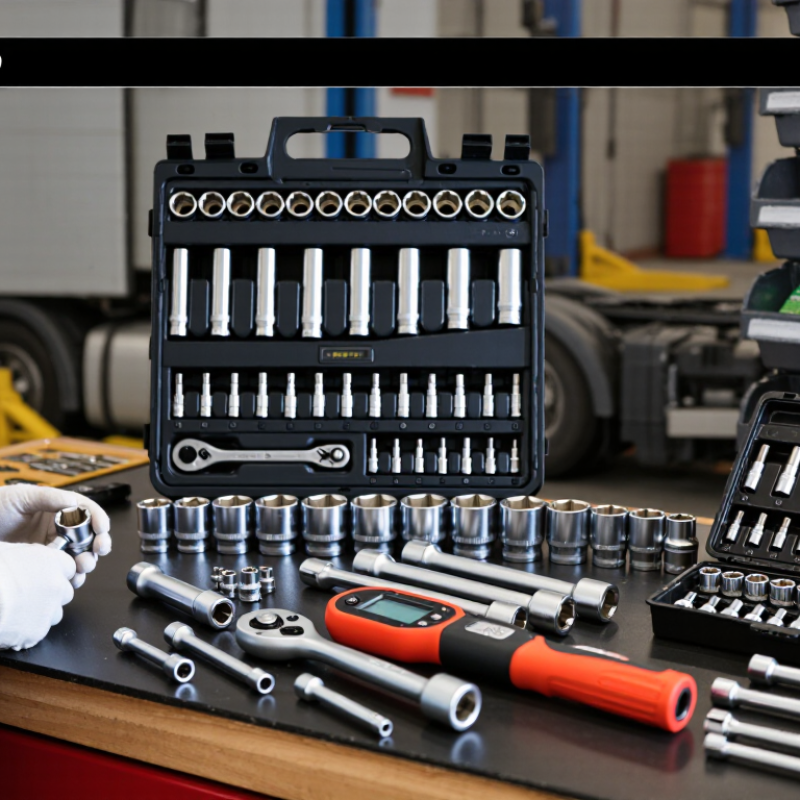
| Hand Tools | Combination wrenches, sockets, ratchets, breaker bars, screwdrivers, and pliers | Used to loosen or tighten fasteners, remove covers, adjust components, and carry out routine repairs. | Engine accessories, suspension parts, battery connections, body fittings, and general workshop maintenance | Confirm metric size coverage, drive sizes, material quality, finish, and whether sockets are designed for hand use or impact use. |
| Torque Tools | Torque wrenches and torque multipliers | Apply a specified amount of tightening force to help reduce under-tightening or over-tightening. | Wheel fasteners, cylinder head fasteners, and other components with manufacturer-specified torque requirements | Check the working range, calibration procedure, accuracy information, drive size, and suitability for the required torque values. |
| Lifting and Support Equipment | Hydraulic jacks, axle stands, workshop cranes, and transmission jacks | Raise or support a vehicle or component during inspection, removal, and installation. | Wheel and brake service, gearbox work, and under-vehicle repairs | Verify rated capacity, lift range, stability, safety features, and compatibility with the vehicle's weight and lifting points. Never rely on a jack alone for support. |
| Pneumatic and Impact Tools | Impact wrenches, air ratchets, air hoses, and air preparation units | Use compressed air to speed up repetitive fastening and removal tasks. | Wheel service, chassis work, and workshop jobs involving frequent fastener removal | Check air pressure and airflow requirements, connection type, drive size, tool duty rating, and the need for suitable impact-rated sockets. |
| Brake Service Tools | Brake piston wind-back tools, brake bleeders, flare nut wrenches, and brake drum tools | Assist with brake component removal, piston retraction, hydraulic bleeding, and servicing of brake lines. | Disc and drum brake maintenance on compatible vehicle designs | Confirm compatibility with the brake system and vehicle design; use the correct fluid and follow the vehicle service procedure. |
| Engine and Fuel-System Tools | Compression testers, leak-down testers, injector pullers, and fuel-line tools | Measure engine condition or help remove and service fuel-system components. | Diesel engine diagnostics, injector work, and investigation of starting or performance problems | Check test range, adapters, connection sizes, pressure rating, and compatibility with the engine and fuel system being serviced. |
| Electrical Diagnostic Tools | Digital multimeters, test lamps, circuit probes, and battery testers | Measure voltage, resistance, and continuity, or assess battery and charging-system performance. | Starting, charging, lighting, wiring, and sensor-circuit diagnosis | Review measurement range, overload protection, lead quality, safety rating, and whether the instrument suits the expected circuit voltage. |
| Electronic Diagnostic Equipment | Commercial-vehicle diagnostic scanners and code readers | Read fault codes and, where supported, view live data or run system tests through vehicle diagnostic connections. | Engine, after-treatment, transmission, braking, and other electronically controlled systems | Confirm vehicle and system coverage, supported communication protocols, software update terms, and connector compatibility before purchase. |
| Measuring and Inspection Tools | Dial indicators, micrometers, vernier calipers, feeler gauges, and inspection mirrors | Measure clearances, dimensions, runout, or wear and inspect areas that are difficult to see directly. | Engine, wheel-end, brake, and driveline inspections | Choose an appropriate measurement range and resolution, and check calibration needs, readability, and protection from workshop contamination. |
| Workshop Consumables and Safety Equipment | Gloves, eye protection, drain pans, work lights, and tool storage | Support safe, organized servicing and help collect fluids or illuminate work areas. | Routine maintenance and repair across the workshop | Check material suitability, load or fluid capacity where relevant, durability, and compliance with applicable workplace safety requirements. |



 © Copyright 2020 Tianjin Tanghaidongyang Valve Co., Ltd. All Rights Reserved.