| Indoor Monitor | Common screen sizes include 4.3, 7, and 10.1 inches. Touchscreen options, hands-free communication, and multi-monitor configurations are widely available. | Confirm screen resolution, operating system, user interface languages, mounting method, and compatibility with the outdoor station. |
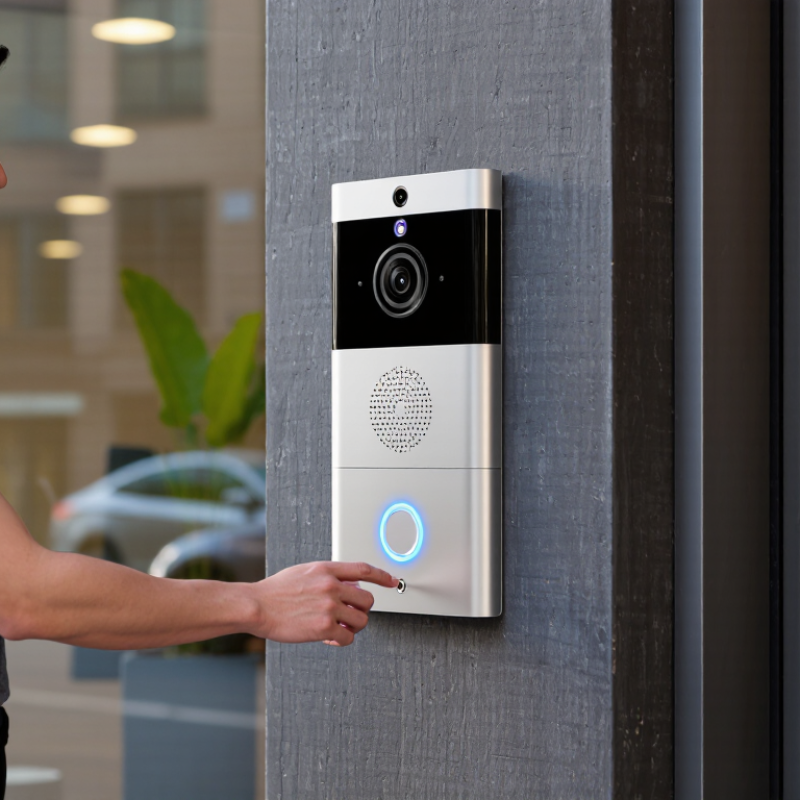
| Outdoor Video Station | Configurations commonly include a wide-angle camera, microphone, speaker, call button, and infrared illumination for low-light use. Full HD (1920 × 1080) is a common camera resolution option. | Check camera resolution and field of view, night-vision performance, audio quality, and whether the unit supports one or multiple apartments. |
| Network and Cloud Connectivity | Depending on the system, connectivity may use Ethernet, Wi-Fi, or Power over Ethernet (PoE). Cloud-connected models can support app notifications, remote answering, and visitor video calls. | Ask which Wi-Fi bands are supported, whether PoE is available, how remote access is secured, and whether cloud services require a subscription. |
| Protocols and Integration | Some products offer SIP-based communication or integration with third-party access-control and building systems. Protocol support varies by model and software version. | Request the protocol documentation, supported APIs, integration test results, and confirmation of compatibility with the intended system. |
| Access-Control Functions | Depending on the configuration, access methods may include an electric-lock relay, PIN entry, or RFID credentials. RFID systems may use 125 kHz or 13.56 MHz technologies. | Verify the credential technology, relay rating, lock compatibility, emergency-release behavior, and any local access-control requirements. |
| Weather and Vandal Resistance | Outdoor models may be offered with an IP65-rated enclosure, indicating dust-tight construction and protection against water jets under the specified test conditions. Ratings depend on the tested product configuration. | Request the test report for the complete assembled unit and check operating-temperature limits, materials, seals, and any impact-resistance rating. |
| Electronics Manufacturing | Typical production processes can include PCB assembly, surface-mount technology (SMT), solder-paste inspection, automated optical inspection (AOI), and final product assembly. | Ask which processes are performed in-house, how component traceability is maintained, and whether inspection records can be provided for production batches. |
| Quality and Reliability Testing | Relevant checks may include call and unlock function tests, audio/video tests, network connection checks, power-on aging, and inspection of enclosure sealing. | Confirm test coverage, sampling or 100% inspection practices, aging-test duration, failure tracking, warranty terms, and corrective-action procedures. |
| Compliance and Documentation | Market access may require applicable electrical-safety, electromagnetic-compatibility, radio, and substance-restriction documentation. Requirements depend on the destination market and product configuration. | Request current certificates and test reports that identify the exact model, radio modules, and manufacturing site; verify that they cover the target market. |
| Customization and OEM/ODM Support | Common customization options include enclosure color, logo placement, language, boot screen, user interface, packaging, and selected hardware configurations. | Clarify tooling costs, minimum order quantities, sample lead time, engineering-change control, ownership of custom designs, and production lead times. |



 © Copyright 2020 Tianjin Tanghaidongyang Valve Co., Ltd. All Rights Reserved.