How Chinese Manufacturers Design and Build Explosion-Proof Boxes
Chinese explosion-proof box manufacturers usually begin with the installation environment. Engineers review gas or dust risks, temperature, voltage, cable entry, and required ingress protection. They also study maintenance habits. A box that is difficult to open may create unsafe field work.
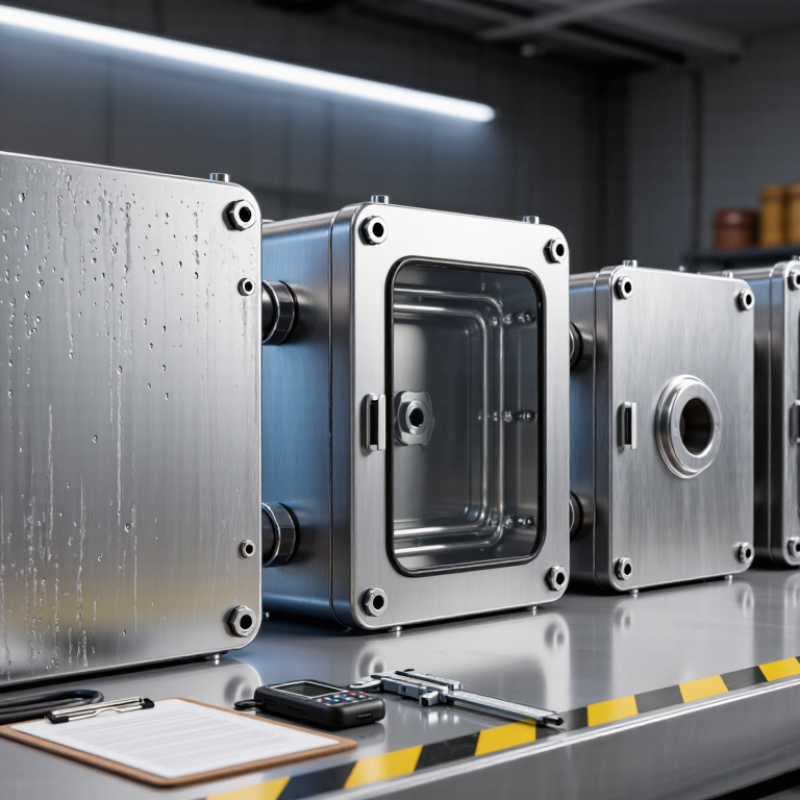
M Material selection depends on the application. Stainless steel resists corrosion in coastal plants. Aluminum reduces weight for indoor equipment. Thick walls, carefully machined joints, and controlled gaps help contain internal pressure. Cable glands, hinges, bolts, and sealing parts must match the enclosure design. Small details matter.
Machining accuracy matters greatly. Even a minor surface defect can affect joint performance. Manufacturers often use CNC equipment, coordinate checks, and controlled welding procedures. Each finished box may undergo visual inspection, insulation testing, grounding checks, pressure testing, and ingress protection verification. Qualified third-party laboratories can assess designs against relevant international requirements, such as IEC 60079 series standards.
Good factories also keep material records, inspection reports, and production traceability. They test prototypes before releasing large orders. Field feedback can reveal problems that laboratory work misses. For example, condensation may appear after repeated temperature changes. A design can pass a test yet remain inconvenient for technicians. That weakness deserves review.
Not every supplier applies the same discipline. Buyers should examine certificates, drawings, test records, and quality controls directly. Clear communication about hazardous-area classification prevents expensive redesigns. Reliable manufacturers explain limits instead of promising universal solutions.



 © Copyright 2020 Tianjin Tanghaidongyang Valve Co., Ltd. All Rights Reserved.