| Two-way, full-port ball valve | Most commonly flanged; some product lines offer grooved ends | On/off isolation where a relatively open flow path and lower flow restriction are useful. Often selected for water and compatible utility services. | Use the manufacturer’s pressure-temperature rating for the complete valve. Flanged iron valves may be specified by a flange standard and class, such as ASME Class 125 or a ductile-iron flange class; these designations should not be treated as interchangeable psi ratings. | Confirm bore size, seat and seal compatibility, flange drilling, face-to-face dimensions, and whether the stated rating applies at the operating temperature. |
| Two-way, reduced-port ball valve | Flanged, threaded, or grooved, depending on the product range | General shutoff where a smaller flow opening is acceptable. A reduced bore can affect flow capacity and pressure loss compared with a full-port design. | Rating is model- and size-specific; the reduced port does not by itself establish a higher or lower allowable working pressure. | Check flow capacity, minimum passage size, pressure drop, connection standard, and the valve’s rated pressure at the required temperature. |
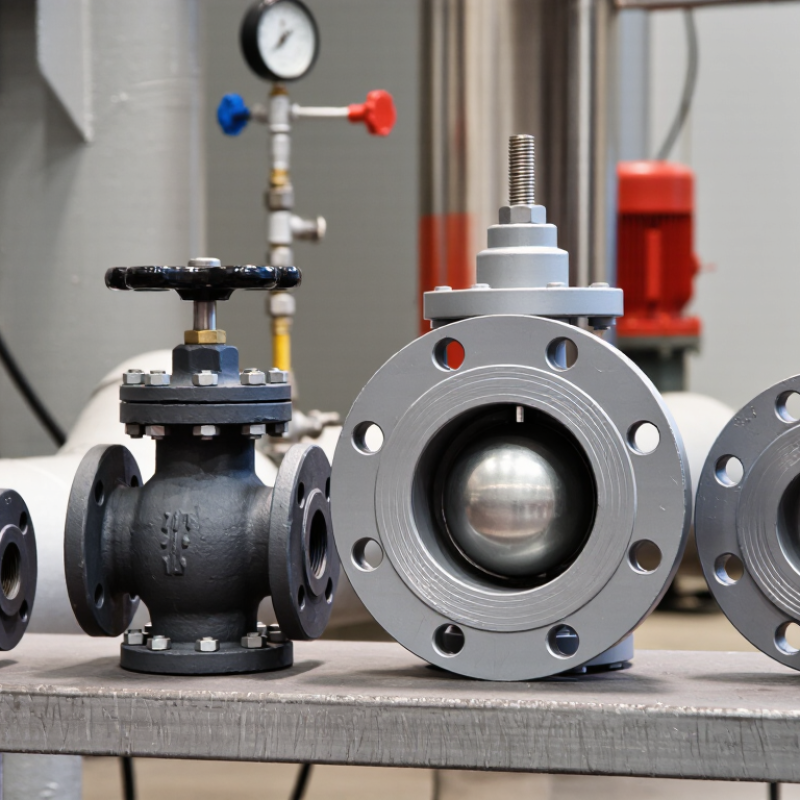
| Flanged-end iron ball valve | Raised-face or flat-face flanges; standards may include ASME B16.1, ASME B16.42, or EN 1092-2, as specified | A common choice for fixed piping, larger sizes, and installations where bolted joints support maintenance or equipment removal. | Flange class, valve-body design, size, and temperature all matter. The flange standard alone does not confirm the pressure rating of the assembled valve. | Match flange standard, class, facing, bolt pattern, gasket, and pipe material. Do not mix flange systems without confirming compatibility. |
| Threaded-end iron ball valve | Typically NPT or BSP threaded ends, where offered | Compact piping and smaller lines where a bolted flange connection is unnecessary. Threaded iron-bodied options are less widely available than many brass or stainless-steel alternatives. | Use the valve’s stated working-pressure rating and temperature limits; do not infer a rating from the thread type or nominal pipe size. | Verify thread form, sealing method, permitted installation torque, body material, and whether the valve is approved for the intended fluid and service. |
| Grooved-end iron ball valve | Grooved ends joined with compatible mechanical couplings | Useful where piping is designed for grooved mechanical joints and quicker assembly or disassembly is desired. | The allowable pressure is limited by the lowest-rated component in the assembly, including the valve, coupling, gasket, and pipe. Ratings can vary with size and service conditions. | Match groove dimensions and coupling type; confirm gasket material, end restraint requirements, and the pressure rating of the complete joint. |
| Three-way iron ball valve | Flanged or threaded, depending on design and size | Diverts or combines flow through an L-port or T-port ball. Can reduce the number of separate valves in some piping layouts. | Follow the specific manufacturer’s rating and port-position limits. Three-way configurations can have different pressure limits from comparable two-way models. | Confirm L-port or T-port flow paths, handle positions, allowable differential pressure, shutoff requirements, and correct installation orientation. |



 © Copyright 2020 Tianjin Tanghaidongyang Valve Co., Ltd. All Rights Reserved.