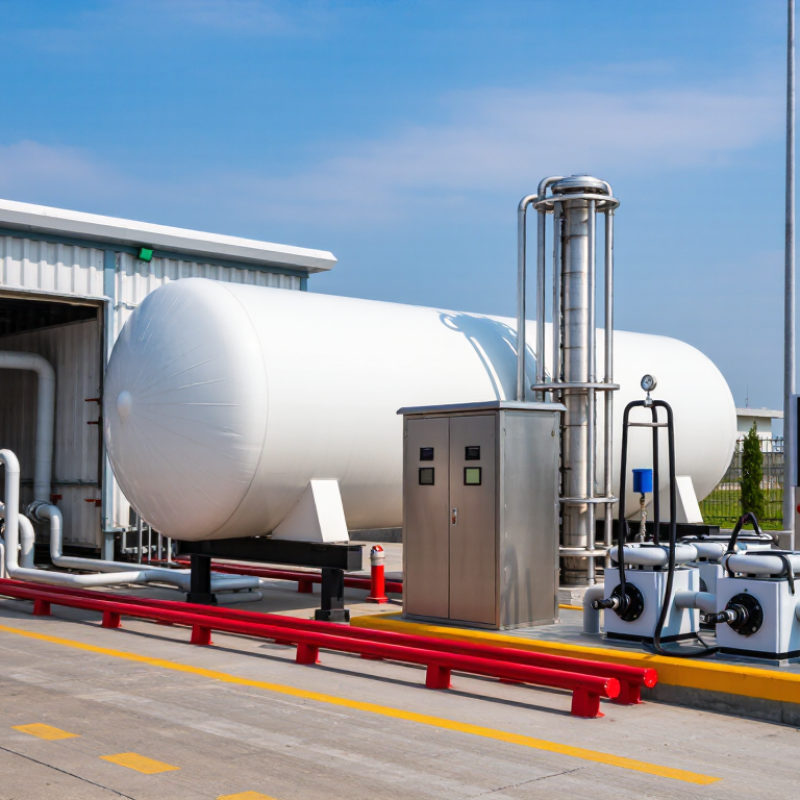
| LNG storage system | Stores liquefied natural gas at cryogenic temperature before dispensing. | Vacuum-insulated storage tank, tank supports, level and pressure instruments. | Designed for cryogenic service; tank pressure, liquid level, insulation condition, and pressure-relief protection require monitoring. |
| LNG transfer and unloading equipment | Transfers LNG from a delivery tanker or other supply source into station storage. | Cryogenic hoses or loading arms, connection points, isolation valves, and transfer piping. | Connections and procedures must control leaks and manage pressure and temperature changes during transfer. |
| LNG pump system | Moves LNG from the storage tank toward the dispenser and provides the required delivery pressure. | Cryogenic pump, motor or drive, pump vessel or sump where applicable, and associated valves. | Pump selection depends on station layout and required flow; equipment must be suitable for cryogenic liquid and protected against abnormal operating conditions. |
| Pressure-building and vaporizer equipment | Uses controlled vaporization to help maintain tank or system pressure where the station design requires it. | Ambient-air or heated vaporizer, pressure-building coil, regulators, and connecting pipework. | The arrangement is design-specific; vaporizer capacity and control settings must match the station’s operating requirements. |
| LNG dispenser and metering system | Delivers LNG to a vehicle and measures the amount dispensed. | Dispenser cabinet, cryogenic flow meter, display, delivery hose, nozzle, and breakaway coupling. | Metering, nozzle compatibility, hose condition, and safe connection and disconnection procedures are essential. |
| Boil-off gas and vent management | Manages gas formed as heat enters the cryogenic system and provides a controlled route for pressure relief where required. | Boil-off gas handling pipework, pressure-control devices, relief valves, and vent stacks or recovery equipment, as specified by the design. | Venting and recovery arrangements must follow applicable codes and the station’s approved safety design. |
| Cryogenic piping, valves, and fittings | Connects storage, pumps, vaporizers, and dispensers while controlling LNG and gas flow. | Cryogenic-rated pipework, isolation and control valves, strainers, joints, and supports. | Materials and components must be suitable for cryogenic temperatures; layout should accommodate thermal contraction and allow safe isolation. |
| Instrumentation and station controls | Monitors operating conditions and coordinates equipment functions and alarms. | Pressure and temperature transmitters, level gauges, gas detectors, alarms, and control panels. | Instrument selection, alarm limits, and control logic should be established through the station’s engineering and safety assessment. |
| Safety and emergency systems | Detects hazards and helps operators isolate or shut down equipment during an abnormal event. | Emergency shutdown controls, gas and fire detection, pressure-relief devices, warning signs, and fire protection provisions. | System coverage and equipment requirements depend on site design and applicable regulations; inspection and functional testing are important. |



 © Copyright 2020 Tianjin Tanghaidongyang Valve Co., Ltd. All Rights Reserved.