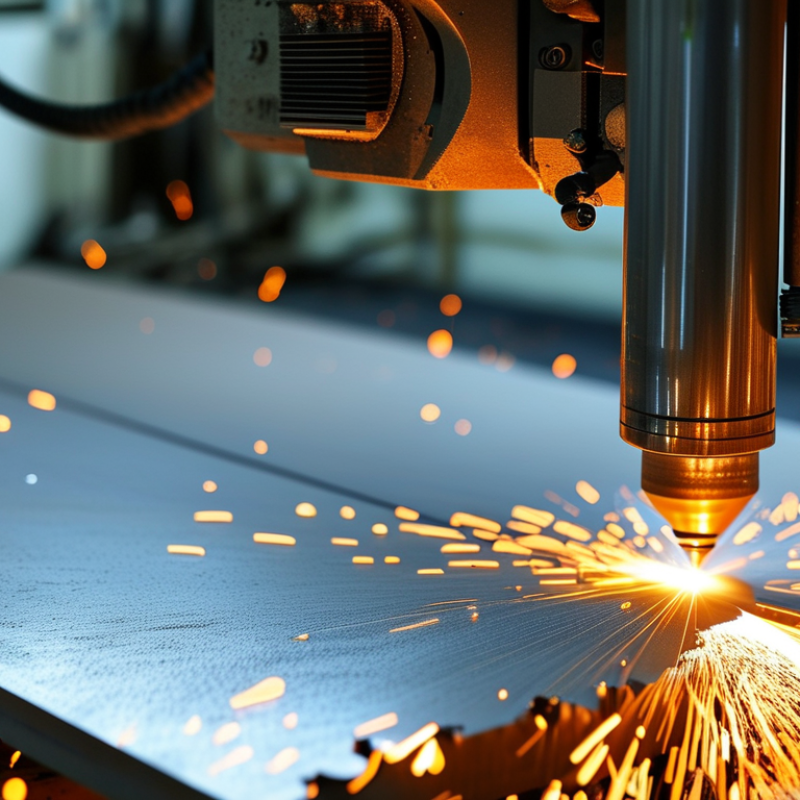
| Laser Cutting | Utilizes a high-powered laser beam to cut through metal. | Steel, Aluminum, Copper | High precision, minimal waste. | Limited thickness cutting. |
| Plasma Cutting | Employs ionized gas to cut through metal. | Steel, Stainless Steel, Aluminum | Fast cutting speed, good for thicker materials. | Less precision than laser cutting. |
| Water Jet Cutting | Uses high-pressure water mixed with abrasive materials. | All metals, Stone, Glass, Plastic | No heat-affected zone, versatile. | Slower than laser/plasma cutting. |
| Oxy-Fuel Cutting | Combines oxygen with fuel gas to cut metal. | Steel and Metals with lower melting points | Inexpensive equipment, effective for thick materials. | Requires preheating, less precision. |
| Band Saw Cutting | Uses a serrated band to cut metal. | All types of metals | Good for intricate cuts, versatile. | Slower compared to other methods. |
| Shearing | Uses a sharp blade to cut metal sheets. | Thin metal sheets | Rapid cutting, minimal distortions. | Not suitable for thick materials. |
| Nibbling | Creates small notches which eventually lead to cutting. | Thin sheets of metal | Intricate cuts, good for small parts. | Time-consuming for large cuts. |
| Chopping | Uses a powerful mechanical blade to chop metal. | Ferrous and non-ferrous metals | Suitable for bulk material removal. | Limited precision on cutting edges. |
| Die Cutting | Uses a die to cut metal in large quantities. | Various metals in sheet form | Efficient for mass production. | High initial setup cost, not suitable for small runs. |



 © Copyright 2020 Tianjin Tanghaidongyang Valve Co., Ltd. All Rights Reserved.