China Top Natural Gas Generator Manufacturers
China’s natural-gas generator market includes manufacturers serving factories, commercial buildings, farms, and backup-power projects. This guide introduces leading Chinese suppliers and explains what buyers should compare beyond price. The Natural Gas Generator is not simply an engine paired with an alternator. Its performance depends on fuel quality, site conditions, control systems, installation, and ongoing maintenance.
IEA Executive Director Fatih Birol has called energy efficiency “the first fuel.” That idea matters when comparing generator manufacturers. A lower purchase price may not mean lower operating costs. Buyers should examine rated output, electrical efficiency, emissions data, service coverage, spare-parts access, and warranty terms. Ask how the quoted performance changes with altitude, ambient temperature, and varying electrical loads. Request test records and references for installations with similar operating conditions. Paper specifications help, but real service history can tell a different story.
The sections ahead consider manufacturers’ product ranges, technical strengths, customization options, and support for international customers. They also outline practical questions to ask before requesting a quotation. China’s suppliers differ in scale and specialization, so a single ranking cannot fit every project. No shortlist is perfect. Treat published claims as starting points, not proof of suitability. A careful comparison should match the generator to the site’s actual demand, fuel supply, operating schedule, and maintenance resources. Small details matter: a delayed control component or unclear service arrangement can affect a project more than a modest difference in headline efficiency.
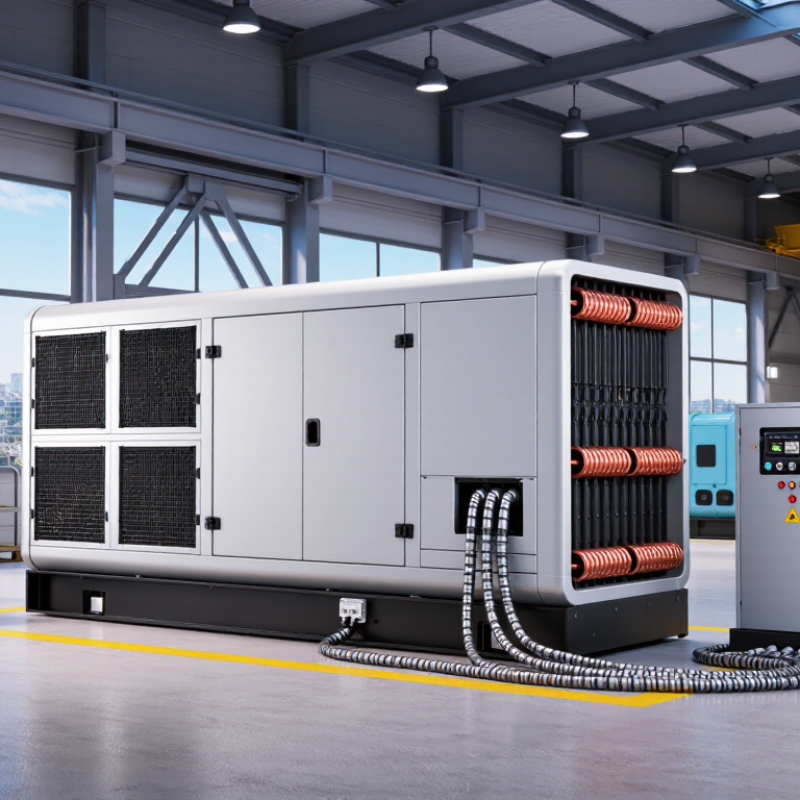
Natural Gas Generator Manufacturing in China: Industry Overview
China’s natural gas generator industry brings together engine production, electrical equipment, control systems, and final assembly. Manufacturing often involves coordinating these components around a specific output range and operating environment. A unit intended for a factory may need different controls and cooling arrangements from one used at a remote site. Details matter.
Production typically includes machining or sourcing engine parts, assembling the generator set, wiring control panels, and running load tests. Technicians may check oil pressure, coolant temperature, vibration, and voltage stability during commissioning. Test records help buyers understand how a unit performed under stated conditions. They do not guarantee identical results at every site.
The industry serves varied applications, including industrial facilities and distributed power projects. Supplier capabilities can differ in component traceability, testing depth, and after-sales support, so these details deserve careful review. Natural gas quality, ambient temperature, installation space, and maintenance access also affect performance. A specification sheet cannot capture everything. In practice, matching the generator to its actual duty cycle can take more discussion than expected, and some project requirements change late in the process.
China Top Natural Gas Generator Manufacturers
Natural Gas Generator Manufacturing in China: Industry Overview
China’s natural gas production increased from 173.6 billion cubic meters in 2019 to 232.4 billion cubic meters in 2023. This provides context on the country’s domestic gas supply; it is not a measure of generator manufacturing output. Source: National Bureau of Statistics of China.
How to Identify Leading Chinese Natural Gas Generator Manufacturers
When comparing Chinese natural gas generator manufacturers, judge the engineering evidence, not the catalogue finish. Ask for the exact engine model, alternator data, rated output, and fuel-consumption curves at 25%, 50%, and 100% load. Ask for proof. A polished brochure cannot show how a set handles sudden motor starts or a hot, dusty site.
The U.S. Environmental Protection Agency’s 2017 Catalog of CHP Technologies reports reciprocating-engine electrical efficiencies of roughly 28–42% on a higher-heating-value basis. It puts total combined heat and power efficiency around 70–80%. These figures are benchmarks, not promises for every machine.
Request witnessed factory test results, then check how ambient temperature, altitude, and gas quality change output. Small details matter.
Review component traceability, quality-control records, warranty terms, and the availability of trained service technicians near your installation. Ask for references with similar loads and operating hours, not just a list of overseas shipments. Confirm what the supplier counts as “rated power”; conditions can differ between offers. One limitation: operating references rarely reveal failure rates or maintenance costs. Keep that uncertainty in your comparison, and ask for service logs where customers permit disclosure.
Profiles of China’s Major Natural Gas Generator Manufacturers
China’s natural gas generator manufacturers serve a wide range of needs, from backup power for factories to continuous electricity at remote sites. Their profiles differ in engineering focus, production scale, and after-sales support. Some emphasize packaged units that fit into compact plant rooms; others build systems for demanding, long-hour operation. Details matter.
A useful profile should describe rated output, fuel pressure requirements, emissions data, and performance under changing loads. It should also explain how the generator handles startup, noise control, and heat removal. These are practical details, not brochure decoration. Buyers can compare test records, warranty terms, parts availability, and service response times. Yet public information is uneven, so a polished catalogue alone cannot verify field reliability.
Manufacturers with strong engineering teams may adapt control systems and enclosures to local operating conditions. For example, a site near the coast may need careful protection against moisture and salt exposure. Ask whether quoted performance reflects the actual gas composition and ambient temperature. Small omissions can distort a comparison. I would also look for clear commissioning procedures and documented maintenance intervals, while remembering that factory capability does not guarantee every project will run smoothly.
Key Technologies and Product Categories
China’s natural gas generator manufacturers work with several core technologies. Spark-ignition engines burn a controlled air-and-gas mixture, while lean-burn designs use more air to improve efficiency and reduce combustion temperatures. Electronic controls monitor engine speed, temperature, and gas pressure. Some systems also capture exhaust heat for hot water or process heating. That can raise total energy use, but only when a site needs the heat. Small details matter. Gas composition and pressure can vary between locations, so performance figures need careful checking.
Product categories include standby units for backup power, prime-power sets for regular operation, and combined heat-and-power systems. Containerized models arrive in weather-resistant enclosures, often with ventilation, sound treatment, and service access built in. Buyers should compare rated output, starting capacity, cooling method, control options, and maintenance intervals. A specification sheet can look tidy; actual sites rarely do. Space, altitude, load changes, and fuel quality may affect results.
Tips: Confirm gas pressure and composition before choosing a model. Ask for load-test records and clear service requirements. Include room for airflow and routine maintenance.



 © Copyright 2020 Tianjin Tanghaidongyang Valve Co., Ltd. All Rights Reserved.