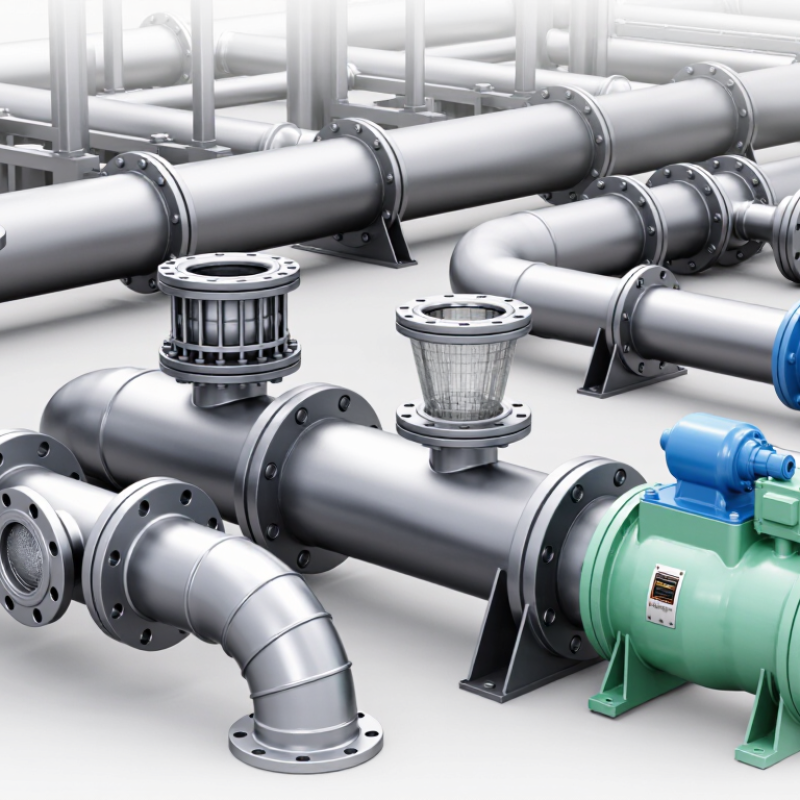
| Y-Type Strainer | Compact body with an angled screen chamber; commonly installed in horizontal lines and in vertical lines with downward flow. | Steam, water, compressed air, gas, and process-liquid lines where space is limited. | Usually has less screen area and debris-holding capacity than a comparable basket strainer. Screens may be perforated plate, wire mesh, or a combination. | Compact installation, but the screen chamber can require line clearance for removal. A blowdown connection can allow cleaning without removing the screen. | Choose it for smaller or space-constrained lines and relatively low debris loads. Check orientation and access before specifying. |
| Simplex Basket Strainer | Single chamber containing a removable basket, typically installed in a horizontal pipeline. | Water treatment, cooling-water circuits, fuel and lubricant lines, and general process-liquid service. | A basket often provides more open area and debris capacity than a compact Y-type screen of similar line size. Screen openings are selected to suit the required particle retention. | Requires flow interruption or a bypass arrangement while the basket is cleaned. Allow overhead or side clearance to lift the basket out. | Choose it for moderate-to-high debris loading when the line can be isolated for maintenance and low clean-screen pressure loss is important. |
| Duplex Basket Strainer | Two strainer chambers with a changeover valve or switching mechanism; one chamber can operate while the other is cleaned. | Continuous-duty liquid systems, such as process cooling, hydraulic oil, and fuel transfer, where stopping flow is undesirable. | Each basket provides substantial debris-holding capacity; capacity depends on basket size, screen area, and the selected opening. | Enables online cleaning when correctly operated. The changeover device and both chambers add installation space, cost, and maintenance requirements. | Choose it when uninterrupted flow is required and operators can safely switch chambers and service the isolated basket. |
| T-Type or Fabricated Pipeline Strainer | Large-body strainer with a removable screen positioned across or within a branch-style chamber; designs vary by pipeline layout. | Large-diameter water, seawater, cooling-water, and industrial process lines, including installations with unusual piping geometry. | Can accommodate a large screen area and high debris volume when engineered for the line. Screen construction and opening are specified for the service. | May require lifting equipment and significant access space. Flow direction, body orientation, structural support, and screen-removal clearance need careful planning. | Consider it for large lines or layouts that do not suit standard compact strainers. Confirm hydraulic and mechanical design with the project engineer. |
| Temporary Cone, Plate, or Basket Strainer | Removable insert fitted between flanges, commonly used during commissioning or initial system flushing. | Short-term protection of pumps, control valves, meters, and other equipment while construction debris is removed from new piping. | Often selected with a relatively coarse opening and generous open area for temporary debris capture; the configuration is chosen for the startup-cleaning plan. | Must be inspected and removed or replaced after commissioning as specified. Accumulated debris can quickly increase pressure drop and restrict flow. | Choose it as a temporary startup safeguard, not as a permanent substitute for a properly selected operating strainer. |



 © Copyright 2020 Tianjin Tanghaidongyang Valve Co., Ltd. All Rights Reserved.