Top Takeaway Food Containers for Global Buyers
Choosing the right Takeaway Food Containers is a practical sourcing decision, not a simple packaging exercise. Global buyers must compare leak resistance, heat tolerance, stacking strength, material safety, and delivery performance. A container that works well for noodles may fail with oily curry or chilled salad. Small details matter. Lid fit matters. Vent design matters. So does the carton’s storage footprint.
Ellen MacArthur, a leading circular economy authority, stated, “We need to move from a take-make-dispose model to one that is regenerative by design.” Her principle is highly relevant to foodservice packaging. Buyers now examine recycled content, responsible materials, reuse potential, and realistic end-of-life options. However, sustainability claims can be confusing. A fiber container may look responsible but perform poorly with liquids. A recyclable plastic container may lack local recycling access. The best choice depends on product use, infrastructure, and verified evidence.
This guide evaluates leading Takeaway Food Containers for international purchasing teams. It considers supplier consistency, customization, minimum order quantities, shipping efficiency, and quality control. Practical testing should include a hot meal, a cold dessert, and a rough delivery route. That sounds basic. It is often overlooked. No container is perfect. Buyers may need to accept a compromise between cost, durability, appearance, and environmental performance. Reliable decisions come from samples, documentation, and honest comparison rather than attractive marketing alone.
Types of Takeaway Food Containers for Different Foods
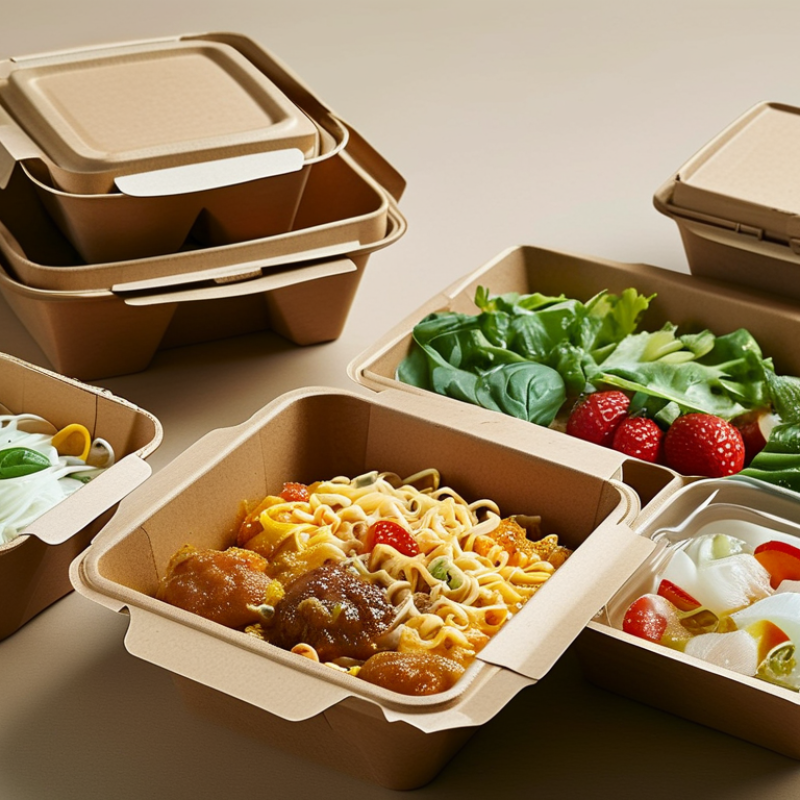
Takeaway food containers should match the food’s texture, temperature, portion size, and travel time. Soup needs leak-resistant bowls with tight lids and stable bases. Wide openings make noodles and stews easier to eat without spills. Rice dishes usually need shallow, rectangular containers that support even heating and convenient mixing. Compartments can keep sauces, vegetables, and grains separate.
Fried foods require ventilation. A fully sealed box traps steam and can soften crispy coatings. Hinged paperboard or molded-fiber clamshells with small vents often protect texture better. Salads need rigid containers that resist crushing, while clear lids help buyers inspect freshness. Cold desserts may require moisture-resistant cups with secure tops. Bakery items benefit from containers that prevent icing damage and allow careful stacking.
Global buyers should check food-contact suitability, temperature limits, closure strength, and local packaging requirements. Leak tests should include hot liquids, not only room-temperature water. Drop tests also matter when containers travel by motorcycle or crowded delivery vehicles. Perfect packaging is unrealistic. A vented box may protect fries but reduce heat retention. It is easy to overlook this trade-off. Small trial orders, real meal testing, and feedback from kitchen staff can reveal weaknesses before large purchasing decisions.
Materials Used in Takeaway Food Container Manufacturing
Takeaway food containers must match the food, temperature, transport time, and local disposal systems. Material choice affects leakage, insulation, appearance, and cost. Paperboard containers suit dry meals, sandwiches, and bakery items. A water-based or plastic coating can improve grease resistance, but it may complicate recycling. Buyers should ask for coating details, food-contact test reports, and storage guidance.
Bagasse, made from sugarcane fiber, offers a sturdy option for hot meals and takeaway bowls. It feels natural and handles moderate moisture well. However, performance can change with oily sauces or extended holding times. Polypropylene containers resist heat and moisture, making them useful for soups and reheating applications. PET is clearer and better suited to chilled foods. Compostable plastics, such as PLA, require suitable industrial composting facilities. Availability differs widely between regions.
Tips: Match the container to the menu. Test it with real portions, sauces, stacking pressure, and delivery times. Ask suppliers about recycled content, migration testing, and minimum order quantities. Check whether local facilities can process the claimed material. “Compostable” sounds simple, but it can mislead buyers without proper infrastructure. No material is perfect. A lighter container may reduce transport emissions, yet fail during delivery. Small pilot orders expose these weaknesses before larger purchasing decisions.
Top Takeaway Food Container Materials for Global Buyers
Indicative upper service-temperature benchmarks for commonly used takeaway container materials. Actual performance depends on wall thickness, coatings, food type, heating method, and manufacturer specifications.
International Sourcing and Compliance Considerations
Top Takeaway Food Containers for Global Buyers
International sourcing starts with food-contact safety, not appearance. A container should match the meal, filling temperature, storage time, and delivery distance. Hot noodles may soften some plastics, while oily foods can increase material migration. Request food-contact declarations, migration test reports, and batch traceability from each supplier. Requirements differ by destination, so one certificate rarely covers every market. Check local limits for additives, recycled content, labeling, and disposal claims before placing a large order.
Physical testing still matters. Fill samples with hot soup, stack them for transport, and test lids after several hours. Inspect leakage around corners and deformation near vents. A factory may provide clean samples, but production consistency can change. This is easy to underestimate. Review quality records, inspection methods, carton strength, and corrective-action history. Confirm dimensions in writing, including lid fit, tolerance, and packed quantity. Import documents should match the actual material and product description.
Tips: Keep a compliance file for every shipment. Include specifications, test reports, supplier declarations, inspection photos, and lot numbers. Ask for fresh samples when the resin, mold, color, or manufacturing site changes. Recheck sustainability language, too. “Recyclable” may depend on local collection systems, not only the container itself. A careful buyer leaves room for retesting and does not treat paperwork as proof of real-world performance.



 © Copyright 2020 Tianjin Tanghaidongyang Valve Co., Ltd. All Rights Reserved.