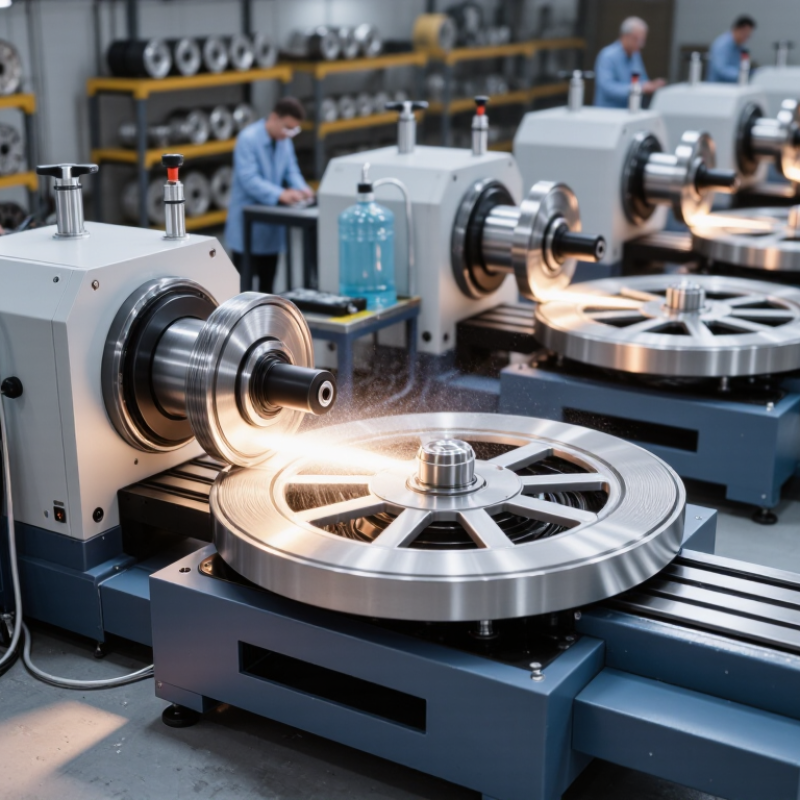
Diamond wheel cutting machines vary by wheel geometry, spindle layout, and workholding. Peripheral wheels suit straight, repeatable cuts in hard materials. Thinner wheels can reduce kerf width, but need careful handling. Cup or profile wheels help create shaped edges and controlled contours. Suitability depends on the material, wheel bond, grit, and machine rigidity. The word “diamond” alone tells little.
A typical workflow starts with checking wheel condition, runout, coolant flow, and fixture security. Operators set feed and depth conservatively, make a test cut, then inspect edge chipping under magnification. Wet cutting can carry heat and debris away, though coolant must suit the workpiece and process. Keep the workpiece stable. Small vibrations can spoil a finish.
In electronics, optics, ceramics, and precision stonework, these machines cut brittle or abrasive stock into wafers, blanks, slots, and shaped edges. Automated stages support repeatability across batches; manual or semi-automatic setups may suit prototypes and mixed jobs. Selection should reflect tolerances, part dimensions, throughput, and maintenance access. A common mistake is optimizing cycle time before checking wheel wear. That tradeoff may look fine on paper, then drift in production.



 © Copyright 2020 Tianjin Tanghaidongyang Valve Co., Ltd. All Rights Reserved.