| Product requirements | Design begins with the intended blind type, installation method, fabric dimensions, operating method, and expected use conditions. | Clear requirements help determine the appropriate tube, brackets, clutch or drive system, and control components. |
| Mechanism design | The mechanism is laid out around a rotating roller tube, fabric attachment, support brackets, and a method for raising, lowering, or positioning the shade. | Design reviews commonly consider fit, alignment, ease of installation, operating smoothness, and compatibility among components. |
| Operating options | Depending on the product, operation may use a continuous control chain, a spring-assisted system, or a motorized drive. | The selected option affects the internal mechanism, controls, installation requirements, and any applicable safety provisions. |
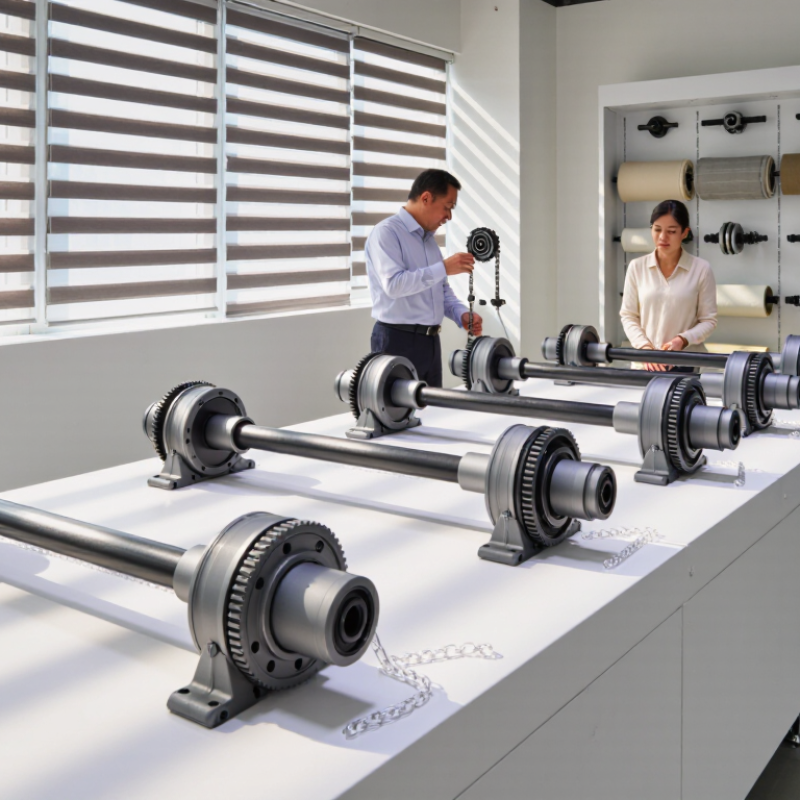
| Roller tube | Roller tubes are commonly made from metal, including aluminum, and are cut to a length suited to the blind design. | Tube dimensions and stiffness should match the intended blind size and mechanism; one tube specification does not suit every application. |
| Core components | Typical assemblies may include a clutch or drive unit, idler end, brackets, chain or control parts, and fasteners. Materials may include engineered plastics and metals. | Component fit, material consistency, and secure assembly contribute to reliable movement and straightforward installation. |
| Manufacturing steps | Production may involve component molding or forming, tube cutting, deburring, surface finishing where required, subassembly, and final assembly. | Documented work instructions and controlled process checks help maintain consistency between production batches. |
| Fabric integration | For a zebra blind, alternating sheer and opaque fabric bands are arranged so their alignment changes as the roller turns. | Testing should confirm smooth rolling and the intended transition between light-filtering and more closed positions. |
| Quality inspection | Typical checks include visual inspection, component and dimension checks, assembly fit, operation through repeated cycles, and packaging inspection. | A capable supplier should define inspection criteria, record results where appropriate, and have a process for handling nonconforming parts. |
| Product validation | Samples or production units can be checked for operating effort, alignment, noise, attachment security, and performance under the intended installation conditions. | Test methods and acceptance limits should be agreed for the specific product rather than assumed to be identical across all mechanisms. |
| Supplier assessment | Compare suppliers by design support, production controls, traceability, sample consistency, technical documentation, and responsiveness to corrective actions. | Request product drawings, material details, inspection records, and samples to verify suitability. A “top” manufacturer should be judged against the application’s requirements, not a generic ranking. |


 © Copyright 2020 Tianjin Tanghaidongyang Valve Co., Ltd. All Rights Reserved.