What Is a Turbidity Sensor and How Does It Work?
A Turbidity Sensor measures how cloudy a liquid is by detecting light affected by suspended particles. These particles may include silt, algae, or fine organic matter. In many instruments, a light source shines through a sample, while a detector measures scattered light, often at an angle near 90 degrees. More scattered light generally indicates greater turbidity. The instrument converts that signal into a reading, commonly expressed in NTU or FNU, depending on its design and measurement method. Small device. Important result.
This measurement helps operators monitor drinking-water treatment, wastewater processes, and rivers after rainfall. A sudden increase can point to changing conditions, but it does not identify the particles or prove that water is safe. That distinction matters. Bubbles, colored liquids, dirty sensor windows, and changing particle sizes can all affect readings. For dependable results, users typically follow the instrument’s calibration guidance, keep the optical surfaces clean, and compare measurements under consistent conditions. Even then, a single reading may not tell the whole story. Turbidity sensors provide useful evidence, not a complete water-quality assessment. Understanding how light, sample conditions, and sensor design interact makes it easier to interpret readings carefully—and to recognize when another test is needed.
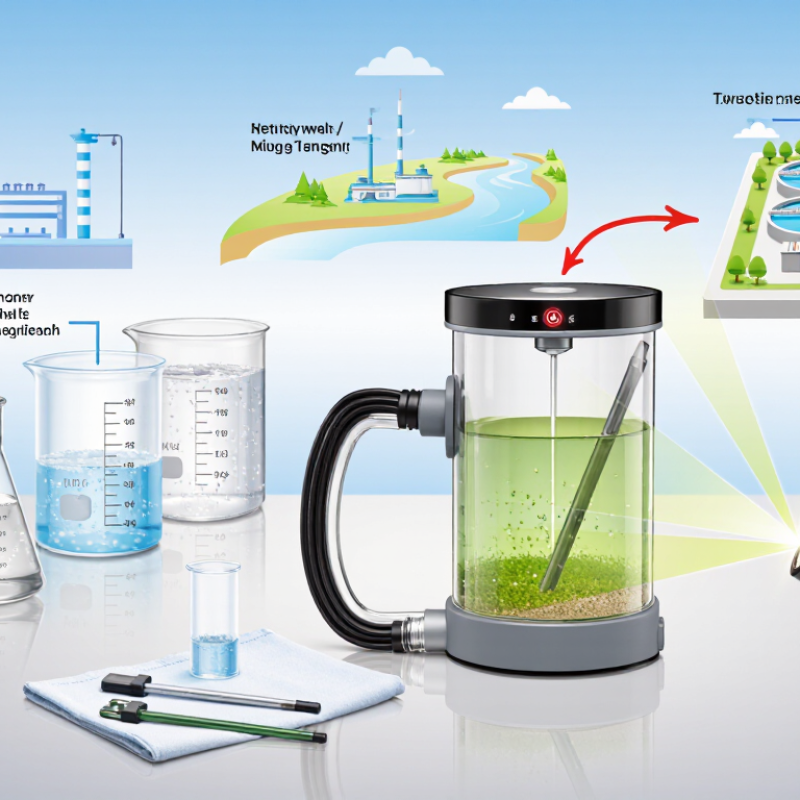
Definition and Purpose of a Turbidity Sensor
A turbidity sensor measures how cloudy a liquid is because of suspended particles, such as clay, silt, or organic matter. It does not identify each particle or directly measure water quality. Instead, it detects how particles affect light passing through or scattering inside a sample. The result is commonly reported in nephelometric turbidity units.
In a typical optical sensor, a light source shines into the water, and a detector records light scattered at an angle. More suspended particles often produce a stronger signal, though particle size and color can influence the reading. Small details matter. A trapped air bubble or dirty sensor window can also distort results.
The sensor’s purpose is to provide quick, repeatable turbidity readings for applications such as drinking-water treatment, wastewater monitoring, and stream surveys. Operators can use changes in readings to spot a filtration problem or track a muddy runoff event. Still, the number is not the whole story. Turbidity alone cannot confirm that water is safe, since dissolved substances may remain invisible. For dependable comparisons, sensors need suitable calibration, careful cleaning, and consistent sampling. Real-world readings can drift, so checking them against a known standard is worthwhile, even when the display looks steady.
How a Turbidity Sensor Measures Water Clarity
What Is a Turbidity Sensor and How Does It Work?
How a Turbidity Sensor Measures Water Clarity
A turbidity sensor estimates how cloudy water is by measuring light scattered by suspended particles. A light source shines into a sample, while a detector measures light scattered at an angle, often 90 degrees. More scattered light generally means higher turbidity, reported in nephelometric turbidity units (NTU). The reading is not a direct measure of particle count or water safety. Particle size, color, bubbles, and sensor placement can affect it. Small details matter.
The U.S. Environmental Protection Agency’s Method 180.1 describes nephelometric measurement, while its Surface Water Treatment Rules set filtration benchmarks. For conventional or direct filtration, combined filter effluent must be at or below 0.3 NTU in at least 95% of monthly measurements, and must not exceed 1 NTU. These are treatment requirements, not a guarantee that every clear-looking sample is safe. A sensor helps operators spot changes, but calibration and representative sampling remain essential.
Tips: Clean the optical window, remove trapped bubbles, and compare readings with a suitable reference standard. Record sample temperature and location, too. A sensor installed beside a pipe wall may tell a slightly different story than one sampling the main flow. That difference deserves attention.
Factors That Affect Sensor Accuracy and Applications
A turbidity sensor estimates how much suspended material scatters light through a water sample. Its reading is not a direct measure of contaminant concentration. Particle size, shape, and color all influence the result. Air bubbles can scatter light too, while a dirty optical window may slowly distort readings. Small details matter. EPA Method 180.1 describes nephelometric measurement and identifies sample color as a potential interference. In practice, technicians should clean the sensor, check it against standards, and compare readings with a consistent sampling method. Even careful checks cannot make every water sample behave alike.
These limits matter in drinking-water treatment, wastewater monitoring, and rivers where runoff carries silt. The U.S. EPA Surface Water Treatment Rules set a filtered-water benchmark of 0.3 NTU or less in at least 95% of monthly measurements for many conventional or direct filtration systems; the applicable requirements depend on system type. The World Health Organization’s drinking-water guidance says turbidity should ideally remain below 1 NTU to support effective disinfection. Those values are operational context, not universal sensor accuracy guarantees. A sensor beside a fast-flowing intake may report differently from a settled laboratory sample. That gap deserves attention, not a quick adjustment. Turbidity is useful, but it is not the whole story.



 © Copyright 2020 Tianjin Tanghaidongyang Valve Co., Ltd. All Rights Reserved.