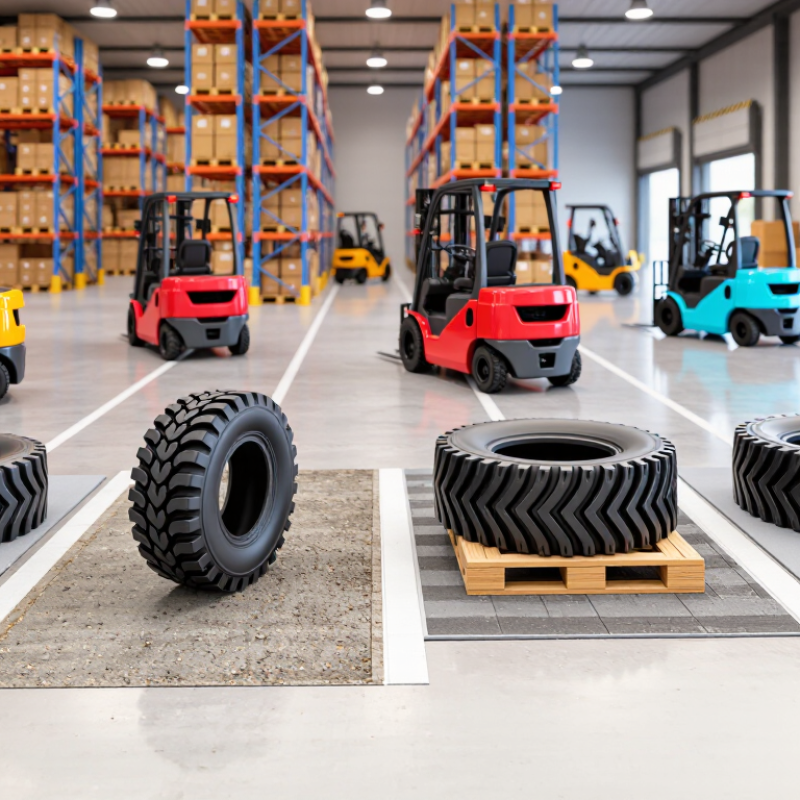
Forklift tires are the only contact between a loaded truck and the warehouse floor. Before each shift, check for cuts, missing chunks, cracks, embedded debris, and uneven wear. Look closely at the tire edges and the floor around the wheels. Small defects matter. On pneumatic tires, use a gauge and follow the truck manufacturer’s pressure specification; a visual check can miss underinflation. For solid tires, watch the wear line and replace tires that reach it.
OSHA estimates that powered industrial trucks are involved in about 85 fatal accidents and 34,900 serious injuries each year. These figures cover trucks overall, not tire-related incidents. Still, damaged or poorly maintained tires can affect traction, stability, and stopping. OSHA’s 29 CFR 1910.178(q)(7) requires unsafe trucks to be removed from service until restored to safe operating condition. Do not guess.
Keep inspection notes with the truck’s maintenance records. Record the tire’s location, defect, and action taken, so recurring wear does not disappear into a vague “fixed” entry. Check for floor hazards too: a loose metal strap can cut a tire, while oil may reduce grip. If wear appears uneven, ask qualified maintenance staff to check alignment, load conditions, and wheel components. A rushed glance can feel adequate. It isn’t.



 © Copyright 2020 Tianjin Tanghaidongyang Valve Co., Ltd. All Rights Reserved.