| Corrosion-resistant process equipment | Linings, transfer lines, and components in chemical-processing equipment exposed to highly corrosive media. | Tantalum resists corrosion in many environments, including many mineral acids, but its compatibility depends on the specific chemistry and operating conditions. | Check the full process composition, concentration, temperature, and contaminants against qualified corrosion data. Fluoride-containing media, including hydrofluoric acid, can attack tantalum. |
| Heat exchangers and condensers | Tube-side or process-side components where corrosion resistance is needed alongside heat transfer. | Tantalum’s corrosion resistance can help protect equipment surfaces, while tube dimensions and wall thickness affect heat transfer and mechanical performance. | Evaluate fluid compatibility, design temperature, pressure, flow conditions, tube dimensions, and joining details as a complete design. |
| Semiconductor and high-purity equipment | Selected fluid-handling or process-system components where contamination control and chemical compatibility are important. | Material purity, cleanliness, surface condition, and fabrication quality can affect contamination risk. | Specify required material grade or purity, cleaning method, surface finish, and inspection documentation; verify suitability for the actual process. |
| High-temperature equipment | Selected furnace or thermal-process assemblies, where the tube’s environment and construction are suitable. | Tantalum has a very high melting point (about 3,017°C), but useful service limits are lower and depend on atmosphere, stress, and component design. | Consider temperature profile, atmosphere, mechanical loading, oxidation risk, and any interaction with adjacent materials. Do not use melting point alone as a service-temperature limit. |
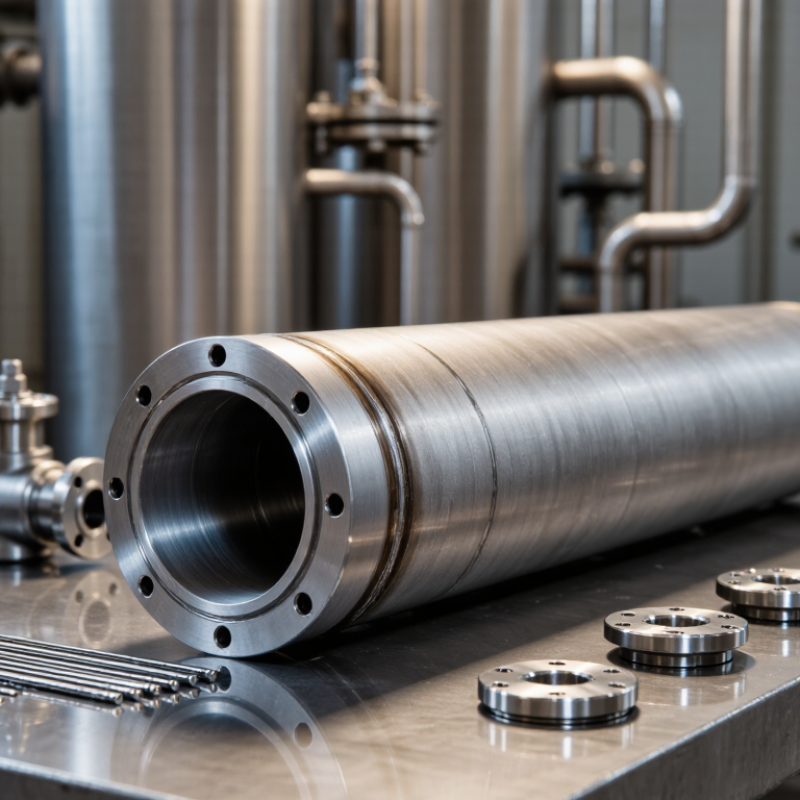
| Tube manufacturing route | Welded tube is made by forming tantalum sheet or strip into a tube and joining the longitudinal seam. | The seam and its surrounding heat-affected area are important parts of the finished tube and may influence integrity and performance. | Ask about seam-welding procedure, weld inspection, any required nondestructive examination, and applicable acceptance criteria. |
| Material grade and purity | Selection of commercially pure tantalum or another specified material condition for the intended service. | Composition, impurities, and material condition can affect corrosion behavior, strength, and fabrication response. | Define the required specification, grade, chemical analysis, and material certificates rather than relying on a generic “tantalum” description. |
| Dimensions and tolerances | Outside diameter, wall thickness, length, straightness, and dimensional tolerances. | These dimensions affect fit-up, flow area, pressure design, and compatibility with connected equipment. | Provide a dimensioned drawing and identify tolerances, end preparation, and any requirements for cutting or forming. |
| Pressure and mechanical design | Tube operation under internal or external pressure, vibration, thermal cycling, or mechanical loads. | Allowable performance depends on dimensions, material properties, weld quality, temperature, supports, and the applicable design rules. | Have the complete component assessed for the specified pressure, temperature, loads, and governing code. Do not infer a pressure rating from material alone. |
| Surface finish and cleanliness | As-fabricated, pickled, polished, or otherwise specified internal and external surfaces. | Surface condition can affect cleanability, fluid behavior, and suitability for high-purity service. | State the required finish and cleaning or packaging conditions, and confirm that the manufacturing process can achieve them. |
| Inspection and traceability | Verification of material identity, dimensions, seam integrity, and condition before installation. | Documented checks help confirm that the delivered tube meets the design and service requirements. | Specify required certificates, dimensional inspection, visual examination, and any weld or leak testing appropriate to the application. |



 © Copyright 2020 Tianjin Tanghaidongyang Valve Co., Ltd. All Rights Reserved.