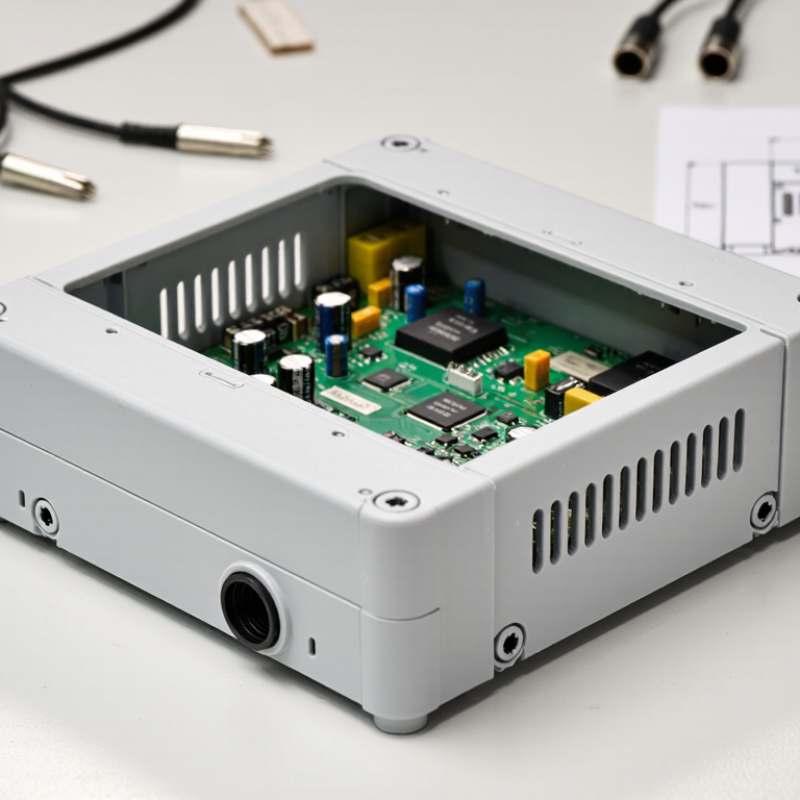
| What it is | A protective housing designed around electronic components, controls, connectors, and the intended installation. | ABS is a thermoplastic commonly used for molded housings because it is lightweight, impact-resistant, and readily formed into detailed shapes. | Confirm the required dimensions, wall thickness, access points, mounting features, finish, and operating environment. | Material performance depends on the ABS grade, enclosure design, manufacturing process, and conditions of use. |
| Control panels and operator interfaces | Housings for buttons, switches, indicator lights, small displays, and control electronics. | The material can be molded or fabricated with openings, recessed areas, and internal supports for components. | Check panel cutouts, button clearance, viewing angles, mounting method, and resistance to cleaning agents. | Specify cutout locations and tolerances against the actual components and assembly drawings. |
| Sensors and monitoring devices | Enclosures for indoor environmental sensors, data loggers, and monitoring modules. | ABS can provide a compact, lightweight housing and can accommodate vents, cable entries, and mounting features. | Consider airflow, sensor exposure, condensation, dust, sunlight, and whether the installation is indoors or outdoors. | Vents and openings can affect dust and moisture protection; select the enclosure layout to suit the sensing function. |
| Networking and communications equipment | Small indoor housings for interface modules, gateways, and low-power communication devices. | Complex shapes and integrated clips or standoffs may help organize circuit boards and connectors. | Review antenna placement, connector access, heat dissipation, cable routing, and any radio-frequency requirements. | Enclosure material and geometry can influence antenna performance; validate the assembled device in its intended configuration. |
| Consumer and household electronics | Casings for small appliances, chargers, accessories, and electronic accessories used in controlled environments. | ABS supports a range of molded shapes and surface finishes and is commonly used for consumer product housings. | Assess impact exposure, surface appearance, assembly method, electrical safety requirements, and contact with heat sources. | Material selection should account for the product's applicable safety standards and expected use conditions. |
| Light industrial instruments | Enclosures for portable meters, small controllers, and instruments installed away from severe hazards. | Its low weight and design flexibility can suit equipment that needs custom mounting or a shaped user interface. | Check vibration, impact, dust, moisture, chemicals, temperature, and exposure to oils or solvents. | For harsh environments, verify the complete enclosure assembly rather than relying on the plastic material alone. |
| Indoor wall-mounted devices | Housings for thermostats, access-control modules, and building monitoring equipment. | ABS can be shaped to include mounting bosses, cable entries, and a finished front face. | Confirm wall-mounting points, cable entry direction, service access, and compatibility with the mounting surface. | Plan access to fasteners and connectors so routine installation and maintenance do not damage the housing. |
| Ingress protection | Protection from dust or water is determined by the complete enclosure design and test configuration. | ABS can be used in designs that include joints, gaskets, and suitable covers, but the resin itself does not establish an IP rating. | Define the required IP rating, gasket arrangement, seam design, cable glands, and test conditions. | Do not assume a rating from material choice; confirm it through testing of the finished, assembled enclosure. |
| Heat and flame requirements | Applications may have limits for operating temperature, component heat, or flame behavior. | ABS grades vary, and specified grades may be available for particular performance requirements. | Check the selected grade's technical data, thermal limits, flame classification, and applicable regulatory requirements. | Allow for heat generated by internal components and confirm performance in the actual enclosure geometry. |
| Manufacturing and customization | Custom features may include bosses, ribs, snap-fits, labels, windows, mounting brackets, and connector openings. | ABS is compatible with common enclosure manufacturing approaches, including injection molding and some fabrication methods. | Choose the process based on quantity, tooling budget, dimensional tolerances, finish, and design complexity. | Injection molding generally requires production tooling; fabricated or prototype approaches may suit lower-volume needs. |



 © Copyright 2020 Tianjin Tanghaidongyang Valve Co., Ltd. All Rights Reserved.