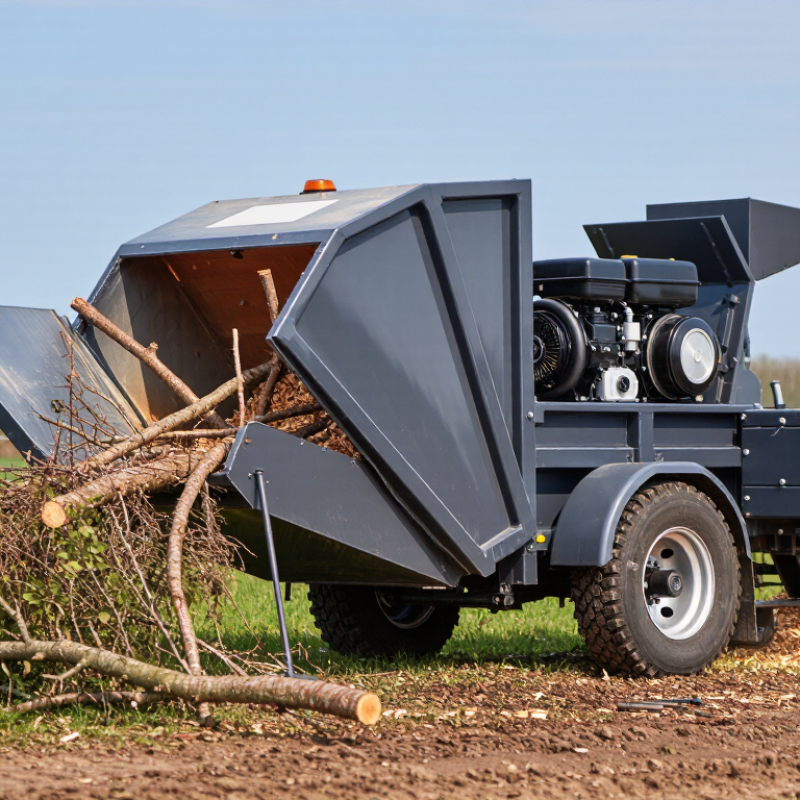
| Machine Definition | Heavy-Duty Chipper Shredder | A powered size-reduction machine designed to process branches, logs, brush, leaves, and other plant-based organic material. | Usually combines chipping and shredding actions in one machine, although the exact design varies by model. | Smaller, more manageable organic material. |
| Material Handling | Feed Hopper and Infeed Chute | Receives organic material and guides it toward the cutting chamber while helping keep operators away from moving parts. | Accepts material within the machine’s specified feed opening; oversized or contaminated material should be removed before feeding. | Controlled and continuous material entry. |
| Material Handling | Feed Rollers or Feed Mechanism | Pulls branches and brush into the cutting chamber at a controlled rate. | Hydraulic or mechanical systems may be used; feed speed depends on material size, moisture, and machine design. | More consistent processing and reduced manual pushing. |
| Size Reduction | Chipper Disc or Chipper Drum | Uses rotating knives to cut larger wood pieces across the grain into chips. | Commonly used for branches and small logs; chip dimensions depend on knife geometry, clearance, and feed configuration. | Uniform wood chips. |
| Size Reduction | Shredder Rotor | Tears, cuts, or breaks softer and irregular organic material into smaller pieces. | Suitable for brush, leaves, garden waste, and mixed green material; it generally produces a less uniform output than a dedicated chipper. | Coarse shredded organic matter. |
| Cutting System | Knives, Blades, Hammers, or Flails | Provides the cutting, tearing, or impact action required to reduce material size. | Knife systems favor cleaner wood chips, while hammer or flail systems are commonly used for fibrous, leafy, or irregular feedstock. | Reduced particle size and improved handling. |
| Size Control | Screen or Sizing Grid | Limits the size of discharged particles and retains material that requires additional processing. | Screen openings are selected according to the desired output size and the material being processed. | More consistent discharge size. |
| Power System | Engine and Drive Assembly | Supplies rotational power to the cutting rotor, chipper disc, drum, feed system, and auxiliary components. | Heavy-duty units may use diesel or gasoline engines; power requirements vary with feed capacity and material density. | Mechanical energy for processing. |
| Power Transmission | Belts, Shafts, Bearings, and Clutches | Transfers engine power to rotating components and supports controlled engagement of the cutting system. | Correct belt tension, lubrication, alignment, and bearing condition are important for reliable operation. | Efficient and stable power transfer. |
| Discharge | Discharge Chute | Directs processed material away from the cutting chamber. | Adjustable chutes can help place chips or shredded material into a pile, container, trailer, or composting area. | Controlled material placement. |
| Discharge | Blower or Ejector System | Uses airflow or rotor momentum to move processed material through the discharge path. | Air-assisted discharge is more common on machines intended to project chips over a short distance. | Continuous removal from the cutting chamber. |
| Protection | Guarding and Emergency Controls | Reduces access to moving parts and provides a method for stopping the machine during an unsafe condition. | Typical safety features include guards, emergency-stop controls, feed-reverse controls, and interlocks, depending on the design. | Improved operator protection. |
| Processing Stage | 1. Inspection and Sorting | Operators inspect organic material and remove stones, metal, soil-heavy items, wire, and other contaminants. | Contaminants can damage knives, hammers, screens, bearings, and other internal components. | Safer and more reliable feeding. |
| Processing Stage | 2. Feeding | Material enters the hopper and is moved toward the cutting chamber by gravity, rollers, or a conveyor arrangement. | Material should be fed within the machine’s stated capacity and without forcing oversized pieces into the opening. | Material reaches the cutting zone. |
| Processing Stage | 3. Chipping | Rotating knives sever branches and woody pieces into chips. | Chipping performance is affected by wood diameter, species, moisture content, knife sharpness, and feed rate. | Wood chips with relatively defined dimensions. |
| Processing Stage | 4. Shredding | Rotating hammers, flails, knives, or other tools tear and break leaves, brush, and softer organic material. | Shredding normally creates a more varied particle shape than dedicated wood chipping. | Loosened and reduced organic material. |
| Processing Stage | 5. Screening and Recirculation | A screen or grid controls the material leaving the chamber; larger pieces may remain for additional impact or cutting. | Repeated processing can improve size consistency but may reduce throughput when material is wet or difficult to break. | Output that meets the selected size range. |
| Processing Stage | 6. Discharge and Collection | Processed material exits through the discharge chute and is directed to the desired collection or application area. | Material may be used for mulch, erosion-control cover, compost feedstock, or volume reduction, subject to local requirements. | Transportable and reusable organic residue. |
| Performance Factors | Feedstock Condition | Material properties influence cutting resistance, throughput, wear, and the quality of the final output. | Wet, tangled, fibrous, frozen, or contaminated material generally requires more power and can reduce processing efficiency. | Variable productivity and output quality. |
| Maintenance | Knife, Hammer, Screen, and Bearing Inspection | Routine inspection keeps cutting edges, impact tools, sizing components, and rotating supports in working condition. | Maintenance intervals should follow the equipment manual and operating conditions; damaged or dull cutting parts can increase vibration and power demand. | Reliable operation and controlled wear. |



 © Copyright 2020 Tianjin Tanghaidongyang Valve Co., Ltd. All Rights Reserved.