| Main component | Lift car or platform | Carries passengers between floors and provides the occupied space of the lift. | Rated capacity and permitted passenger load are specified for each lift; users should follow the displayed limit. |
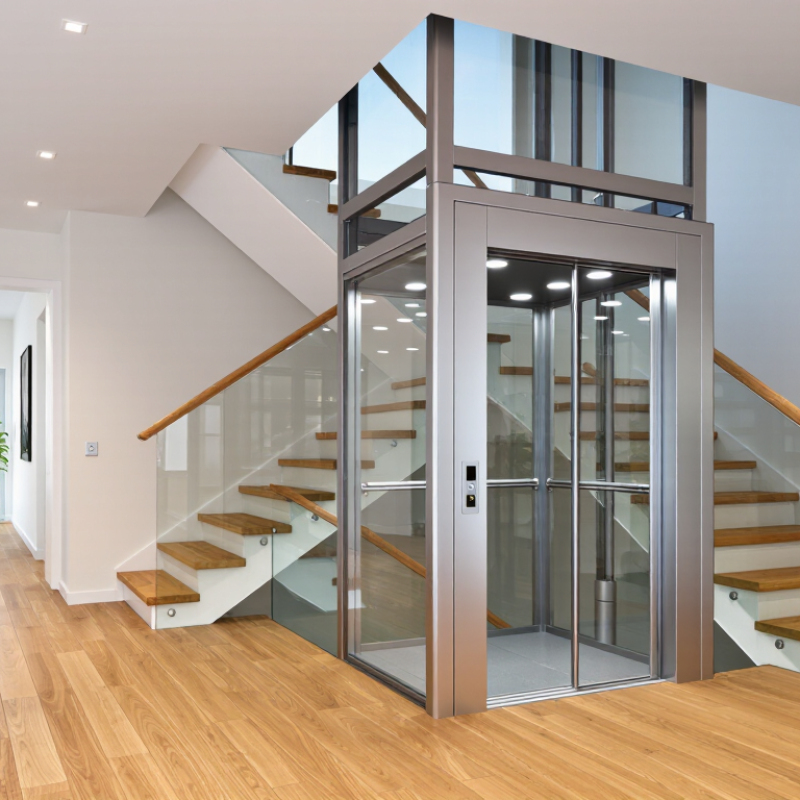
| Main component | Hoistway, shaft, or enclosure | Provides the route and structural space in which the car or platform travels. | Construction and access requirements depend on the lift design and local building and lift regulations. |
| Main component | Drive system | Moves the lift. Common residential designs use traction, hydraulic, or other purpose-designed drive arrangements. | Drive type affects installation, maintenance, travel characteristics, and the method used for emergency recovery. |
| Main component | Controller and position sensors | Processes calls and controls movement, stopping, and floor positioning. | Positioning and control functions are designed to help the lift stop at the intended landing; performance depends on the specific system. |
| Main component | Landing doors and car gate or door | Provide access to the car at each served level and help separate passengers from the hoistway. | Door arrangements vary. Interlocks are commonly used so the lift cannot travel unless the relevant doors or gates are in the required closed and locked condition. |
| Built-in safety feature | Door interlock | Monitors the condition of landing doors and, where fitted, the car door or gate. | Helps prevent normal lift movement with an unsecured landing door. It is not a substitute for keeping clear of moving doors. |
| Built-in safety feature | Door obstruction detection | Detects an obstruction while a powered door is closing and may stop or reopen the door. | Detection methods differ by model; users should not rely on the sensor to detect every object or prevent every injury. |
| Built-in safety feature | Overspeed protection and safety gear | On applicable designs, detects excessive car speed and can activate a mechanical stopping device. | The specific devices and their configuration depend on the lift type. Not every residential lift uses the same overspeed-governor arrangement. |
| Built-in safety feature | Buffers or end-of-travel protection | Provide protection at travel limits on designs equipped with these devices. | Equipment and placement depend on the lift’s construction and applicable standards; buffers are not intended for routine stopping. |
| Built-in safety feature | Emergency alarm or communication device | Allows a trapped passenger to request assistance, where this equipment is provided. | Passengers should use the installed alarm or communication method and wait for trained assistance rather than attempting to exit between floors. |
| Built-in safety feature | Emergency lighting | Provides illumination in the car if normal power is interrupted, where fitted or required. | Operation and backup duration depend on the installed system and local requirements. |
| Built-in safety feature | Emergency lowering or rescue provision | Some systems provide a controlled means of moving the car to a landing after a power failure or fault. | Methods vary by drive type. Rescue procedures should be carried out only by trained or authorized people in accordance with the manufacturer’s instructions. |
| Use and upkeep | Inspection and maintenance | Helps keep safety devices, controls, doors, and mechanical parts in proper working condition. | Follow the lift manufacturer’s maintenance schedule and applicable local inspection requirements; remove a lift from service if a fault affects safe operation. |



 © Copyright 2020 Tianjin Tanghaidongyang Valve Co., Ltd. All Rights Reserved.