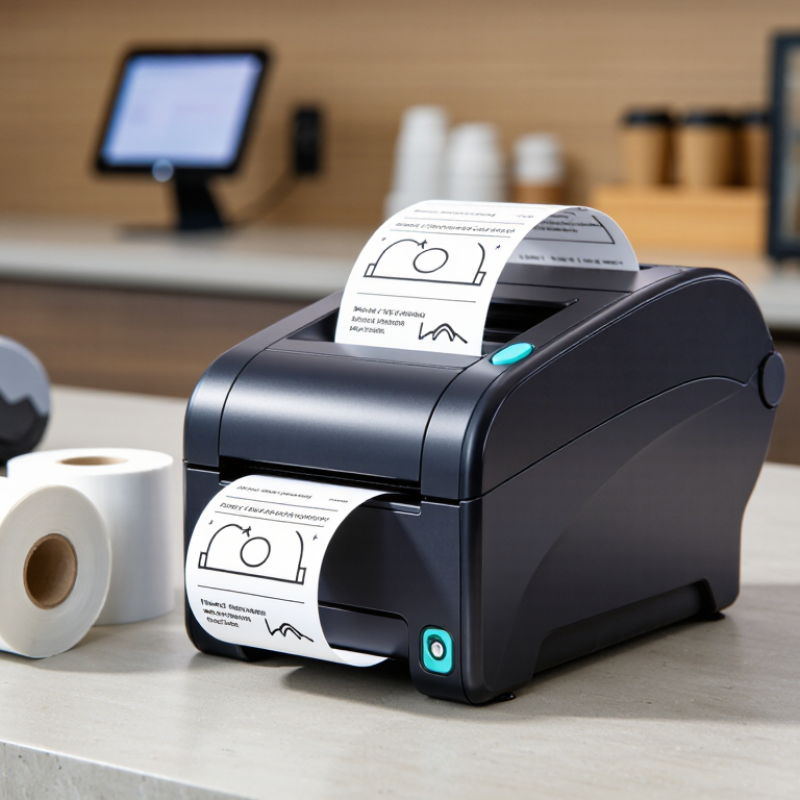
| How it works | A direct thermal receipt printer uses a heated printhead to create text and images on heat-sensitive paper. | It does not require ink or toner. The paper itself reacts to heat to form the printed image. |
| Common uses | Retail and hospitality receipts, queue tickets, order slips, parking tickets, and some shipping or service-counter documents. | It is most suitable for short documents produced quickly at a point of sale or service. |
| Typical paper widths | Common roll widths include approximately 58 mm and 80 mm, though supported sizes vary by printer. | Check the printer’s specifications and the application’s receipt layout before choosing paper. |
| Advantages | Printing is generally fast and quiet, and there are no ink or toner cartridges to replace. | Fewer consumables can simplify routine operation, although paper rolls still need regular replacement. |
| Print durability | Thermal images can fade over time, especially when exposed to heat, strong light, friction, or certain chemicals. | For long-term records, consider a more durable printing method or make a digital copy. |
| Color and output | Most receipt printers produce monochrome output, usually black text on light paper. | They are not a good choice when full-color graphics or photo-quality output is required. |
| Paper requirements | Direct thermal printers require compatible heat-sensitive paper rather than ordinary office paper. | Paper grades differ in image quality and durability. Store rolls away from excessive heat and direct sunlight. |
| Maintenance | The printhead and paper path can collect dust or residue, and the printhead is a wear component. | Follow the equipment instructions for cleaning and avoid abrasive materials that could damage the printhead. |
| Connectivity and compatibility | Depending on the model, connections may include USB, Ethernet, serial, or Bluetooth. | Confirm that the printer supports the required device, operating system, connection type, and receipt software. |
| Best-fit summary | A practical option for frequent, short-lived receipts and tickets where speed and simple consumables matter. | Less suitable when documents must remain legible for many years or withstand heat, light, and handling. |



 © Copyright 2020 Tianjin Tanghaidongyang Valve Co., Ltd. All Rights Reserved.