| Walkie Electric Stacker | The operator walks behind or beside the powered truck and controls travel and lifting with a handle. | About 1,000–2,000 kg (2,200–4,400 lb) | About 1.6–5.5 m (5–18 ft) | Short-distance pallet movement, low-to-medium rack storage, and loading areas with limited space. | Travel speed and suitability for long routes are generally lower than those of ride-on models. |
| Straddle Stacker | Outriggers extend around the pallet to support the load while the forks raise it. | About 1,000–2,000 kg (2,200–4,400 lb) | About 1.6–5.5 m (5–18 ft) | Stacking open-bottom pallets in warehouses and stockrooms. | The outriggers need clearance beside the pallet; some closed-bottom or oversized loads may not fit. |
| Counterbalance Stacker | A rear counterweight balances the load, so front outriggers are not needed. | About 1,000–2,000 kg (2,200–4,400 lb) | About 1.6–5.0 m (5–16 ft) | Handling closed-bottom pallets, skids, or loads that cannot accommodate straddle legs. | Typically requires more operating space than a comparable straddle model. |
| Reach Stacker | A reach mechanism extends the forks and load forward into a rack, then retracts them for travel. | About 1,000–2,000 kg (2,200–4,400 lb) | About 2.5–5.5 m (8–18 ft) | Higher-density storage and rack aisles where forward load placement is useful. | Capacity can decrease as the load is raised or extended; check the truck’s load chart. |
| Ride-On Electric Stacker | The operator stands on a platform or rides on a compact platform-equipped truck while traveling. | About 1,200–2,000 kg (2,650–4,400 lb) | About 1.6–5.5 m (5–18 ft) | Facilities with frequent or longer-distance pallet transport between storage and work areas. | Needs appropriate aisle and turning space; platform and operating features vary by model. |
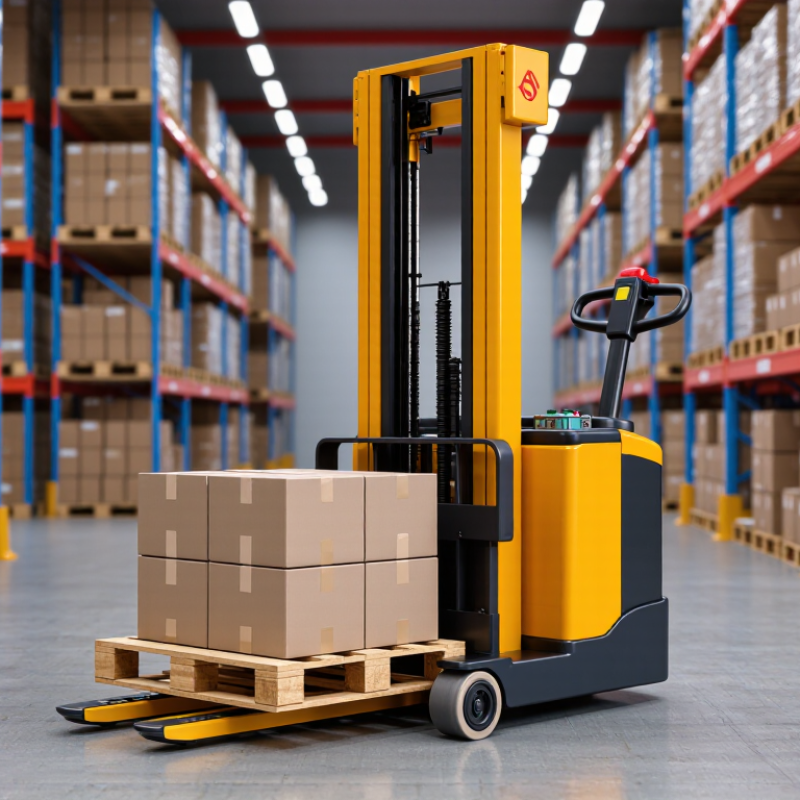
| Note: An electric stacker is a powered material-handling truck that lifts and moves palletized loads. The capacity and lift-height figures above are indicative ranges, not specifications for every model. Actual performance depends on the truck design, load center, mast configuration, battery, and operating conditions; consult the manufacturer’s load chart before use. |



 © Copyright 2020 Tianjin Tanghaidongyang Valve Co., Ltd. All Rights Reserved.