| Meaning of LT | LT commonly means low tension or low voltage in electrical equipment contexts. | An LT winding machine is generally used to wind the low-voltage winding of a transformer. Terminology can vary by region and equipment type. |
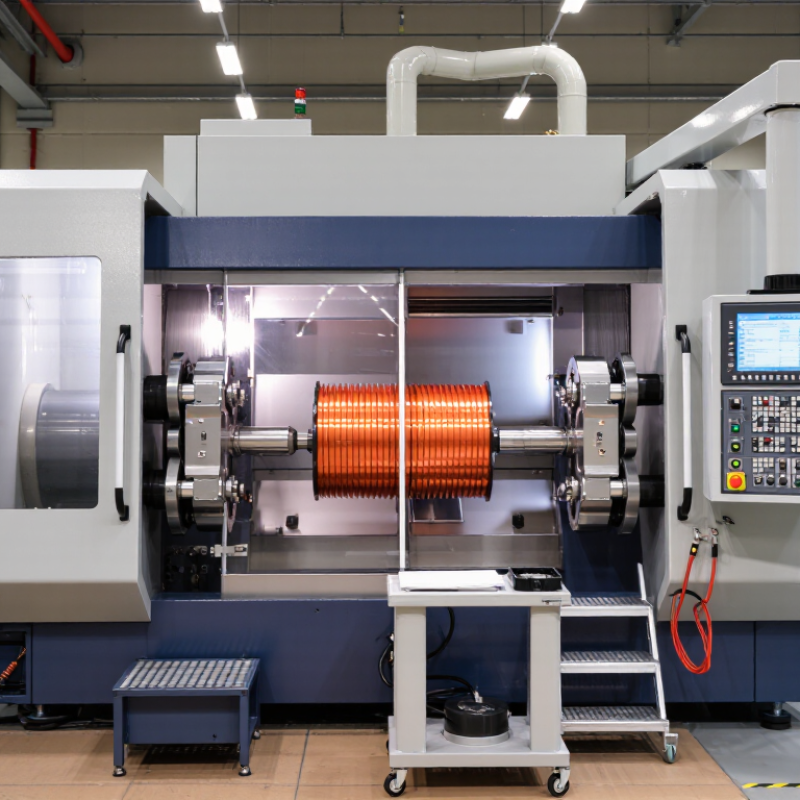
| Primary function | Rotates a coil former or core while laying conductor in controlled turns and layers. | Consistent winding placement helps produce a compact coil with repeatable geometry. |
| Typical applications | Manufacture and repair of low-voltage transformer coils. | Used in distribution and power transformer production, subject to the machine’s capacity and the winding design. |
| Conductor types | May handle copper or aluminum conductors, including round wire or strip, depending on the machine configuration. | Confirm conductor dimensions, material, insulation, and allowable bending radius against the machine and coil design. |
| Winding tension | Conductor tension should be controlled and appropriate to its material, cross-section, and insulation. | Excessive tension can stretch or damage the conductor and insulation; insufficient tension can cause loose or uneven turns. |
| Turn counting | A turn counter or control system tracks the number of completed turns. | Verify the counter and reset settings before production; turn count should be checked against the winding specification. |
| Guiding and traverse | A guide or traverse mechanism positions the conductor across the coil width. | Correct alignment and traverse settings help prevent crossed turns, gaps, and conductor displacement. |
| Layer insulation | Insulation materials may be inserted between layers or at specified points in the winding. | Follow the coil drawing and insulation system requirements for material, placement, and overlap. |
| Speed and acceleration | Rotational speed should suit the conductor, coil dimensions, and winding process. | Use controlled starts and stops to reduce conductor shock, slippage, and uneven winding, especially with heavier conductors. |
| Setup and alignment | The former or core must be securely mounted and centered on the machine. | Check clamping, shaft alignment, and clearances before operation to reduce vibration and uneven coil build. |
| Quality checks | Inspection may include turn count, coil dimensions, winding appearance, and insulation condition. | Perform electrical tests required by the applicable design and quality procedures after winding is complete. |
| Operator safety | Rotating shafts, chucks, and moving guides present mechanical hazards. | Use machine guards and emergency stops, secure loose clothing and hair, and isolate power before adjustments or maintenance. |
| Maintenance | Regular inspection of guides, clamps, drive components, controls, and tensioning parts supports reliable operation. | Follow the equipment maintenance instructions and replace worn or damaged parts before they affect winding quality. |



 © Copyright 2020 Tianjin Tanghaidongyang Valve Co., Ltd. All Rights Reserved.