Certificates

Certificates

What Is Epoxy Adhesive Used For?

Epoxy Adhesive is used to join, repair, and seal many materials, including metal, wood, ceramics, and some plastics. It forms a strong bond when the surfaces are compatible and properly prepared. A mechanic might use it to secure a loose metal bracket; a furniture maker might fill a small crack in a wooden part. The exact result depends on the formula, the joint design, and the conditions after curing. It is not a universal fix.

Adhesive specialist Eric M. Petrie’s published work supports a practical principle: choose an adhesive for the materials and service conditions, not strength claims alone. This is a paraphrase, not a direct quotation. That distinction matters. Two products labeled epoxy can differ in cure time, flexibility, temperature resistance, and suitability for wet environments. A shiny bead on a clean workbench may look reassuring, yet oil, dust, or a poorly fitted joint can undermine the bond. Surface preparation counts.

This guide explores what Epoxy Adhesive is used for, where it performs well, and where another joining method may be more suitable. It also covers common application details, such as mixing ratios, working time, and curing. Read the product instructions carefully. Small errors matter. Even experienced users can misjudge a repair, so test the product on a discreet area when appearance or compatibility is uncertain.

What Is Epoxy Adhesive Used For?

What Epoxy Adhesive Is and How It Bonds

What Is Epoxy Adhesive Used For?

What Epoxy Adhesive Is and How It Bonds

Epoxy adhesive is usually made from two parts: a resin and a hardener. When mixed, they react and gradually form a rigid, cross-linked solid. That cured network grips prepared surfaces and can fill small gaps, which makes epoxy useful for repairs and assembly. The bond is not magic. Oil, dust, or loose paint can weaken it.

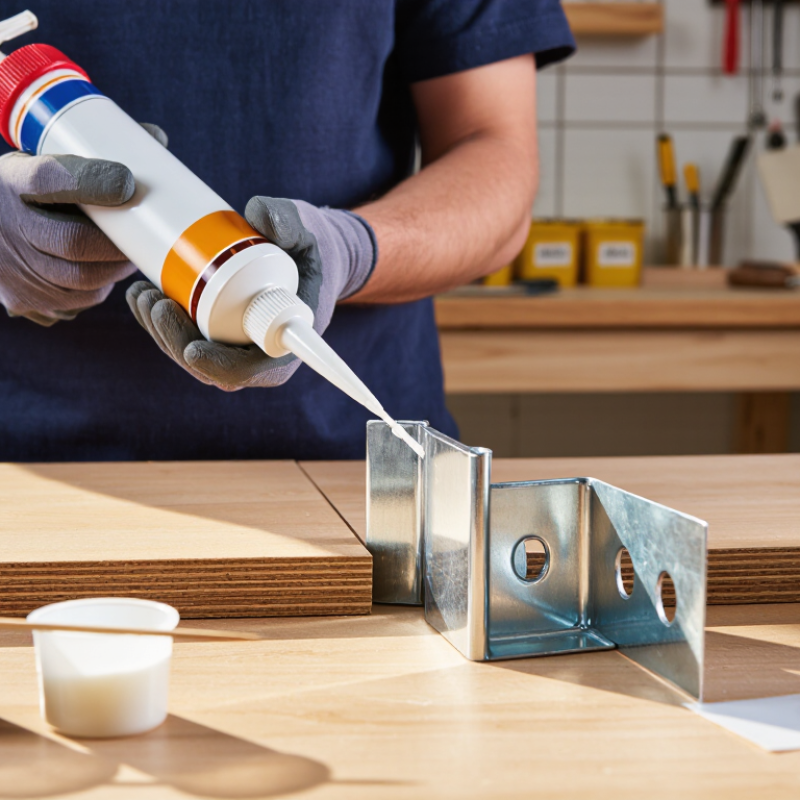
Tips: Measure both parts carefully and mix until the color looks even. Scrape the sides of the cup. Check the product’s working time, since some mixtures thicken quickly.

Epoxy can join materials such as metal, ceramic, wood, and certain plastics, though suitability depends on the specific formulation. A cracked ceramic handle may need only a small amount, while a metal joint may need clamping as it cures. Follow the package directions for surface preparation, temperature, and cure time. “Dry to the touch” does not always mean fully cured. It is easy to assume a thicker layer means a stronger repair, but excess adhesive can sometimes make alignment harder or leave a brittle seam. After curing, inspect the joint before putting it under load.

Materials Epoxy Adhesive Can Join

Epoxy adhesive is useful when two surfaces need a firm, close-fitting bond. It can join metals such as steel and aluminum, ceramic pieces, glass, stone, concrete, and many types of wood. A cracked ceramic handle or a small metal bracket may be suitable, provided the surfaces are clean and stable. Not every plastic bonds reliably; polyethylene and polypropylene often need specialized preparation or another adhesive.

Surface preparation matters. Remove loose paint, rust, dust, and oil, then let the material dry. Lightly roughening smooth metal or glass can help, but avoid damaging thin parts. Mix the resin and hardener in the specified ratio, and use only enough to cover the joint. More adhesive does not necessarily mean a stronger bond. Give it time to cure. Really, patience helps.

Epoxy usually works best on rigid joints with a close fit. It may not suit surfaces that flex repeatedly, joints exposed to constant movement, or parts that become hot beyond the adhesive’s rated limits. Test an inconspicuous area when appearance matters, since some formulas can leave a visible line or amber tint. I would not assume one epoxy suits every material; checking the package guidance is a small step, but an easy one to skip.

Common Uses in Home Repairs and DIY Projects

What Is Epoxy Adhesive Used For?

Common Uses in Home Repairs and DIY Projects

Epoxy adhesive can help repair a chipped ceramic planter, secure a loose metal bracket, or bond two pieces of wood. Many formulas use two parts that must be mixed before application. Once cured, the bond can resist more movement than ordinary craft glue, though strength depends on the product and materials. It can also fill small gaps, which is handy when a broken edge is not perfectly smooth. Still, epoxy is not a fix for every job.

For home projects, use it on suitable items such as a cracked tool handle, a loose furniture joint, or a detached tile trim. Clean and dry the surfaces first. Remove loose paint, dust, or grease so the adhesive can make contact. Follow the package directions for mixing, working time, and curing. A repair may feel firm before it has fully cured. That detail is easy to overlook.

Tips: Test a small, hidden area when appearance matters. Wear gloves and work with good ventilation. Use only products rated for the materials and conditions involved; some epoxies are not suitable for food-contact surfaces or constant water exposure. I’d also avoid rushing the cure. Waiting can feel inconvenient, but a wobbly repair is more frustrating.

What Is Epoxy Adhesive Used For? - Common Uses in Home Repairs and DIY Projects
Home Repair or DIY Task Typical Materials Why Epoxy Can Help Preparation Tips Important Considerations
Repairing a chipped ceramic item Ceramic, porcelain, some pottery Can form a strong bond between clean, closely fitting broken pieces. Dry-fit the pieces first; clean and dry the surfaces. Apply a small amount and hold the pieces in position as directed. Not every epoxy is suitable for items that contact food or drink. Check the product label, and avoid using repaired items for food service unless specifically approved.
Fixing a loose metal part Steel, aluminum, and other metals, depending on the formulation Useful for bonding or filling small gaps in non-structural household repairs. Remove rust, paint, oil, and dirt. Lightly roughen smooth metal if the adhesive instructions recommend it. Bond strength and temperature resistance vary. Do not rely on household epoxy to repair safety-critical or heavily loaded parts.
Bonding or filling a small wood repair Wood and wood composites Can join pieces or fill small voids where a gap-filling adhesive is appropriate. Use clean, dry wood. Remove loose fibers and dust; clamp or support the joint if needed. For large structural joints, select an adhesive and repair method rated for the load and conditions. Some wood glues may be more suitable for close-fitting wood joints.
Repairing a small crack in a hard plastic item Some rigid plastics, such as certain ABS or PVC items A compatible epoxy may bond rigid plastics and can sometimes fill a small crack. Identify the plastic where possible, clean it, and follow the adhesive maker’s surface-preparation instructions. Epoxy often bonds poorly to polyethylene, polypropylene, silicone, and PTFE. Check compatibility before use; flexible plastics may need a different repair method.
Bonding or patching a small masonry defect Concrete, stone, or masonry, if the epoxy is designed for the application Some epoxy formulations bond to prepared masonry or fill small, localized defects. Remove loose material, dust, and contamination. Ensure the surface condition matches the product instructions. Not all epoxies are intended for damp surfaces, exterior exposure, or structural repairs. Use a repair product specified for the location and purpose.
Reattaching a small glass component Glass bonded to glass or another compatible material Some clear or specialty epoxies can make a durable bond on suitable glass surfaces. Clean and dry the surfaces, and test the fit before mixing. Use only a small amount to limit squeeze-out. Epoxy may be visible after curing and may not suit items exposed to high heat, movement, or impact. A glass-specific adhesive may be a better choice.
General safety and curing Applies to all epoxy projects Two-part epoxy typically cures after its resin and hardener are mixed; working time and full-cure time depend on the formulation and conditions. Measure and mix as directed. Wear suitable gloves, provide ventilation, and protect nearby surfaces. Follow the label for mixing, clamping, temperature, ventilation, and cleanup. Do not handle or load the repair until the stated cure time has passed.

Industrial and Specialized Applications of Epoxy Adhesive

In industrial settings, epoxy adhesive joins metal, concrete, ceramics, and some engineered plastics when screws or welds are impractical. It can bond dissimilar materials, spread loads across a joint, and seal small gaps. In a pump housing, for example, a properly selected epoxy may secure a component exposed to vibration and occasional moisture. Fit matters.

Specialized applications include electrical encapsulation, composite repairs, vehicle components, and equipment used in marine environments. Some formulations insulate electrical parts or resist oils and cleaning chemicals. Others cure slowly, giving technicians time to position large panels or reinforce a cracked composite part. The right choice depends on the substrate, operating temperature, chemical exposure, and expected load—not merely the word “industrial” on a product label.

Preparation often decides whether a bond lasts. Surfaces may need degreasing, abrasion, and thorough drying; dust or an oily fingerprint can weaken adhesion. Accurate mixing and the specified cure time matter too. Not every joint. Epoxy can be brittle under repeated flexing, and heat may reduce performance. A small test on representative materials can reveal problems before a repair or assembly goes into service. Check the technical data and safety instructions, especially where ventilation or protective equipment is required.

Factors to Consider When Choosing an Epoxy Adhesive

What Is Epoxy Adhesive Used For?
Factors to Consider When Choosing an Epoxy Adhesive

Epoxy adhesive bonds metals, ceramics, wood, concrete, and some plastics. The right choice depends on the materials and the forces the joint will face. A small metal bracket carrying a steady load needs different properties from a concrete repair exposed to vibration. Check the product’s technical data for lap-shear strength, peel resistance, and temperature limits. ASTM D1002 describes a standard method for measuring adhesive shear strength between metal coupons; that result is useful, but it does not predict every real-world joint.

Surface condition matters. Oil, dust, rust, or a glossy finish can weaken the bond, so cleaning and abrasion may be needed. Also consider working time and cure time: a quick-setting adhesive can be awkward on a large, carefully aligned part. Small details matter. Grand View Research estimated the global epoxy adhesives market at USD 7.23 billion in 2023, reflecting broad use across applications, not one adhesive suited to all jobs. Choose a formulation rated for the expected moisture and temperature, then test it on a sample when failure would be costly. Honestly, the ideal choice can still be uncertain if the surface or load is poorly understood.

What Is Epoxy Adhesive Used For?

Typical bonding suitability by substrate

Epoxy adhesives are commonly used to bond metals, ceramics, glass, and wood. This qualitative guide compares general suitability, not measured strength: results depend on the specific adhesive, surface preparation, and application. Polyethylene, polypropylene, and PTFE are typically difficult to bond with standard epoxy without special preparation or products.